
| Joseph Ignaz Philipp von Hessen-Darmstadt (1699–1768) | Link to Wikipedia |
Joseph Ignaz Philipp von Hessen-Darmstadt (1699–1768): History and Coinage
In the mid-eighteenth century, Joseph Ignaz Philipp of Hesse-Darmstadt stands as a fascinating bridge between secular dynasties and ecclesiastical authority. Born in Brussels on 22 January 1699 to Philip of Hesse-Darmstadt and Princess Marie Ernestine of Croy-Havré, he was raised partially in Mantua before rising through the clergy.
Rising at a time when enlightened absolutism was reshaping Europe, Joseph Ignaz Philipp managed to maintain his spiritual vocation while navigating complex Imperial politics. In 1740, after being ordained as a priest years prior, he ascended from secular life into church office within Augsburg Cathedral. The cathedral chapter elected him Prince-Bishop of Augsburg in August 1740, an appointment confirmed by Pope Benedict XIV the following year. His rule over Augsburg placed him within the Holy Roman Empire as a Prince of the Reichskirche (Imperial Church). This unique status meant he held territorial sovereignty comparable to kings elsewhere, wielding significant influence despite being an ecclesiastical figure.
The Intersection of Office and Coinage
During his lifetime, this region operated under Imperial law which permitted high-ranking prelates to issue their own currency. While strict canon laws existed regarding clergy involvement in commerce, the political reality required these princes to maintain coinage for trade within their domains.
Ecclesiastical Sovereignty
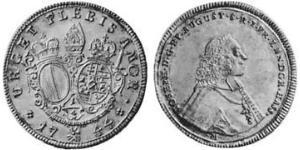
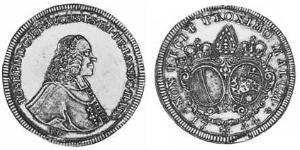
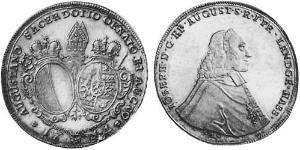
Coinage depicting or bearing his title circulated alongside standard Imperial currency. The Augsburg Mint, active during his tenure, produced denominations reflecting the Prince-Bishopric's authority. Unlike secular monarchs who prioritized royal portraits on gold and silver florins, ecclesiastical coinage often emphasized pious iconography, yet still projected dynastic legitimacy.
The connection to Hesse-Darmstadt remained crucial; his election as Bishop was a result of Imperial politics rather than pure religious selection. This political background influenced the style of coins issued under this period, subtly blending regional family heraldry with ecclesiastical symbols. Following 1750, portrait engraving became more standard on these pieces to assert personal rule over territory and mint rights.
Coin Types
- Ecclesiastical florins used for imperial trade within the Empire.
- Semi-official or private issue denominations reflecting Hesse-Darmstadt heritage.
- Later commemorative issues celebrating his tenure in Augsburg Cathedral.
Collectors should note that coins may appear less common than secular European sovereigns but are highly sought after for their historical rarity and artistic engraving of the era.
The Appeal to Numismatists
Nuanced History
Holders of these pieces value them not merely as currency but as evidence of a man who ruled two worlds simultaneously. The aesthetic quality reflects the late-Baroque transition into Enlightenment aesthetics prevalent in Augsburg.
- Rarity: Pieces bearing his title often exist in fewer numbers compared to contemporary secular states.
- Ideal for thematic collections focusing on the Holy Roman Empire or Church-State relations.
- Contextual value provides deep insight into 18th-century Imperial administration beyond standard political history.
Judging by historical records of coinage practices, his tenure represents a significant period where ecclesiastical sovereignty met commercial necessity. Exploring these artifacts offers enthusiasts a tangible connection to the intricate power structures that defined Europe before the Napoleonic Wars altered its landscape entirely. For those seeking deeper understanding into this era's complex political and artistic intersections.


