Benvenuto

Stati/Paesi -> Vanuatu      

Duardare  
 
preceduto da
 
Vanuatu
sostituito da

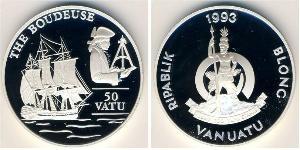
50 Vatu Vanuatu Argento
il gruppo ha   2 monete / 2 prezzi
50 Vatu Vanuatu Argento
il gruppo ha   2 monete / 2 prezzi
50 Vatu Vanuatu Argento
il gruppo ha   2 monete / 2 prezzi
  Vanuatu Link a Wikipedia

Repubblica di Vanuatu: Storia, Monetazione e Collezionismo

Welcome to our exploration of one of the most fascinating narratives within global numismatics and Pacific history. The story of this archipelago is not merely a tale of islands in an ocean, but a compelling journey through sovereignty, cultural identity, and the artistry that defines modern currency collecting.

Contesto Storico

To understand the numismatic value of Vanuatu today, one must first appreciate its unique geopolitical origin. Unlike many Pacific nations conquered by force or acquired as single colonial territories, this archipelago became known under a distinct system: the Condominium Agreement between Great Britain and France in 1906.

This period established a regime of "joint sovereignty," where both metropolitan powers governed together without conflict until their independence. This diplomatic history profoundly influenced its monetary development. While European explorers like Pedro Fernández de Quirós claimed these lands for Spain centuries earlier, it was the joint administration that shaped economic reality throughout the early twentieth century.

The islands were named "Nuove Ebridi" during this era and retained a degree of autonomy within their own colonial framework even as global empires shifted. This stability allowed trade networks to flourish between Australia, New Caledonia, Fiji, and the rest of Melanesia long before local independence was granted on July 30, 1980.

Independence meant a new economic beginning for Vanuatu (officially named Ripablik blong Vanuatu in Bislama), entering into international bodies like the UN and establishing itself as part of the Commonwealth. This transition from condominium to sovereign state created an opportunity not just political, but strictly monetary.

The history of this region is defined by its isolation yet deep interconnection with global trade routes. Early Melanesian inhabitants traded using local resources—shells and shells like cowrie money—which were later replaced or complemented by colonial coinage to facilitate commerce as the islands opened up to tourism and mining industries.

Storia della Valuta e della Monetazione

The evolution of currency in Vanuatu reflects a fascinating shift from imperial standards to national sovereignty. Prior to independence, circulating coinage was predominantly tied to colonial currencies. However, upon regaining full freedom, the nation sought its own identity on metal.

In 1982, following independence two years earlier, Vanuau adopted the "Vatu" as its currency unit and changed from using French Francs or New Caledonian Dollars in a dual system. The transition involved minting new coinage to symbolize this break with direct colonial dependence.

The early post-independence coins were designed to be simple yet dignified, avoiding complex iconography that might alienate traditional populations while adopting modern international standards of currency design. This period marked the "Golden Age" for collectors interested in decolonization themes.

Zecche e Produzione Monetaria

The actual production technology used by Vanuatu during its first decades was often outsourced, as is common for many smaller island nations that did not possess domestic minting infrastructure immediately after independence. This reliance on external partners ensures high artistic quality and technical precision.

This practice of utilizing world-class fabrication centers has been a constant in the numismatic landscape since 1980. The shift from simple, utilitarian colonial coins to intricately designed modern pieces demonstrates how quickly Vanuatu's economy matured following political stability. Artists were encouraged to integrate traditional patterns.

A crucial aspect of this production history is the evolution of design aesthetics. While early issues might have appeared more austere or strictly functional for economic necessity, later editions in subsequent decades allowed for greater artistic expression involving local flora and fauna. This change reflects an increasing national confidence on the international stage where currency serves as a cultural ambassador.

Monete più Rilevanti

Certain issues stand out among numismatic historians not merely for their rarity in technical terms, but because they represent pivotal moments in history. The first series of Vatu coins introduced after 1980 is particularly sought after by those studying the independence era.

  1. The Independence Set (1982-1985): This range includes denominations such as one-cent, five-cents and ten-cent pieces. The reverse often features traditional motifs or national symbols representing peace between the French and British heritage that united the nation before independence.
  2. The 50 Cents / Francs (Post-Independence): These coins are significant because they were among the larger denominations used in a transition period where currency systems fluctuated. They often depicted iconic landmarks or animals, serving as early propaganda for national unity.
  3. The Sea Eagle Series: The Vanuatu bird of prey serves as an emblematic symbol on various high-denomination notes and coins produced over the last few decades. While not a native species to these specific isles originally, it holds symbolic weight in local culture due to its resilience.

Note: For collectors seeking pieces with higher artistic merit than strictly functional circulation coinage, modern commemorative sets exist that feature detailed engravings of underwater ecosystems like the coral reefs bordering Vanuatu. These often display superior relief work and coloration (colored strikes) which appeal to contemporary aesthetic tastes.

Eredità Culturale

The coins produced by this archipelago mirror a rich, diverse society where languages like Bislama are spoken alongside English and French. This trilingualism is reflected in the text on modern denominations and official inscriptions found on legal tender.

Nature remains central to national identity. The design of many contemporary issues showcases vibrant imagery from local ecosystems such as the Rainbow Lorikeets or distinctive volcanic island profiles like Mount Yasur (which appears frequently due to its iconic status in cultural heritage). These images connect modern global buyers directly to the environment and spirit that defines this nation's daily life.

The artistry of these issues also honors traditional craftsmanship. While modern technology allows for crisp, clear detail on metallic surfaces, many designs reference patterns woven into local basketry or pottery styles, subtly bridging indigenous tradition with Western numismatic conventions.

Per i Collezionisti

For the discerning collector today, Vanuatu offers a unique entry point to Pacific history that is distinct from larger neighbors like New Caledonia. The focus should be on pieces that mark key historical milestones rather than speculative market trends.

Rarity and interest are often found in early independence issues where design consistency was still being established across different series of mints. These represent a nation defining itself against the backdrop of global economic integration after 1980.

The importance of these pieces lies in their role as physical records of sovereignty transitions. The history of Vanuatu's currency is an ongoing story about cultural resilience and administrative maturity that makes it a valuable part of any specialized collection dedicated to Pacific Islands or the Commonwealth.

In conclusion, while small by population size (around 350k citizens), this nation has produced significant numismatic artifacts. These coins serve as ambassadors for Vanuatu's history and its people. When viewing an image from one of these islands in your collection today, you hold a tangible piece of the transition from colonial condominium to modern independent statehood.

We encourage buyers to consider provenance when possible and look at condition grades closely since older pieces often show wear consistent with heavy circulation usage prior to independence. The best approach is to acquire them as part of a broader historical narrative that connects you to this beautiful island nation's unique journey through history.

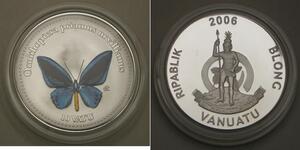
VANUATU 10 Vatu 2006 Proof - Series Multicolour Butterflies - 3286 *
Venduta per: $19.0
VANUATU 10 Vatu 2006 Proof - Series Multicolour Butterflies - 3286 *
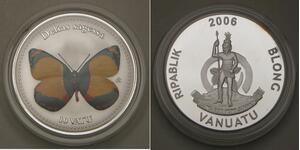
VANUATU 10 Vatu 2006 Proof - Silver plated Cu-Ni - Delias Sagessa - 3284 *
Venduta per: $17.0
VANUATU 10 Vatu 2006 Proof - Silver plated Cu-Ni - Delias Sagessa - 3284 *
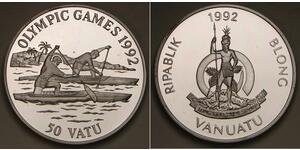
VANUATU 50 Vatu 1992 Proof - Silver 0.925 - Barcelona Olympics / Canoe - 3825 *
Venduta per: $33.0
VANUATU 50 Vatu 1992 Proof - Silver 0.925 - Barcelona Olympics / Canoe - 3825 *
Aiuta Lucky Coin a classificare le monete! Entrambe le immagini rappresentano la stessa moneta?
|
About the project  |  Terms of Service  |  Privacy Policy  |  Your Privacy Choices