| Heinrich LXVII, Prince Reuss Younger Line | Lien vers Wikipédia |
Heinrich LXVII, Prince Reuss Younger Line (1789–1867): History and Coinage
Historical Significance of the Ruler
Born on October 20, 1789 in Schleiz, Heinrich LXVII served as a pivotal figure for small Central European states during an era of dissolution. He ascended to the Principality following his brother's childless death and governed with notable administrative talent until July 11, 1867. Unlike passive sovereigns who merely signed decrees, he was known locally for popular initiatives that included rebuilding Osterstein Castle in Gera between 1859 and 1863.
The reign of Heinrich LXVII also marks a critical political transition where local sovereignty began to merge with the rising power of Prussia. Under his administration, Minister Eduard Heinrich-Crispendorf was appointed to amend constitutional laws in 1856 to reflect reactionary standards while maintaining domestic popularity. By entering into treaties with Kingdom of Prussia and joining the North German Confederation by 1866, he cemented a legacy that bridged local independence with federal unity.
The Relationship to Coinage
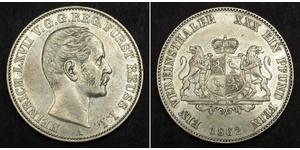
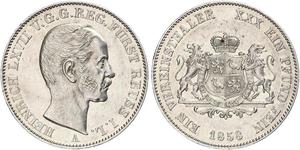
Faced with shifting monetary policies within the complex structure of fragmented Germany, Heinrich LXVII's name appears on currency through specific regional issues rather than standard imperial coinage. As a vassal state prince under Prussian influence after 1867, his territory adopted broader standards that reflected federal configurations.
- Sovereign Tokens: During the mid-19th century, smaller principalities often issued copper tokens bearing their specific heraldry to manage local commerce before full assimilation into larger currency systems.
- Civil Orders Medals: In 1857, Heinrich LXVII founded his own Golden and Silver Merit orders as a Civil Cross of Honour. These items are collected by numismatists alongside official coinage due to their intricate design and the sovereign authority behind them.
The portrait or name on these coins represents not just personal power but the administrative autonomy of the principality itself before it was fully subsumed into Prussian monetary standards following his alliance with Berlin. Collectors also value medals associated with orders like the Iron Cross, which Heinrich received in 1813.
Collections Value for Historians
Histories of German unification drive significant interest among enthusiasts seeking to preserve artifacts from this transitional era before full standardization in the late 19th century. Collectors seek out Reuss state issues because they represent a rare slice of regional history distinct from larger empires.
- Rarity and Condition: Items issued during his direct rule (post-1854) are highly sought after for their connection to specific political reforms and architectural changes like the Gera residence transfer.
- Narrative Context: Every coin depicts a man who navigated complex European politics, making these items educational tools that explain how small states integrated into modern Germany.