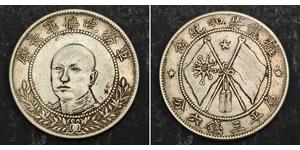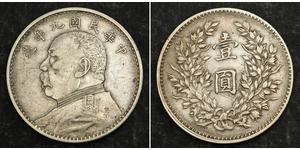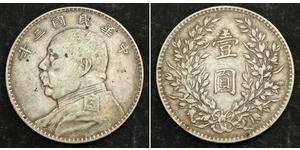

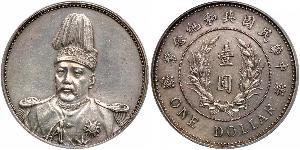
| Yuan Shikai (1859 - 1916) | Link to Wikipedia |
Yuan Shikai (1859–1916): History and Coinage
In the turbulent decades bridging ancient tradition and modern statehood, Yuan Shikai stands as a pivotal figure in Chinese history. Born into an affluent family but failing traditional civil service exams early on, he redirected his ambition toward military leadership within the Huai Army. His administrative prowess later became instrumental during the Wuchang Uprising of 1911, where he brokered peace between revolutionaries and monarchists to ensure China did not fracture completely.
He first served as provisional president before becoming formal head of state for the Republic of China. However, driven by a desire to restore imperial dignity after observing Japanese influence in Asia, Yuan reversed course just two years into his presidency. He declared himself Emperor Hongxian in late 1915, an attempt at establishing a new dynasty that ultimately failed and led only eight months later.
Coinage and Imperial Legacy
The numismatic record surrounding Yuan reflects this dramatic political volatility. During his tenure as president prior to the imperial declaration, currency issues were part of unifying efforts for the nascent republic. However, it is the specific coins struck after December 1915 that hold distinct significance.
To solidify legitimacy under his new title, a series of silver dollars and bronze cash pieces were minted bearing the Hongxian era name. These issues represent one of few successful attempts in Chinese history to issue currency for an imperial regime within modern Republican times before World War II concluded that conflict elsewhere. The portrait featured on these coins was intended to project authority over the fragmented provinces.
- The Hongxiang Series: Released following his proclamation as emperor, bearing traditional Chinese legends alongside Western minting styles in reverse designs.
- Presidential Issues: Circulated widely before 1916 but often bear earlier design elements prior to the imperial title adoption.
The decision to issue currency for his short-lived monarchy was a political necessity; however, widespread opposition and internal war forced him to abdicate in March of that same year. This collapse meant many mint runs were incomplete or quickly withdrawn from circulation once he renounced kingship.
Why Collectors Value These Issues
Serious numismatists are drawn to these pieces primarily because they represent a fleeting moment in history before total civil conflict plunged China into decades of warlordism. The scarcity of high-grade Hongxian silver dollars is due partly to the abrupt regime change that caused their removal from circulation.
- Rarity and Condition: Because these coins were minted for a failed empire, specimens in uncirculated condition are rare outside major Chinese collections. Their survival depends largely on how quickly they left active commerce.