| Valerian II (?-258) | Link to Wikipedia |
Valerian II (c. 246–258): History and Coinage
In the turbulent landscape of late third-century Rome, Valerian II stands as a poignant figure representing both dynastic hope and frontier fragility. As the eldest son of Emperor Gallienus and Augusta Cornelia Salonina, he ascended to the rank of Caesar around 253 AD. Appointed guardian over the troubled Illyrian provinces in Sirmium, his brief existence encapsulates the desperate measures taken by central Rome to hold back barbarian incursions on its northern frontiers.
The Symbolism of Imperial Portraiture
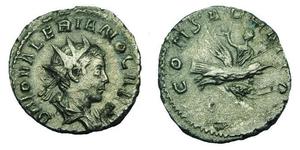
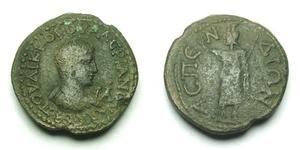
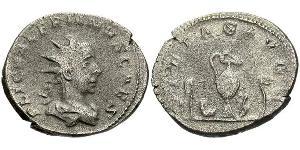
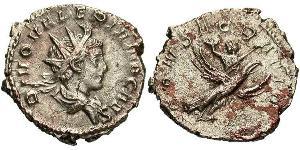
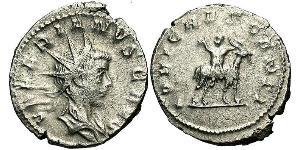
Coinage from this era serves as a powerful testament to political legitimacy. When Valerian II appeared upon imperial bronze and silver denominations, it was not merely an act of commemoration but a declaration of sovereignty under the shadow of his father’s name. These issues were struck during the short tenure that spanned roughly five years before his sudden death in early 258 AD.
The decision to mint portraits for such a young prince stemmed from two primary drivers: the necessity of local stability and dynastic continuity. While Gallienus fought wars on the Germanic borders, he needed his heir apparent in Sirmium to command local garrisons. Coins featuring Valerian II were essential tools of propaganda, designed to reassure provincial soldiers that Imperial protection remained unbroken despite their distance from Rome.
The Collector’s Perspective
For the numismatist interested in history and rarity, these issues offer a unique window into the Crisis of the Third Century. The artistic style found on his coins reflects the transition from classical ideals toward more militaristic expression common during this chaotic period.
- Scarcity: The brevity of his reign limits survival rates for high-grade specimens in private collections.
- Dynastic Narrative: Each coin provides a tangible connection to the struggle between central authority and provincial autonomy.
The face of power found on these ancient discs reminds us that an emperor’s legacy is often preserved best through small, circulating media. Collectors value these pieces for their historical narrative weight as much as they are sought after in specialized exhibitions or museum archives dedicated to the Antonine dynasty and its successors.