Urho Kekkonen
| Urho Kekkonen | Link to Wikipedia |
Urho Kekkonen 1900-1986: History and Coinage
A Guardian of Finnish Independence
For nearly three decades, Urho Kaleva Kekkonen served as the president of Finland (known by his initials, UKK), a figure who defined the geopolitical landscape of post-war Europe. Born in 1900 to peasant origins, he ascended through various cabinet positions before becoming head of state during one of the most delicate periods of modern history: the Cold War. Kekkonen was instrumental in shaping Finland's "active neutrality," often called the Paasikivi–Kekkonen doctrine, which allowed the small nation to maintain its sovereignty while navigating between powerful neighbors like the Soviet Union and NATO nations. His ability to stabilize Finnish politics during a tense era made him an indispensable political figure whose policies ensured trade prosperity with both West and East, preserving Finland's independence against immense odds.Portrait on Currency
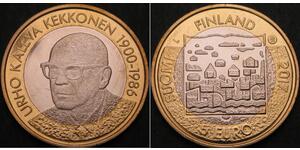
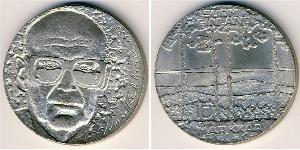
While numismatics is most famous for circulating coinage, the representation of national leaders often extends significantly to banknotes (paper currency) and commemorative medals. In the case of Finnish history enthusiasts looking into this era, Kekkonen's image appeared prominently on Bank of Finland issues during his presidency and in subsequent years. During that time, presidents were frequently depicted as symbols of state continuity rather than political partisanship; thus, Urho was featured alongside other national heroes to signify stability and sovereignty. Unlike American dollar coins which have carried the faces of living or past presidents for decades, Finnish standard metal coinage typically displayed state coats-of-arms during this period. However, collectors seeking a connection to Kekkonen find his portrait on banknotes that circulated widely in 1970s Finland. Furthermore, posthumous commemorative medals were minted after the end of his career to honor his diplomatic legacy. These pieces served as tangible historical documents, allowing citizens and visitors alike to hold a physical representation of the era's most dominant political leader while studying history from a numismatic perspective.Collecting Value
For collectors interested in mid-20th-century Finnish history or Cold War memorabilia, items associated with Urho Kekkonen are prized for their rarity and historical context rather than high market price tags found on ancient gold coins.- Educational Significance: These pieces help modern audiences understand the concept of "Finlandization" and how small nations maintained diplomatic maneuvering during the nuclear threat, preserving peace through political nuance.
- Rarity Factor: As a leader who dominated his nation's politics for 31 years without significant opposition in later terms, there are no modern equivalents to American coins where every president is depicted on current currency. His appearance makes him unique within regional history collections.
- National Memory: The images found on the Finnish Markka notes and official medals serve as a link between domestic politics and national identity in Western Europe, connecting collectors who study Scandinavian financial evolution over time.