| Romuald Traugutt | Link to Wikipedia |
Romuald Traugutt (1826–1864): History and Coinage
Romuald Traugutt, who lived from January 18, 1826 to August 5, 1864, stands as a pivotal figure in Polish history. Born into the Russian Empire but rejecting its rule through military and political resistance, he became known for his tragic leadership during the struggle against foreign occupation.
The Historical Context
Traagutt served initially within the Imperial Russian Army before turning to fight alongside fellow nationalists following a personal crisis in 1863. Upon joining the January Uprising, which aimed to reclaim sovereignty for Poland, he reluctantly accepted leadership roles. He rose from an ordinary officer under his alias Michał Czarnecki to become the last dictator of the uprising on October 17.
His command was defined by a desperate attempt to professionalize guerrilla units and negotiate terms that included abolishing serfdom. Despite seeking funds from banks or foreign powers like France, his diplomatic missions failed. He faced immense personal tragedy, having lost family members before the uprising even concluded. Following betrayal by an associate who revealed his identity to Russian police, he was arrested in Warsaw.
Traugutt attempted various reforms but could not sustain a professional army against state forces and financial collapse. Executed alongside other commanders at the Warsaw Citadel on August 5, 1864, his death transformed him into an icon of resistance. For decades after his hanging, Russian authorities censored mentions of his service until Poland regained independence as a sovereign entity.
Currency Recognition
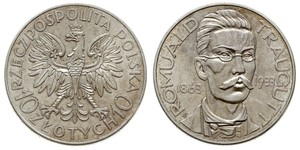
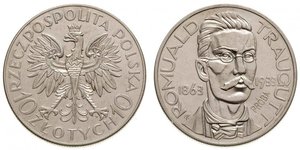
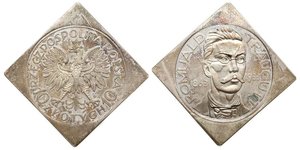
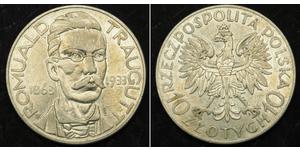
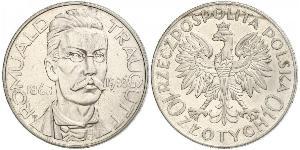
Numerous political entities have sought to honor national heroes through official currency. Although Traugutt died in the mid-19th century under occupation where coinage was controlled by Imperial Russia, his image became prominent on modern Polish monetary artifacts after 1945.
Currency collectors often find these items valuable not for metal content but as historical records of a nation's identity. Post-independence Poland issued stamps and later banknotes to acknowledge his sacrifice. For instance, the state honored him with postage in 1938 and featured him on currency including the twentieth złoty bill during economic reforms.
Numeismatic Value
The attraction for collectors extends beyond mere rarity; it represents a tangible connection to national resilience. Artifacts bearing his likeness are sought after by those studying late 19th-century revolutionary history or Polish statehood restoration. While metallic coinage from this period may not be available, the broader numismatic collection of medals and paper money associated with him remains vital for understanding post-World War I economic transitions.
Traugutt serves as a reminder that currency often preserves memory when living language is suppressed by occupation or censorship.