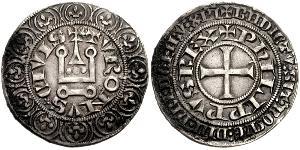
| Philip V of France (1292 - 1322) | Link to Wikipedia |
Philip V of France (c. 1291 – 3 January 1322): History and Coinage
Introduction to the Capetian Reformer
Welcome inside our historical gallery where we examine Philip, known historically as Philip II or Philippe le Long. He ascended to the throne of France in a time defined by dynastic turbulence following the untimely death of his elder brother Louis X. As King from 1316 until his passing in 1322, he is remembered for decisively managing complex succession disputes and initiating significant domestic reforms that stabilized the kingdom's economy.
The era during which Philip V reigned marked a pivotal shift in French political theory. By securing the throne despite rival claims from female descendants of his predecessor, he established legal precedents regarding inheritance rights. These actions were not merely bureaucratic but deeply symbolic for an audience comprised of nobility and traders who relied on royal coinage as proof of state authority.
The Connection Between Philip V and Currency
Musium numismatists recognize that coins from this period served more than just economic utility; they were declarations of sovereignty. During his reign, the French crown worked diligently to restore fiscal control following a century of financial instability under earlier rulers.
- Fiscal Standardization: Philip V implemented reforms aimed at improving kingdom management by establishing an independent Court of Finances and standardizing weights and measures. These policies were physically manifested in the minting processes that unified currency across different regions, reducing inflationary pressures caused by varied local denominations.
- Royal Propaganda: While medieval coinage styles evolved slowly compared to later European kingdoms, coins issued during his lifetime served as tangible proof of his legitimacy. The portraits or monograms found on deniers and florins circulated in markets from Normandy to Burgundy carried the message that trade continued under a unified legal authority.
- Rarity: Most surviving examples are gold pieces associated with royal mints rather than common silver currency, making physical identification of his specific issues quite rare for general collectors compared to more prolific monarchs like Philip IV or John II centuries later.
The Appeal for Modern Collectors
Farm and estate owners, along with coin enthusiasts seeking pieces beyond the common Roman Empire, find great interest in medieval European currency from this dynasty. The rarity of original French Capetian coins often drives significant attention toward Philip's reign specifically.
- Historical Context: Possessing a specimen linked to this period allows collectors to hold physical artifacts that connect directly to the establishment of succession laws which governed European royalty for hundreds of years. It represents one specific phase where royal authority was actively consolidated through economic means rather than warfare.
- Ceremonial Significance: Coins associated with a monarch who successfully defended his claim against legal challenges often feature refined details or distinctive mint marks that differentiate them from standard issues, providing educational depth regarding the artistry and craftsmanship of early thirteenth-century France. The historical narrative surrounding Philip’s efforts to ensure financial solvency is preserved in every surviving specimen.
- Educational Value: Studying these pieces helps learners understand how medieval kingship relied on fiscal stability, making them a fascinating addition to specialized collections focused on the evolution of state finance and royal iconography. The limited number of examples encourages collectors to investigate auction records for provenance stories that illuminate Philip’s domestic achievements.
In conclusion, collecting these numismatic treasures is an invitation to understand how financial policy reinforced political power in medieval France. Whether viewed through a magnifying glass or studied from history texts, they stand as enduring symbols of the kingdom's transition toward modern administrative structures.