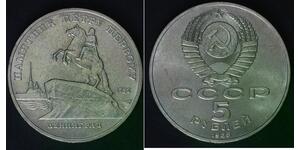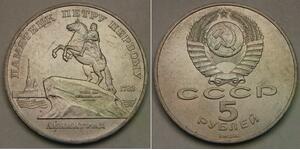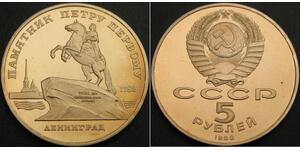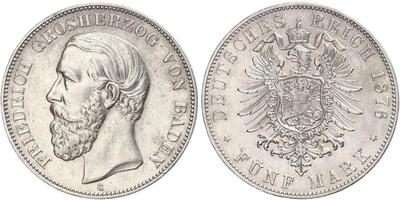
| Peter the Great (1672-1725) | Link to Wikipedia |
Peter I (1672–1725): History and Coinage
Welcome, fellow explorers of history and currency. As a curator with over forty years dedicated to the preservation of heritage artifacts, it is an honor to present you today with the life of one who fundamentally reshaped a nation: Peter I of Russia. Commonly known as "Peter the Great," this autocrat presided over a period where Tsar became Emperor and Moscow transformed into the imperial capital of Saint Petersburg.
Peter’s historical significance extends far beyond military conquest; he orchestrated an administrative revolution that modernized Russian society, science, and commerce. By relocating his government to St. Petersburg—a city built entirely from scratch—and engaging deeply with Western technology and philosophy, Peter sought to transition Russia into a major European power.
The Imperial Standard
You might wonder why an autocrat who reigned in the early 18th century would feature prominently on currency. Before his accession, Russian coinage was often undervalued compared to Western standards and produced with inconsistent weights due to local debasement practices used during wars or shortages of precious metals.
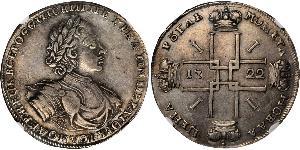
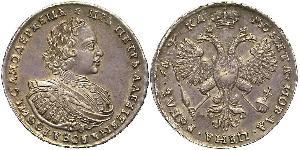
Peter’s most profound contribution to numismatics occurred when he aligned the Ruble with European weight systems to facilitate trade. Unlike his predecessors, whose coinage often featured religious icons typical of medieval iconography, Peter introduced a new era where realistic portraits and military titles appeared on state currency. This reflected his ideology that Russia should be perceived as a modern, rational entity in international markets.
The coins struck during this period were minted under the direct supervision of foreign experts he invited from places like Germany and France to ensure quality. The Russian Empire issued silver roubles intended for circulation both domestically and across Europe, signaling his nation's rising economic status following victories against the Ottoman and Swedish empires.
A Collector’s Perspective
The coinage of Peter I offers more than a simple representation of face value; it represents an artifact of statecraft. For collectors seeking to understand this era, these pieces are invaluable for several reasons:
- Economic Modernization:
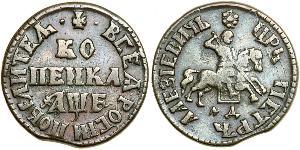
- Analyze the transition from traditional copper coins and silver roubles used during his reign, which were often debased before he standardized production.
- Rarity and Survival:
- Pieces depicting Peter are highly sought after because few survived without being melted down for bullion or lost in the chaos of early Russian history. High-grade examples offer a tangible link to his industrialization projects where copper was extracted from local mines.
- Historical Context:
- Coinage from this period often carries inscriptions referencing specific reigns and titles related to his imperial coronation in 1721, making them essential for understanding the elevation of Russia's global standing.
- Cultural Significance:
- The art on these coins mirrors Peter’s desire to "window out" toward Europe. They were struck with a precision that was considered advanced for their time in Eastern markets, reflecting his obsession with shipbuilding and engineering applied to metallurgy.
In the study of numismatics, holding a piece depicting Peter I is akin to walking through the gate he opened between an isolated medieval world and the modern West. These coins stand as testaments to how much effort was required to build that bridge.