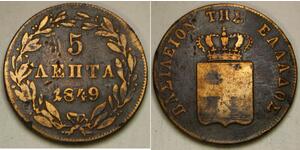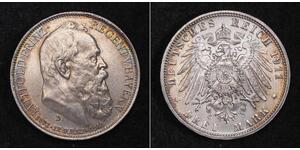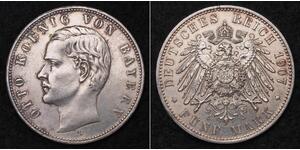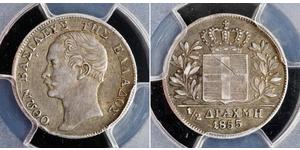
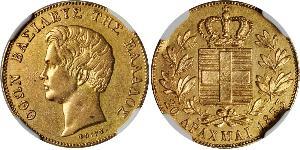
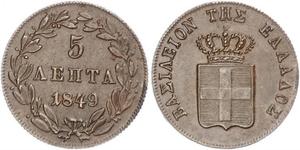
| Otto of Greece (1815 - 1867) | Link to Wikipedia |
Otto of Greece (1815-1867): History and Coinage
Introduction to a Monarch in Formation
Potential King Otto Friedrich Ludwig represents one of the most unique instances where European dynasty politics met modern Greek statehood. His coronation followed the abdication of his predecessor, Prince Leopold, after Britain refused financial support for Greece during its war against the Ottoman Empire. Unlike many monarchs who inherited thrones through direct lineage, Otto was appointed by international diplomacy to stabilize a young nation emerging from conflict.
Otto’s arrival marked the beginning of foreign tutelage over domestic affairs. Although he attempted modernization efforts such as establishing schools and state services, his reign faced constant pressure between Greek demands for autonomy and Great Powers interests involving Britain, France, and Russia. This geopolitical tension is essential to understanding why his currency bears such specific historical context.
Circulation and Political Context
Coins depicting Otto were issued by the Kingdom of Greece starting in 1830s shortly after he accepted the crown via an amended protocol. The decision to place a Bavarian prince on Greek soil was controversial among locals, leading some early issues to feature imagery that balanced his foreign origin with nationalistic symbols.
The historical circumstances surrounding these coins changed dramatically as Otto's political standing eroded under British naval blockades and economic meddling from outside powers. As he lost support domestically due to high taxation funded by Rothschild banks for debt, the currency became less reliable than earlier Ottoman-era pieces or later independent issues after his deposition.
Appeal in Modern Collections
Collectors of modern European numismatics prize these specimens primarily for their role in documenting a specific era of transition. Unlike ancient Greek electrum which depicts mythology, Otto's coins show the reality of international politics shaping local governance.
- The pieces offer tangible evidence of how Great Power alliances dictated domestic monetary policy and state independence during the 19th century.
- Late issues from his reign connect to broader histories involving constitutional monarchies in Europe transitioning away from absolute rule after 1830 revolutions.
The educational value lies not necessarily in their market rarity but rather in what they symbolize regarding the struggle of Greece against foreign bureaucracy, making them fascinating objects for history enthusiasts exploring early modern statehood.