


| Oscar II of Sweden (1829-1907) | Link to Wikipedia |
Oscar II of Sweden (1829–1907): History and Coinage
Introduction to a Reformer-Ruler
Musicians, poets, and mathematician King Oscar II is best remembered as the monarch who presided over Scandinavia during its industrial adolescence. He ascended in 1872 following his brother's death, ruling until the Union between Sweden and Norway quietly dissolved a decade later. Unlike many dynastic leaders of his time whose lives were defined solely by war or diplomacy, Oscar II was an active patron of science who championed Arctic exploration and funded major discoveries relevant to celestial mechanics today.
The Numismatic Legacy
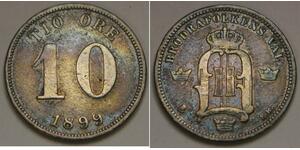
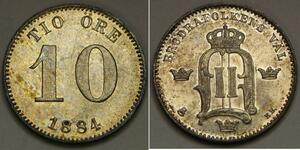
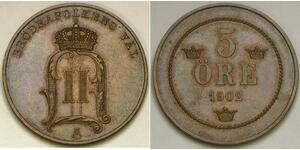
Currency from this era serves as tangible evidence of the dual monarchy he commanded. Coins bearing his portrait were minted in Stockholm for Sweden, while separate issues honored Norwegian territories until 1905 when national independence necessitated distinct designs under a new king.
- Dual currency issued between 1872 and 1905
- Silver Krone standard for general trade circulation
Coinage reflects the transition from a royal state to constitutional rule. While he was deeply interested in mathematics, his official portrait on coins remained formal, reflecting the tradition that monarchs represented stability rather than their specific intellectual passions.
Collector Significance and Appeal
The pieces depicting Oscar II are valued by enthusiasts for several reasons beyond simple rarity. Collectors appreciate how these medals link to broader geopolitical shifts in Europe during a pre-World War I era where the union broke apart, creating independent national histories.
- Norwegian separation issues represent major historical change
- Silver standards are consistent with regional industrial growth
The enduring appeal of this coinage lies in its connection to an enlightened ruler who supported Henrik Ibsen and Fridtjof Nansen. This narrative allows scholars and hobbyists alike to examine how currency art evolved alongside modern democracy, bridging the gap between historical biography and economic history within a compact format.


