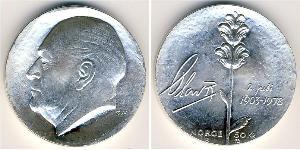

| Olav V of Norway (1903 - 1991) | Link to Wikipedia |
Olav V (1903–1991): History and Coinage
Welcome to a curated overview of one of Scandinavia's most resilient monarchs. Olav V was born in England but raised with the national pride essential for Norway's post-war independence, ascending to power as King after his father passed away from 1957 until his own death two decades later.
The Numismatic Portrait
Relationship to Coinage
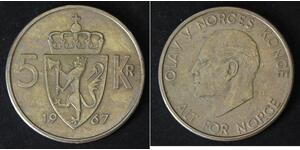
Norwegian currency during this era served not merely as a medium of exchange, but as portable symbols of state unity. During Olav's reign, the Royal Crown was depicted on official Kröner and lower denomination coins representing Norway's stable democracy following World War II.
The decision to place his portrait alongside national emblems reflected the constitutional shift from monarchical executive power to a representative role in 1957. His wife had died years prior, yet he remained King alone, making the solitary royal head prominent on state mints. These coins were issued consistently during the mid-20th century, marking his personal rule and serving as diplomatic tools when representing Norway abroad.
The historical circumstances surrounding this coinage are tied to the nation's recovery following exile in London before returning to liberated Oslo. The transition from emergency wartime currency designs to refined peacetime portraits mirrored Olav V's own journey from a military cadet to constitutional monarch.
The Collector’s Perspective
Why Collectors Value These Coins
- Coin enthusiasts appreciate these issues for their narrative of modern sovereignty and stability during the Cold War era.
- The distinctiveness lies in seeing how national identity was physically carried through daily commerce via coinage from London, Washington, or Oslo.
- Rarity is determined by minting quantities during high circulation years versus limited proof sets produced for foreign dignitaries or diplomatic missions.
Coin enthusiasts often seek these pieces not only to preserve metal but to safeguard a memory of peaceful leadership. The historical context is vital; collecting coins from the 1960s and 70s offers insight into Norway during its economic golden age, coinciding with his own interest in Olympic sailing where he claimed victory earlier.
In sum, seeking out coins featuring King Olav V provides a tangible link to Norway’s journey toward full sovereignty. Whether examining the design intricacies of circulated crowns from the late 1960s or exploring specialized editions released after his death in 1991, collectors hold fragments of history that celebrate peace and national pride without relying on imperial conquest.