| Mohammad Reza Pahlavi (1919-1980) | Link to Wikipedia |
Mohammad Reza Shah Pahlavi (1919–1980): History and Coinage
The Last Monarch of the Empire
Mohammad Reza Shah Pahlavi ruled Iran from his succession in 1941 until he was overthrown during the Revolution of 1979, leading into exile. Born to the first shah and a Georgian mother who migrated after territorial loss in the Caucasus, he ascended as Crown Prince young before becoming King at age twenty-four.
His governance focused on centralized power which modernized Iran significantly through infrastructure development, education reform initiatives, and defense industrial programs established alongside major oil investments that transformed GDP per capita substantially by 1970s standards despite social unrest growing toward the end of his reign. This era witnessed rapid economic growth from agrarian roots into an industrial nation capable of sustaining high military expenditures while implementing land redistribution for peasant populations across various rural regions.
The regime nationalized industries and redistributed lands in 1963 reforms that transformed society which later became central themes on circulating money as state assets were managed through the Consortium Agreement involving foreign powers who invested billions into construction projects before political turmoil halted production near his death. Reza Khan, his father, influenced him through strict discipline to instill order in society and command respect among subordinates which translated to state authority on currency.
Coinage Context
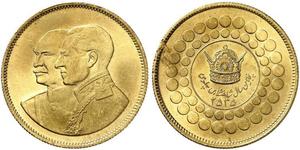
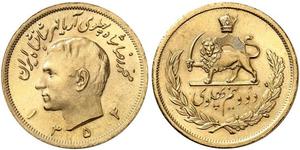
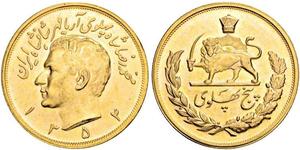
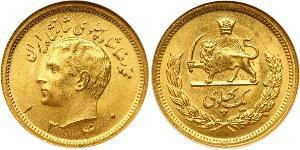
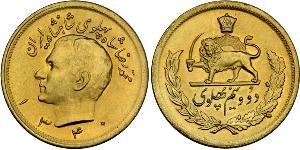
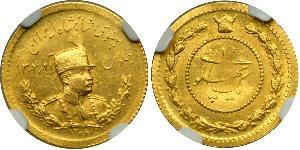
The Imperial State issued currency bearing his likeness primarily between the 1940s until 1979 to commemorate national stability, economic reforms known as White Revolution, and independence efforts following World War II geopolitical shifts. During his lifetime, mints produced bronze rials featuring his profile alongside architectural symbols or religious iconography appropriate to each era of design evolution before revolution.
The imagery transitioned from formal court attire as he assumed titles such as Shahanshah and Bozorg Arteshtaran (Grand Army Commander), visually reinforcing the narrative that state sovereignty resided in a strong, centralized leadership capable of defending national resources against foreign intervention. These metallic issues served not merely for commerce but displayed on denominations used in everyday transactions across Tehran to provincial markets.
Currency Significance
Nationalists and historians find value in these issues because they represent physical evidence of Iran's industrial expansion. As oil revenues flowed into the country to fund construction projects and infrastructure upgrades from 1950s onward, circulation increased significantly before political turmoil halted production near his death.
- The mid-century period introduced distinct iconography on denominations symbolizing foreign partnership with national entities under agreements like Consortium
- Late period issues display designs influenced by military attire reflecting focus on defense spending and regional stability against Cold War dynamics prior to 1979 overthrows
Collectors also appreciate the historical context provided by each series that documents the transition from monarchy to republic, making these coins a tangible link between economic policy decisions of the twentieth century.