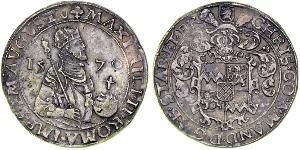
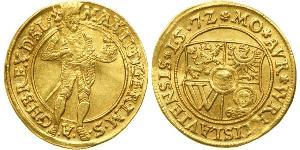
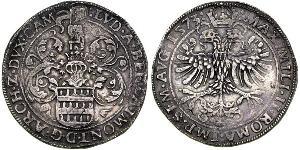
| Maximilian II, Holy Roman Emperor (1527- 1576) | Link to Wikipedia |
Maximilian II (1527–1576): History and Coinage
In the mid-sixteenth century, Maximilian II emerged as a stabilizing force within an increasingly fractured Europe. Born in Vienna to Ferdinand I and Princess Anne of Bohemia, he inherited responsibilities during a time when religious schism was reshaping political alliances. Unlike his cousin Philip II of Spain, who prioritized strict Catholic orthodoxy and military expansion, Maximillian cultivated a reputation for humanist tolerance. He maintained complex relationships with Protestant princes while navigating the ongoing Ottoman threat to Hungary.
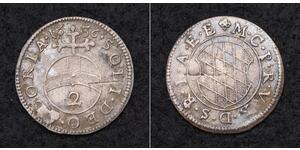
Coinage struck during his reign serves as material evidence of this balancing act prior to 1564 were often issued by vassals in anticipation of imperial succession, but upon ascending the throne he standardized currency circulation across German lands and Hungary. This shift reinforced economic unity through official minting operations that required royal assent.
Nuancing Imperial Power
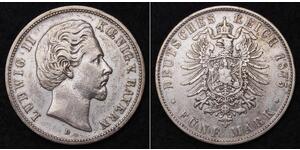
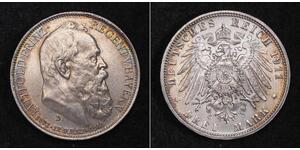
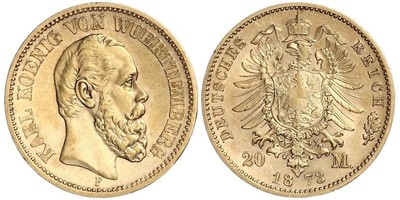
The Holy Roman Empire saw silver groats bear his portrait alongside imperial regalia signifying authority over contested religious territories. Austrian Territories produced local issues reflecting Vienna’s wealth and cultural renaissance under Habsburg patronage, with the mint output often showing greater artistic refinement than regional states.
- The Holy Roman Empire saw silver groats bear his portrait alongside imperial regalia signifying authority over contested religious territories.
- Austrian Territories produced local issues reflecting Vienna’s wealth and cultural renaissance under Habsburg patronage, with the mint output often showing greater artistic refinement than regional states.
The portraits on these coins evolved from stiff medieval styles to smoother Renaissance profiles mirroring Maximillian’s own support for arts and sciences. His court in Vienna was a hub where humanist scholars gathered and this intellectual climate permeated the artistic depictions stamped onto silver circulating throughout his domains.
The Collector’s Perspective
Coin enthusiasts find value not only in rarity but in the historical testimony preserved within their strikes. Pieces bearing his name connect collectors to a sovereign who faced significant challenges including denominational conflict and border invasions from external powers, making each artifact unique.
- Rarity: Early issues are often scarce preserving the transition between feudal minting systems and modern state control.
- Cultural Context: These artifacts reflect a European society transitioning toward confession specific identity while retaining imperial cohesion.
Possessing these coins invites reflection on how currency was used to maintain legitimacy during turbulent times. For the serious collector Maximillian’s issues offer an educational opportunity to understand diplomacy and finance intertwined in early modern history, bridging past empires with present day appreciation of numismatic art.