
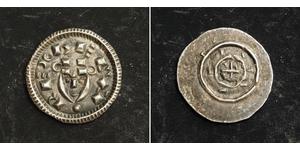
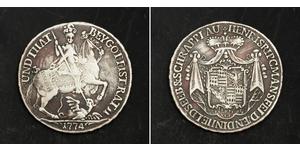
| Lothair I (795 -855) | Link to Wikipedia |
Lothair I (795 – 855): History and Coinage
Lothair I stands as a monumental figure in medieval history, serving as Emperor of the Carolingian Empire from his early years until his death at age sixty. As the eldest son of Louis the Pious and grandson of Charlemagne, he navigated complex family dynamics that ultimately fractured the vast Frankish dominions inherited by his father upon arrival.
The political upheavals involving rebellions against his father, civil wars with his brothers Pepin and Louis, and the eventual partitioning of the realm laid essential foundations for modern nation-states like France and Germany. His reign marked a critical transition in European history where centralized imperial power gave way to regional kingdoms. For collectors, understanding Lothair requires looking beyond dates to grasp how currency functioned as an instrument of imperial authority during this time.
Relationship to Coinage
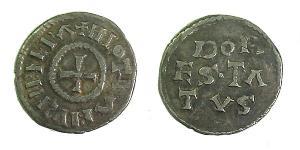
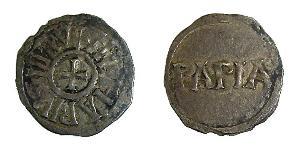
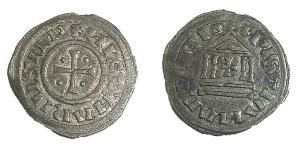
Coinage depicting Lothair I was issued primarily by the Carolingian chancery and various mints within his territories, particularly Italy after 843 and Middle Francia thereafter. These silver coins circulated widely across Europe in the ninth century.
During his lifetime, Lothair used coinage to assert legitimacy as a sole emperor while simultaneously defending himself against challenges from Charles the Bald and Louis the German. The imagery on these pieces evolved significantly following the Treaty of Verdun in 843.
Before this split, coins often displayed unified imperial iconography reflecting his authority over Italy or Aquitaine. After the division in 855 upon Lothair's death into three kingdoms including Middle Francia, posthumous issues were rare but sometimes minted by successors to maintain continuity with established dies he commissioned while ruling Lorraine.
This helps collectors trace the political fragmentation visible through metallurgy designs as money shifted from a unified standard to regional denominations that prefigure modern currencies. The transition of power after Charlemagne is best observed in these silver pieces showing royal portraits alongside imperial titles before his death at Prüm monastery.
Why Collectors Value These Coins
Enthusiasts value Lothair I coinage for its tangible connection to the end of the unified Frankish Empire. Rarity plays a significant role; because mints were local, survival rates vary based on wear and corrosion common in silver from this era.
The historical importance outweighs market fluctuations, making these pieces desirable for educational collections that trace state formation. Additionally, finding an authentic specimen bearing his portrait provides insight into the transition of power after Charlemagne's death and before Louis II took over Italy alone.
For serious collectors pursuing specialized medieval series, securing a piece associated with Lothair represents acquiring not just silver but numismatic records from a pivotal era in European political evolution that defined borders for centuries to follow. Collectors often seek these specimens as educational tools regarding early statehood and the dissolution of Carolingian unification.


