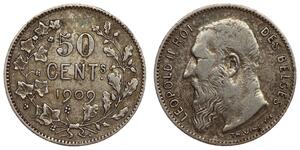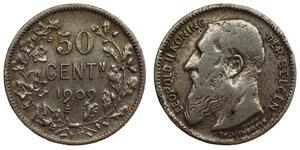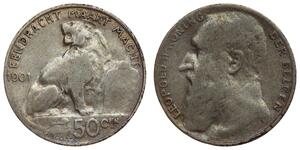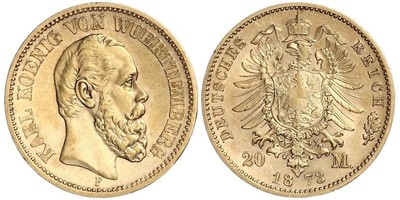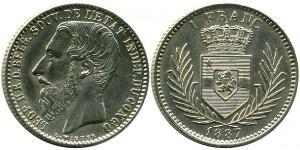
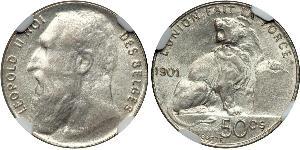
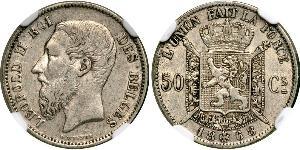
| Leopold II of Belgium(1835 - 1909) | Link to Wikipedia |
Leopold II (9 April 1835 – 17 December 1909): History and Coinage
Welcome to the gallery of our collection, where we explore a pivotal era in Belgian history through the tangible medium of currency. Leopold II stands as one of Europe's most influential monarchs during the late nineteenth century, ruling for forty-four years—the longest reign by any modern sovereign in Belgium. He is historically celebrated not merely as a ruler, but as an architect who industrialized his nation without natural resources at home.
Historically significant for transforming a small maritime kingdom into an international economic power through infrastructure development and colonial expansion, Leopold II's legacy shaped the geopolitical landscape of Africa and Europe. In the context of numismatics, he represents the transition in European coinage from allegorical figures to more personal portraits that emphasized national wealth and stability.
The Coinage Connection
In the 19th century, sovereigns often used currency as a medium for royal authority. During Leopold II's reign, Belgium issued gold coins, notably the twenty Franc Gold Crown, which were critical in establishing trust within international trade networks and stabilizing commerce across colonial markets.
While standard domestic circulation circulated with state symbols or earlier portraits of Charles V, his administration coincided with a shift toward showcasing national strength through monetary standards. He was depicted on various commemorative pieces that emphasized the connection between royal patronage and industrial progress—specifically focusing on steam-powered shipping and railway networks which were central to Belgian prosperity under his direction.
The coins of this era serve as tangible records of how a smaller European nation used financial leverage to expand its global influence. They are often found alongside artifacts related to the construction of major ports, illustrating Leopold II's dual role: king at home and private owner abroad during the Congo Free State period.
The Value for Collectors
Educational value is paramount when examining these pieces. Coins depicting this reign offer a glimpse into an epoch defined by rapid technological change in metallurgy and transport, mirroring his domestic reforms to provide social security and infrastructure development like public works and education.
- Rarity: High-grade examples often show specific die states that mark distinct periods of minting before standardization became more strict later on.
Collectors seeking historical context will find these pieces essential for understanding the era where Belgium rose to become a major commercial powerhouse, leveraging gold reserves from its territories and banking networks.
Closing Reflections
The study of this period's coinage allows us to connect with Leopold II as both modernizer and sovereign. For any numismatist interested in the history of empire or industrial growth during the 1800s, these coins are not just metal; they represent a moment when Belgium transitioned from regional politics to global trade dominance through the sheer scale of its gold production.