| Leo the Thracian (401-474) | Link to Wikipedia |
Leo I c. 401–474 AD: History and Coinage
Historical Significance of Leo the Thracian
Leo, born around 401 to a Thraco-Roman family in Dacia Aureliana, rose from military service within the ranks of comes rei militaris to become one of the most pivotal Eastern Roman emperors. His reign established significant precedents for both statecraft and religious integration that distinguished his rule as medievalized rather than purely ancient. Upon ascending the throne following Aspar's death in 457, Leo initially operated under a degree of military pressure but eventually demonstrated independent governance crucial to stabilizing the eastern half of the empire. A defining moment occurred during his coronation at Hagia Sophia when he deposited the crown before the altar, allowing the Patriarch to replace it upon exiting. This Christian ritual transformed imperial accession from ancient tradition into medieval ceremony, influencing courts across Europe for centuries thereafter.
Beyond religious symbolism, Leo was a legislator who shifted official administrative language toward Koine Greek rather than Late Latin, marking a cultural transition within the Eastern Empire. His political strategy included appointing Anthemius as Western emperor in 467 and attempting to reclaim Italian territories against Vandal threats through massive naval expeditions involving over one thousand ships in 468. Although these campaigns ultimately drained imperial resources due to logistical failures led by Basiliscus, they reinforced the East's focus on defending Constantinople’s formidable walls against Ostrogoth and Hun raids during a period of significant external pressure.
Relationship to Coinage
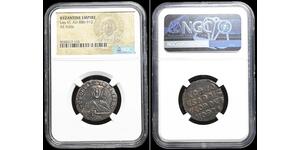
During his seventeen-year tenure, coin production remained centered in Constantinople with gold Solidi serving as the primary medium for imperial propaganda. These coins were minted primarily within his lifetime to validate his authority against rival factions and usurpers such as those led by Zeno following the elimination of Aspar’s influence. The portrait typically depicted Leo wearing traditional laurel wreaths or diadems, emphasizing continuity with Rome despite internal religious shifts.
The historical context for issuing these coins involved maintaining economic stability in an era when Western Europe was fragmenting under barbarian kingdoms while Eastern trade routes remained profitable enough to mint gold coinage. Although the Vandal expedition caused financial strain recorded by John the Lydian and Procopius, high-denomination currency circulated alongside denarii or solidi until later reigns standardized denominations further.
Why Collectors Value These Coins
- Rarity: Survival rates for fifth-century eastern gold are lower than sixth century Justinianic issues due to the volatility of post-Armenia wars and economic melting of silver stock.
- Historical Context: Collectors value these coins as tangible artifacts from a transitional era where Christianity merged with imperial tradition, offering educational insight into late antiquity.
- Cultural Transition: The evolution of imagery on the coin obverse helps numismatists understand how artistic styles shifted from classical realism to medieval stylization under his long reign.
Their possession allows enthusiasts to study imperial titulature changes and state resilience. For beginners exploring ancient history, these pieces provide a visual connection to the era when Constantinople solidified its role as a center of power distinct from Rome’s capital while preserving Roman legal traditions through coinage inscriptions that often featured Leo's Greek titles rather than Latin.