| Julius Caesar (100BC- 44 BC) | Link to Wikipedia |
Julius Caesar (100 BC – 44 BC): History and Coinage
Gaius Julius Caesar stands as a monumental figure in the annals of world history, serving as both statesman and general during the twilight of the Roman Republic. Born into an ancient patrician family, he rose through military command to conquer Gaul before challenging political rivals like Pompey in a brutal civil war. Following his victory in 45 BC, Caesar consolidated absolute power and began significant reforms, including extending citizenship to provinces outside Italy and reforming the calendar system used by Rome itself.
Historical sources note that he was assassinated on the Ides of March after being proclaimed dictator for life due to fears among senators. His death did not end his influence; instead, it triggered a new era where his image would be immortalized in metal currency rather than solely through political power during living tenure.
The Numismatic Footprint
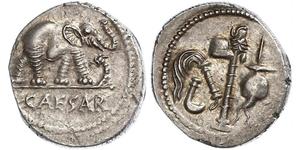
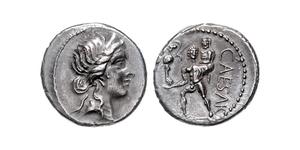
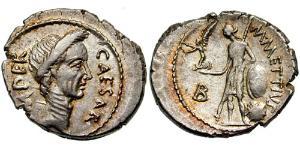
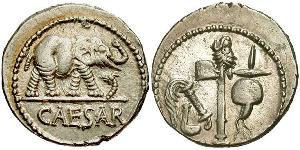
Coinage during Caesar’s lifetime is unique because he was never officially depicted in his living form. Ancient law prohibited portraying individuals as heads of state on standard denominations until the Imperial reforms initiated by his nephew, Octavian, who became Augustus. Consequently, coins minted while Caesar lived often featured generic symbols like Liberty rather than personal effigies.
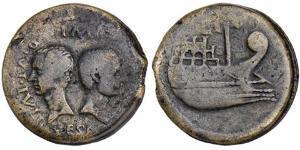
The numismatic record changes after 44 BC when Augustus officially deified him as Divus Julius. Imperial successors struck silver denarii bearing a portrait that utilized his likeness to claim divine ancestry for the ruling family. These portraits typically show Caesar in military attire with a laurel wreath, linking his battlefield victories directly to coinage.
- Minting Entities: Coins featuring Julius appeared primarily on Imperial issues minted by Augustus and subsequent emperors who sought divine legitimacy through this ancestral connection. While Republic-era coins remained headless in Rome, provincial mints sometimes circulated commemorative pieces honoring his victories later.
- Circumstances: The shift from symbolic imagery to personal portraits marked the birth of imperial iconography on currency. Collectors analyze these changes to understand how Caesar’s legacy was used by successors as political propaganda for unchallenged authority after his death in 45 BC and beyond.
The Collector's Appeal
Coin collectors are drawn to this period because it marks the precise transition from a Republic based on communal symbols to an Empire built on personal dynastic authority. The high historical value of these pieces makes them essential for understanding how political power was visually communicated through metal.
Rarity and artistic style further enhance their worth; surviving examples often display intricate detailing in armor work or laurel textures that define Imperial portraiture standards. For enthusiasts, a piece from this era is not merely monetary but historical evidence of the moment Rome became an empire by righting its coinage to mirror Caesar's deified status.