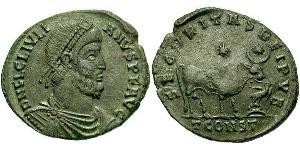
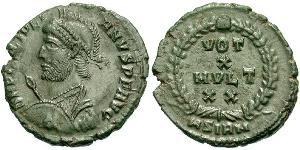
| Julian the Apostate (331-363) | Link to Wikipedia |
Julian the Apostate (331–363): History and Coinage
In the annals of late antiquity, Flavius Claudius Julianus stands as a singular figure who bridged an ancient pagan world with an emerging Christian empire.
Born into the imperial family yet surviving childhood purges that eliminated most of his relatives, he became known for challenging religious norms by 361. His brief reign serves as a critical chapter where traditional Roman polytheism faced extinction against rising Christian dominance. Understanding this emperor requires recognizing how his education in Athens shaped an intellect that sought to unite philosophy with imperial authority.
Relationship to Coinage
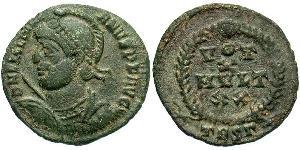
The currency issued during his rule is strictly tied to the Eastern and Western courts of Rome prior to their permanent division under Valentinian and Gratian following Julian's death. While he ruled for only twenty months, coins circulated widely across Gaul before moving east against Persia.
This campaign left a specific numismatic legacy in those regions specifically due to his presence there during the conflict with Sasanians. The iconography on these issues often displays classical artistic styles reminiscent of his Greek-speaking background rather than standard Christian imagery dominating contemporary minting practices under other emperors at that time.
This distinction makes them stand out from neighbors like Constantine who appear alongside different symbols in later periods, though Julian's portrait remains firmly pagan-oriented by design. The coinage was often struck to support his campaign legitimacy and promote the traditional Roman values he intended to restore over what he viewed as a failing bureaucracy.
Why Collectors Value These Coins
Collectors seek these specimens for several historical reasons beyond mere scarcity found in modern markets. They provide direct evidence of the tension between state religion and personal belief during a time when imperial succession was fragile after his fatal campaign at Samarra.
- Rarity: Because he ruled briefly before death, surviving specimens are naturally scarce compared to longer-reigning rulers like Constantine or Julian's nephew Jovian who struck coins for extended periods. Their presence in circulation is limited by the rapid end of his military career.
- Aesthetic Appeal: The pieces allow historians and enthusiasts to reconstruct the visual identity of Rome before it fully adopted a new theological standard under subsequent emperors like Valentinian I. They reflect classical artistry maintained during turbulent years.
- Ideological Context: Each piece connects tangible artifacts to the intellectual debates that shaped Europe's medieval landscape, offering insight into why an emperor would choose traditional gods over established faiths as public policy.
Their importance lies not just in value but because they connect a tangible artifact to the friction between established traditions and new theological dominance during this transitional era. Enthusiasts are encouraged to study these issues closely, noting how the reverse imagery shifts from standard military symbols toward philosophical references as his reign progresses.