Welcome

John III Sobieski (1629-1696)
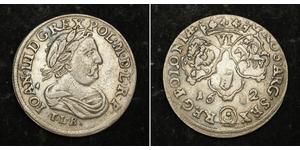
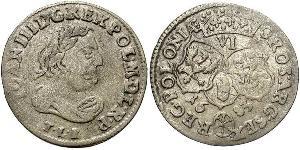
6 Grosh Polish-Lithuanian Commonwealth (1569-1795) Silver John III Sobieski (1629-1696)
6 Grosh Polish-Lithuanian Commonwealth ( ...
group has   2 coins / 1 prices
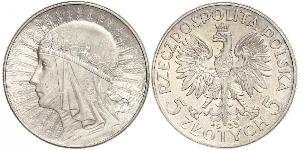
5 Zloty Second Polish Republic (1918 - 1939) Silver John III Sobieski (1629-1696)
5 Zloty Second Polish Republic (1918 - 1 ...
group has   26 coins / 21 prices
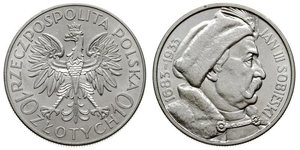
10 Zloty Poland / Second Polish Republic (1918 - 1939) Silver John III Sobieski (1629-1696)
10 Zloty Poland / Second Polish Republic ...
group has   28 coins / 24 prices
  John III Sobieski (1629-1696) Link to Wikipedia

John III Sobieski (1629–1696): History and Coinage

Welcome to the legacy of a central figure in early modern Central Europe. John III served as King of Poland from 1674 until his death, overseeing significant military victories that defined national identity for generations.

His youth was spent traveling through western nations where he learned languages and diplomacy before returning to serve during civil strife known as the Deluge. He demonstrated command prowess against both Swedish incursions and Tatar cavalry forces throughout central Poland.

Sovereign Currency

The political landscape of his time required robust monetary systems capable of funding prolonged defense campaigns. Official currency struck under royal decrees carried state authority through engraved imagery or monograms rather than allegory common in other European courts at the same period. During these years, production focused on silver denominations that circulated within trade networks connecting Poland to Western markets.

  • Coins were primarily issued during his active reign from 1674 onward
  • Issuance served to solidify loyalty among nobility and soldiers

Nominal Value And Significance

Collectors focus on these items because of their tangible connection to the defense budget that kept borders secure. The survival rate for high grade specimens remains low due to constant military demand which destroyed most circulation issues by mid-17th century standards relative to other nations.

  • Rare examples provide insight into mint techniques

Collecting Value And History

The importance of these coins lies not just in their metal content but the narrative they carry about leadership during crisis. The victory at Vienna is a historical fact often associated with his era which influences how historians view statecraft alongside economic policy.

  • Rarity drives educational curiosity among enthusiasts today
Each piece represents funding efforts required to stabilize an expanding empire amidst threats from the Ottomans and internal political factions that frequently challenged central authority.
 
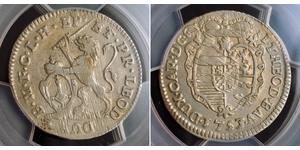
  1753,  Liege (Bishopric), Johann Theodor. Silver Double Escalin Coin. PCGS AU-53!  Mint Year: 1753 State: Bishopric of Liége (Belgium) References: KM-161 ($125 in XF!). Denomination: 2 Escali ...
Sold for: $132.0
1753, Liege (Bishopric), Johann Theodor. Silver Double Escalin Coin. PCGS AU-53! Mint Year: 1753 State: Bishopric of Liége (Belgium) References: KM-161 ($125 in XF!). Denomination: 2 Escali ...
 
  1682, Poland, John III Sobieski. Silver 6 Groszy (6 Groschen) Coin. aXF!    Mint Year: 1682 Reference: KM-128. Mint Place: Ujazdow  Condition: About XF! Denomination: VI (6) Groszy  Mint Maas ...
Sold for: $74.0
1682, Poland, John III Sobieski. Silver 6 Groszy (6 Groschen) Coin. aXF! Mint Year: 1682 Reference: KM-128. Mint Place: Ujazdow Condition: About XF! Denomination: VI (6) Groszy Mint Maas ...
 
 
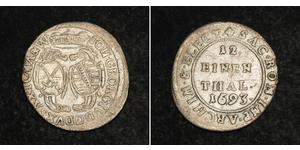
   1693, Saxony, John George III. Silver 1/12 Thaler (Doppelgroschen) Coin. VF+  Condition: VF+  Mint Year: 1693  Reference: KM-638.  Denomination: 1/24 Thaler (Doppelgroschen) - Death of Joh ...
Sold for: $18.0
1693, Saxony, John George III. Silver 1/12 Thaler (Doppelgroschen) Coin. VF+ Condition: VF+ Mint Year: 1693 Reference: KM-638. Denomination: 1/24 Thaler (Doppelgroschen) - Death of Joh ...
Help Lucky Coin to classify coins! Do both pictures represent the same coin?
|