| Jean, Grand Duke of Luxembourg (1921 - ) | Link to Wikipedia |
Jean, Grand Duke of Luxembourg 1921–2019: Life and Coinage
In the narrative of European royalty during the twentieth century, Jean stands as a figure who bridged tradition with modernity. Born on January 5, 1921, he became Grand Duke upon his mother’s abdication in November 1964 at just forty-three years old. His thirty-six-year reign oversaw Luxembourg’s metamorphosis from an industrial contributor into a pivotal international financial centre and the cornerstone of European economic unity.
The Man Behind the Portrait
Jean was not merely a figurehead but a stabilizing force during turbulent times. His childhood included exile in New York when Germany occupied the Grand Duchy, followed by active service with the Irish Guards to liberate his homeland from occupation forces in 1944. This military background contrasted sharply with his role as head of state under a semi-parliamentary system known for its stability and neutrality.
The marriage alliance with Belgium’s Princess Joséphine-Charlotte ended decades-old tensions between the two nations, fostering regional harmony that reflected on Luxembourg's diplomatic standing throughout the Cold War era. When he abdicated in 2000 to allow his son Henri to reign over a modernized state, Jean remained an active elder statesman until passing away at age ninety-eight in April 2019.
Coinage and Currency
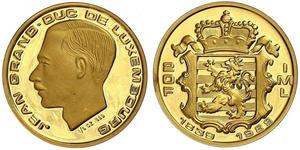
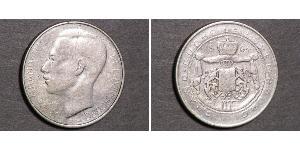
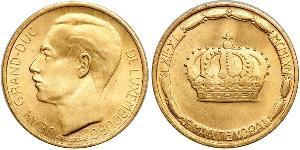
During the latter half of the twentieth century, Luxembourg introduced its own currency systems that bore his image to establish national identity within the European context. The Grand Duke appeared on standard circulation coins during periods when independent national identities were emphasized before full monetary integration.
- Circulation Issues: His portrait featured prominently on gold and silver florins from 1964 until the transition to decimalization in subsequent years, marking his era of sovereignty. The minting process served as an annual declaration of continuity for Luxembourg’s independence.
- The Euro Transition: Following the monetary union, Jean was commemorated through special issues honoring the Grand Duchy before he stepped down and after. While national coinage shifted to generic designs upon his abdication, legacy pieces remain popular among specialists in modern European numismatics.
Nuance for Collectors
Coin collectors often seek these issues not solely for their face value but as tangible links to a monarch who navigated the transition from wartime exile to prosperity. High relief portraits on commemorative strikes provide educational insight into Luxembourg’s industrial and financial growth during his tenure.
Rarity is determined by mintage limits rather than condition alone, making posthumous issues particularly interesting for those studying European monetary history. Exploring coins bearing Jean allows a collector to understand the specific period of prosperity known as the "Golden Age" of Luxembourg's economy before full Euro adoption in 2002.