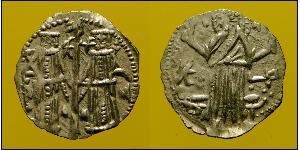
| Ivan Alexander (1331 - 1371) | Link to Wikipedia |
Ivan Alexander of Bulgaria (? – 1371): History and Coinage
Ivan Alexander Asen, also known as John Alexander in Latin sources, served as the Emperor (Tsar) of the Second Bulgarian Empire from 1331 until his death on February 17, 1371. His reign represents a complex and transitional chapter in medieval Eastern Europe, occurring during a time when regional powers were vying for dominance amidst shifting alliances with Byzantium and Serbia.
The early years of Ivan Alexander’s rule were characterized by political instability that necessitated significant military campaigning to secure his throne against conspirators. By consolidating authority over key territories like Lovech and Tarnovo, he briefly restored the empire's integrity following a period of civil war in Byzantium where Bulgaria had intervened diplomatically. However, as Ottoman expansion gained momentum and internal succession struggles intensified after 1356, the state was forced into division to manage its decline. This era marked the gradual loss of independence for one of medieval Europe’s prominent Slavic kingdoms before it fell entirely under Turkish suzerainty.
The Emperor on Metal Money
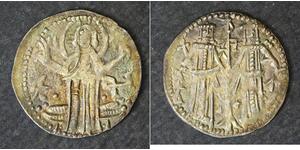
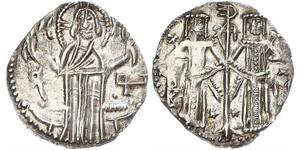
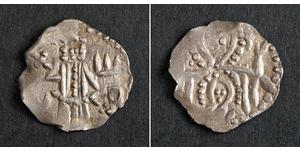
During his lifetime and shortly after, official coinage circulated throughout Thrace, Vidin, and Tarnovo. In the absence of modern banks or paper currency, metal coins were essential for state taxation and trade with Western Europe, Byzantium, and Hungary.
- Purpose: The portrait or name on a medieval coin was less about aesthetics and more about asserting imperial legitimacy against Ottoman threats.
- Minting Context: These pieces were produced under the oversight of ecclesiastical authorities, reflecting the strong influence of Orthodoxy in daily life during this crisis-ridden era.
Collectors recognize that these issues are historical artifacts rather than high-volume currency. The depiction on metal was often a claim to divine right and stability when Ivan Alexander faced military defeat against Hungarian forces or incursions by the Turks. Consequently, finding such pieces today offers tangible evidence of his struggle to maintain sovereignty during chaotic times.
The Value for Collectors
While many medieval coins were worn heavy over time due to their use in commerce, those depicting Ivan Alexander hold significance because they bridge a gap between Byzantine and Ottoman numismatics. Their artistic quality reflects the unique transition from traditional imperial iconography toward regional styles prevalent among Slavic peoples.
Enthusiasts are drawn not merely by rarity but by the context of possession; these items represent the final days before total conquest in 1396, marking a specific moment when Bulgaria was still an active political entity. Understanding why Ivan Alexander divided his sons and how this weakened defenses helps explain the scarcity or survival rates associated with coinage from that precise window. For any historian interested in pre-modern statecraft, acquiring such items provides direct access to the economic reality of 14th-century warfare and diplomacy.