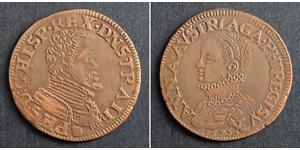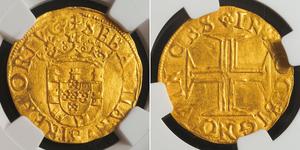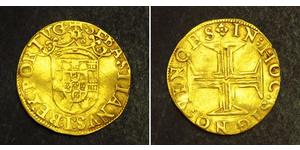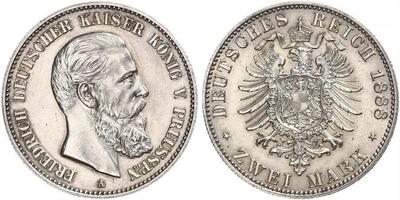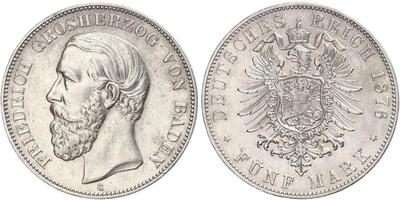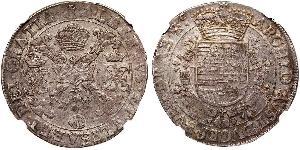
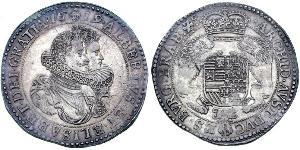
| Isabella Clara Eugenia (1566 -1633) | Link to Wikipedia |
Isabella Clara Eugenia (1566–1633): History and Coinage
In the grand tapestry of early modern Europe, few figures illuminate their era as brightly as Isabella Clara Eugenia. Born in 1566 to King Philip II of Spain, she ascended to a position that defied convention: joint sovereignty over the Habsburg Netherlands and Burgundy from 1598 until her death three decades later. Her reign coincided with what historians call the Golden Age of the Low Countries, characterized by economic revival and artistic flourishing following peace with the Dutch Republic.
Beyond her political acumen as a ruler who governed during tumultuous times involving France and England, Isabella stands out for challenging gender norms of her time. To encounter a coin bearing Isabella’s image is to hold a piece of diplomatic history that validates female authority within male-dominated spheres. As an Infanta and later Archduchess ruling jointly with her husband, Albert VII, her portrait appeared on currency minted specifically within the Spanish Netherlands territories.
During this era, coinage served to legitimize authority in volatile regions prone to rebellion and foreign interference. While male sovereigns dominated standard circulating media, Isabella’s inclusion highlights a specific window of power dynamics where women were recognized as capable governors rather than mere figureshead consorts. Collectors often examine these pieces alongside broader collections from the Spanish monarchy's Low Countries branch to understand how her legacy was preserved through monetary policy.
Rarity and Historical Resonance
The allure for collectors extends beyond scarcity to narrative depth regarding their provenance and design. Coins featuring Isabella represent a rare instance where a ruling queen is depicted with authority comparable to her male counterparts during this specific geopolitical timeframe. The artistic style aligns with the Baroque trends she patronized, showcasing high craftsmanship typical of Brussels courts that rivaled Madrid.
- Rarity: Female depictions in Habsburg coinage are notably less common than those of Philip II or Albert alone, making preservation difficult.
- Artistic Merit: The engravings often reflect the sophisticated artistic standards promoted during her administration.
- Historical Context: They connect enthusiasts directly to treaties involving European powers and internal stability issues of the Low Countries.
Possessing these coins allows history buffs to touch a legacy where art, diplomacy, and money converged uniquely. For the serious collector of early modern European numismatics, Isabella Clara Eugenia offers unique insight into how women navigated power in an era predominantly shaped by kings.