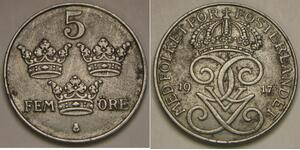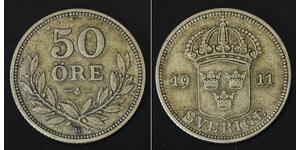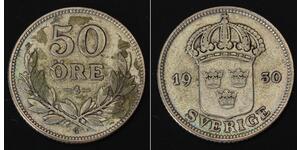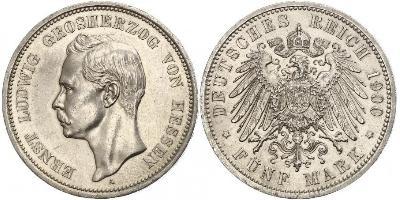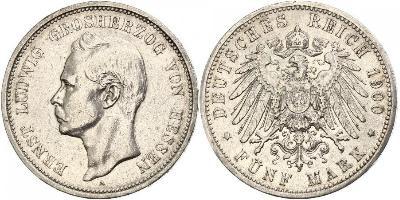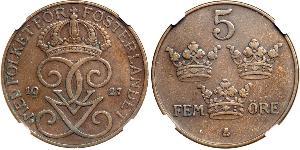
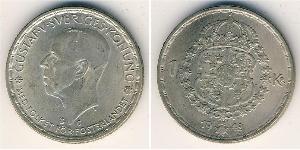
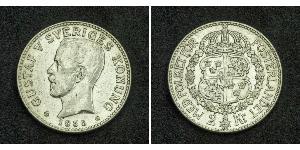
| Gustaf V of Sweden (1858 - 1950) | Link to Wikipedia |
Gustaf V (1858–1950): History and Coinage
Introduction
Gustav V stands as a pivotal figure in Swedish history, reigning from 1907 until his death at the age of ninety-two. He was the fifth monarch of Sweden's House of Bernadotte, marking an era defined by profound political transition and longevity. During his thirty-five years on the throne following Oscar II, Gustav navigated Sweden away from its near-autocratic roots toward modern parliamentary democracy. This transformation began under pressure from the Riksdag after 1917, when Liberal-Social Democratic coalitions stripped the monarchy of direct governance power while retaining royal symbols until 1974. Beyond his political role, he is remembered for presiding over the 1912 Olympic Games and representing Sweden in international sport before World War I.
Relationship to Coinage
The portrait of Gustaf V became synonymous with Swedish currency throughout most of the twentieth century. Coins depicting his image were issued by the Riksbank (Swedish Central Bank) and minted from 1907 through posthumous issues, often featuring him alongside national landmarks or Olympic themes during the early years. His reign coincided with significant technological shifts in coinage production, moving toward decimalization and changing metal compositions to reflect wartime economies after World War II.
The decision to place his likeness on currency reflected two main circumstances: maintaining continuity of state authority under a constitutional shift where he served as head of state but not government. Although wearing no crown during coronation ceremonies which ended the practice for good, coins often utilized laurel wreaths and civic imagery rather than regalia. The numismatic legacy from 1928 to 1945 captures Sweden's neutrality during two global conflicts while adhering strictly to parliamentary rule over internal matters.
Why Collectors Value These Coins
Collectors are drawn to these issues for their historical weight and artistic evolution. Because he was the longest-serving monarch of his era, a wide variety of denominations exist from silver coins in peace time down to base metal issues during wartime shortages which have survived less frequently.
- The portrait depicts him as an elder statesman reflecting his transition into civic figurehead status over decades.
- Circulation pieces feature artistic designs by notable engravers capturing the shift from monarchical prestige to republican style elements.
Possession of coins depicting Gustav V offers insight into Sweden's modernization process, making them valuable artifacts for understanding how a monarchy adapted through rapid societal changes. While market value varies based on condition and rarity errors like overstrikes or mint mistakes during the interwar years, their primary worth to numismatists lies in connecting metal fragments of history with specific events such as neutrality debates or Olympic celebrations.