
| Gordian II (192-238) | Link to Wikipedia |
Gordian II (c. 192 – AD 238): History and Coinage
Marcus Antonius Gordianus Sempronianus Romanus, known historically as Gordian II, occupies a tragic place in the annals of imperial Rome. His brief tenure occurred during the chaotic Year of Six Emperors, when political instability threatened to tear the empire apart from within and without. Appointed alongside his father, Gordian I, their leadership represented an attempt by the Roman Senate to restore stability against the unpopulartur rule of Maximinus Thrax. As a former senator turned military commander in Africa Proconsularis, he embodies the final gasp of aristocratic resistance before martial usurpers permanently seized control.
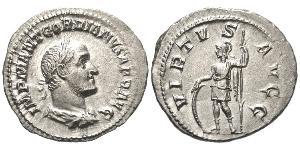
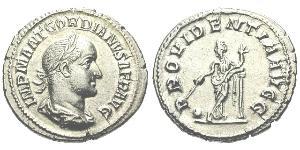
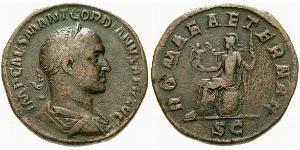
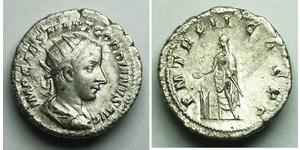
The numismatic record from this period is sparse but compelling for specialists and historians alike. Coinage depicting Gordian II was struck rapidly following his acclamation by African legions during the revolt in AD 238. These issues were primarily minted at Carthage rather than Rome, reflecting a decentralized authority where provincial governors acted independently to legitimize their allegiance to the Senate against Maximinus Thrax. Since he perished at the Battle of Carthage alongside his father shortly after being hailed as Augustus by local soldiers, no extensive portrait series circulated beyond this brief window. Consequently, surviving examples often appear in conjunction with issues from his predecessor or brother figures involved in the same uprising.
Why Collectors Value These Coins
Gordian II coins hold a unique allure within specialized collections of late Roman imperial coinage due to their rarity and historical resonance. For numismatists, these pieces serve as tangible evidence of how quickly political tides could turn in the third century. A mint issue that took months or years elsewhere might only exist for weeks in Africa before Gordian II was slain by Maximinus Thrax's forces.
The scarcity associated with his sudden death makes them particularly desirable to collectors focused on historical anomalies and rebellious coinage sets found during this era. The reverse designs often feature military motifs, emphasizing the martial desperation of the revolt. Additionally, these pieces are frequently sought after those studying senatorial propaganda; Gordian II’s image served as a declaration that legitimate authority belonged not just to an emperor born in Italy, but could be claimed by traditional Roman aristocrats like himself who fought for their perceived moral standing.
This coinage acts more than mere currency; it is a testament to the dramatic collapse of order. For any collection featuring late third-century antiquity, securing even one example helps bridge the narrative between the principate’s golden age and its eventual fragmentation into military dictatorship under Diocletian centuries later.


