| George II, Prince of Waldeck and Pyrmont | Link to Wikipedia |
George II (1789–1845): History and Coinage
The reign of George II, Prince of Waldeck and Pyrmont, serves as a fascinating case study for understanding numismatics within small German states prior to national unification. Born in 1789 into the main Pyrmont line of an ancient House of Waldeck, he ascended to power following the conclusion of major European conflicts that reshaped central Europe’s political map.
Ruling from 1813 until his death in 1845, George oversaw a principality located along the Weser and Lippe rivers. His tenure spanned significant diplomatic shifts under the Vienna Congress settlement era where many small German territories secured stability after Napoleonic occupation. This geopolitical calm allowed for economic recovery and local minting operations to resume full capacity after decades of disruption from foreign armies.
The Sovereign on Silver
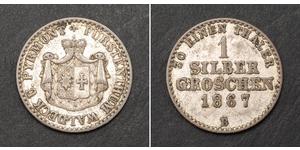
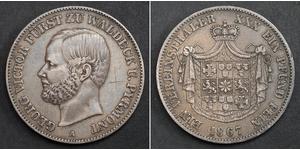
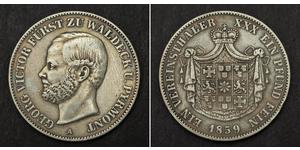
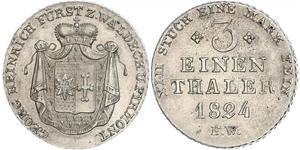
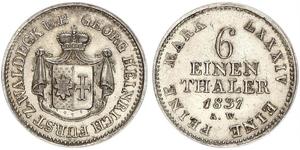
Currency served as a primary tool for asserting sovereignty within his principality, despite its small territorial footprint relative to major empires. George appeared frequently upon thalers and smaller denominations struck at local mints in Rhoden or Schaumburg during the early Victorian era of coinage.
The decision to feature Prince George on these issues was a standard practice for minor German sovereigns aiming to maintain distinct identity within trade networks that spanned Hanover, Prussia, and Hesse. Collectors often find portraits rendered in silver with detailed hair textures typical of the early nineteenth century aesthetic, while copper pieces were reserved for lower-value commerce transactions.
The Collector's Perspective
For enthusiasts exploring regional German history, coins from this period offer insight into how small powers managed independence before losing autonomy to larger federations in later decades. The scarcity of high-grade specimens often arises not just from age but from the limited production runs typical for minor states that prioritized circulating trade currency over large denominational hoards.
The decision to collect these pieces allows one to physically examine a piece of history tied directly to local governance rather than imperial propaganda found in larger mints. Understanding the specific historical context surrounding George II helps collectors appreciate why certain dies show variations or wear consistent with their active use period before being superseded by standardization later in his reign.