

| Faustina I (105-141) | Link to Wikipedia |
Annia Galeria Faustina the Elder (c. 100–140): History and Coinage
Welcome to a deeper exploration of one of antiquity’s most celebrated imperial figures, Annia Galeria Faustina the Elder. Known affectionately as Faustina I within the historical record, she serves not merely as a political spouse but as a symbol of domestic harmony during the Roman Principate. Her life spanned an era defined by stability under Antoninus Pius and marked profound transition following Hadrian’s death.
The Empress and Imperial Legacy
Faustina entered history not only as a mother to future emperors Lucius Verus and Marcus Aurelius but also for her tangible devotion to public welfare. Before ascending the throne, she was noted for charitable works toward Roman children and the needy. When Antoninus Pius acceded in 138 A.D., his new wife became Augusta without immediate relocation outside Italy. This residence pattern reinforced a distinct image of domestic peace that contrasted with the military-focused imagery of previous dynasties.
Faustina died early in her husband’s principate near Rome, yet her influence persisted immediately after she was passed from mortal life to divine status by the Senate. She remained prominent enough for coins struck years later to honor her memory specifically through gold issues that highlighted her association with agricultural goddesses like Ceres.
The Art on Bronze and Silver
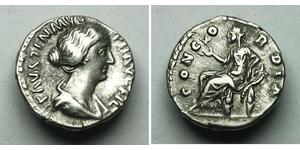
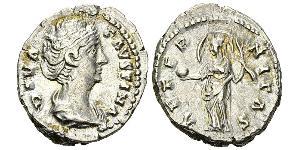
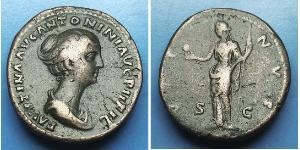
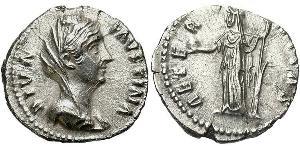
Numerous states issued coinage bearing her portrait, ranging from imperial Rome to distant provinces like Delphi or Alexandria. Initially struck in silver during her reign as Augusta, portraits were later augmented with gold after the state authorized her deification shortly following her death in 140 A.D. The transition was deliberate; Antoninus Pius sought to immortalize his wife by having the Senate declare her a Diva.
- Roman Forum: She became the first empress granted permanent commemoration within the capital’s central civic space via dedicated temple columns and statues authorized for display in the circus on carriages drawn by elephants or horses. Provincial honors included cities like Ephesus, where couriers adopted her name as a corporate identity.
- Mints of Delphi, Bostra, and Nicopolis: These locations produced distinctive issues featuring legends such as Diva Faustina. The imagery evolved from crowned veiled profiles to cult images seated on thrones holding tall staffs that may reference the torch-bearing Ceres motif found in earlier aurei.
Significance for Modern Collectors
The value Faustina brings to a private cabinet is multifaceted. Her portraits offer an artistic study of imperial idealization, particularly regarding her distinctive hairstyle copied by subsequent generations and displayed in marble busts found across the empire today. For collectors specializing in ancient Roman currency, these issues represent a unique connection between social welfare history and numismatic art.
Coinage from this period often highlights imagery associated with charity rather than military conquest, providing insight into how emperors curated public perception of female power. The survival of coins featuring Faustina offers tangible evidence of her posthumous cult, which remained active through the reigns of Antoninus and his successors.
To examine these issues is to hold a piece of Roman social history in hand, bridging the gap between high imperial propaganda and the daily lives governed by such benevolent symbolism. Whether seeking specific city-mint variants or examples illustrating her connection to Ceres on aurei, this coinage remains essential for any comprehensive collection dedicated to understanding Flavian-Nerva-Antonine continuity.