| Charles X of France (1757-1836) | Link to Wikipedia |
Charles X of France (October 9, 1757 – November 6, 1836): History and Coinage
King Charles X represents the final chapter for the senior branch of the House of Bourbon before a republican shift redefined French governance. Born at Versailles on October 9, 1757, he was raised after becoming an orphan at nine following his father's death in smallpox and later tuberculosis affecting his mother. As the younger brother to former kings Louis XVI and Louis XVIII, Charles served as a staunch supporter of absolute monarchy during times when constitutional reform became necessary for survival.
The Reign and Political Landscape
His historical significance is deeply intertwined with political conflict regarding religious liberty and civil rights granted by the Charter. After gaining influence following the assassination of his son, Charles Ferdinand in 1820, he succeeded Louis XVIII upon death in 1824 to lead the ultra-royalists. During this short period from September 16, 1824 until August 2, 1830, he attempted to revive traditional royal practices while governing a fractured state facing liberal opposition and domestic unrest over feudal restitution policies.
The monarch died in exile at Gorizia after being forced into abdication by the July Revolution of 1830. His reign marked an era where currency served as propaganda for absolute monarchy against rising democratic sentiments, contrasting sharply with his brother's earlier constitutional compromises.
Relationship to Coinage
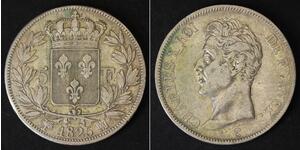
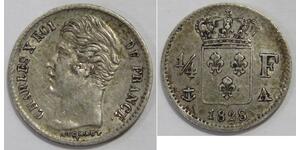
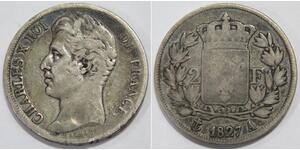
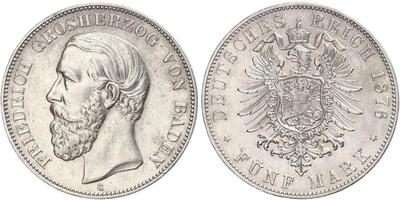
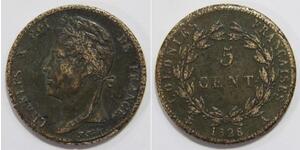
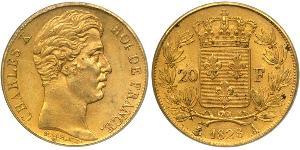
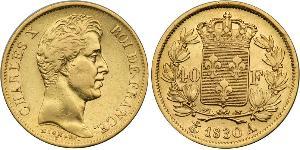
The royal mints in Paris issued coins depicting Charles X during his tenure from 1824 until the political upheaval of 1830. These pieces primarily included silver écus and copper francs bearing standard Bourbon portraiture that emphasized piety and divine right following restoration turmoil.
- The effigies were often minted by state sculptors aiming for conservative legitimacy rather than revolutionary style.
- Circulation ceased quickly after 1830 when Louis Philippe I replaced him, altering the heraldry entirely on subsequent issues of French currency.
This abrupt end to production meant many coins depict a regime that vanished within weeks of their final minting run. Collectors analyze these items for clues about state authority during times of intense social tension between liberal majority deputies and conservative administration.
Why Collectors Value These Coins
- Pieces feature artistic designs contrasting the Neoclassical style of Louis XVI's era with a more rigid aesthetic appropriate for an ultra-royalist leader seeking to restore traditional order.
- Holding these coins connects enthusiasts directly to the narrative of conservative resistance against liberal reforms, providing educational context often missing from market-focused appraisals.
Such artifacts serve as historical witnesses where metal meets memory. By examining these issues, one understands how currency functioned as a tool for maintaining order amidst chaos during the Restoration period. For those assembling French monarchial collections, Charles' era represents the boundary between absolute tradition and modern constitutionalism before the Orleans branch took over.