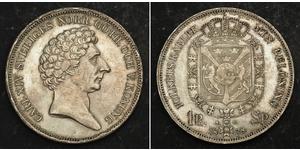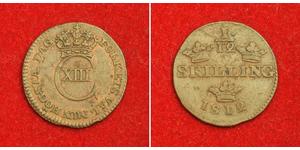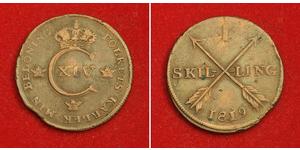
| Charles XIV John of Sweden and Norway (1763-1844) | Link to Wikipedia |
Charles XIV John of Sweden (1763–1844): History and Coinage
Jean-Baptiste Jules Bernadotte stands as a unique figure in European history, bridging the turbulent era of Napoleon with the restoration monarchy period originally rising through the ranks to become Marshal under Bonaparte during French Revolutionary Wars. He remained unknown outside France until his election as Crown Prince of Sweden in 1809 due to advocacy by Baron Carl Otto Mörner who supported him over a childless heir apparent.
Upon accession in 1818 following Charles XIII's death, King Charles John transformed Sweden from a warring state into one defined by stability and neutrality. He ruled until his death nearly three decades later presiding over an era that secured Norway within the union despite initial conflict during his reign which ended only after almost fifty years of peace in 1905 following its dissolution.
The Numismatic Legacy
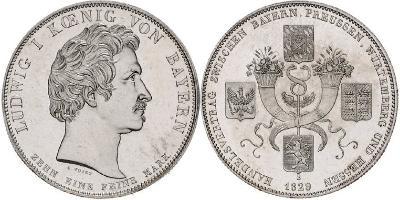
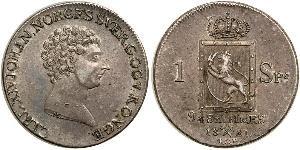
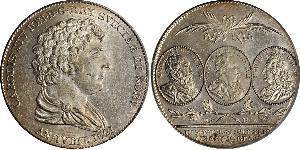
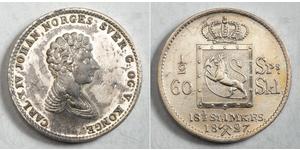
During his long reign as King of Sweden-Norway, royal mints produced currency bearing his likeness or title "Charles John." His early French military career means numismatics enthusiasts sometimes find coins reflecting this duality in auction markets where foreign service medals appear alongside sovereign coinage. Post-1813 campaigns saw him on Allied issues before adoption of Swedish identity fully cemented the portrait style, transitioning from revolutionary iconography to Northern European monarchical portraits.
This shift allowed collectors to observe distinct artistic changes as engravers adapted Bernadotte's visage for different regions under his rule. Coins issued during this period were essential for proving legitimacy and projecting power in a fragmented post-Napoleonic world. The imagery evolved from military uniforms suited for Marshal of France contexts to the traditional regal garb expected by Stockholm citizens.
The Collector's Perspective
Collectors seek these pieces for their historical narrative connection between France and Scandinavia representing geopolitical shifts across Northern Europe. The artistic quality captures early 19th-century portraiture evolution while preserving records of a union that lasted until the peaceful dissolution in 1905.
- Historical Context: Coins featuring the Bernadotte provide insight into Swedish-Norwegian political identity formation during his reign over thirty-five years total including earlier status as Prince Regent or Marshal of France. Their design evolution mirrors shift from French influence to nationalistic sovereignty throughout Europe.
- Ceremonial Value: These often mark significant dates like coronations or treaty signings within metal composition, making them desirable for specialized numismatic collections focusing on European royal unions during the 19th century transition period into modern states. Collectors also value items that showcase how a Marshal became King.