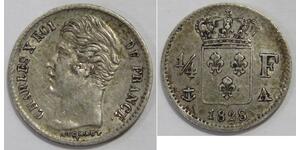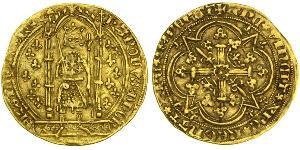
| Charles V of France (1338 - 1380) | Link to Wikipedia |
Charles V of France (21 January 1338 – 16 September 1380): History and Coinage
The reign of Charles the Wise represents a pivotal transition in French history, marking one of the dynasty's highest points before the fall of Paris to English forces. Rising from regent status after his father was captured at Poitiers, he managed severe internal rebellions led by nobility and peasants alike without succumbing to instability or loss of sovereignty. His primary achievement was reversing military setbacks during the Hundred Years' War and reclaiming lost territories through strategic leadership rather than sheer force alone.
The Numismatic Legacy
As ruler, Charles sought to modernize financial administration alongside military reform. Before his ascension in 1364, French currency often suffered from debasement or lack of uniformity due to economic strain following the ransom payments required for King John II's liberation. By replenishing the royal treasury and establishing a permanent standing army funded through regular taxation rather than feudal levies, he created fiscal stability conducive to consistent minting practices.
Coins bearing Charles' name appear as deniers or tournois issued during his rule under both Dauphin and King titles while still holding regnal power. These pieces feature heraldic symbols of the House of Valois rather than elaborate portraiture typical of later European monarchs, yet they signify a crucial shift toward centralized fiscal control. The transition from feudal chaos to structured state revenue is physically recorded on these artifacts.
The Appeal for Collectors
While rare high-grade specimens are difficult to find due to the era's production methods and subsequent circulation wear, enthusiasts value this numismatic group primarily for historical narrative rather than rarity or market value. These coins allow collectors to study how financial recovery paralleled military victory during a prolonged conflict.
- The pieces connect directly to the stabilization of the economy preceding modern monarchy structures.
For those exploring medieval European minting traditions, these examples provide context for understanding the evolution from purely feudal economics to state-managed finance systems that would define later centuries. Collectors are often drawn by the educational connection between art history and economic policy preserved in metal form during this critical time period.