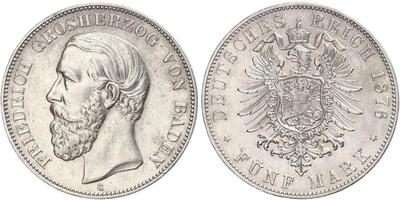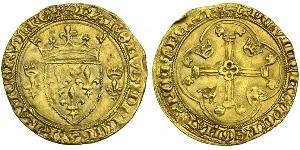
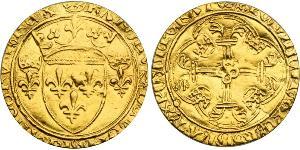
| Charles VII of France (1403 - 1461) | Link to Wikipedia |
Charles VII (1403–1461): History and Coinage
In medieval history, few monarchs achieved a transformation as profound as Charles the Victorious of France. Born into a realm fractured by civil war between the Armagnacs and Burgundians, his early reign was defined not just by military conflict but by a desperate struggle for legitimacy against English claims to the throne.
The historical narrative surrounding Charles illustrates why he became an enduring figure in royal portraiture on currency. After being disinherited under the Treaty of Troyes in 1420, much of northern France was controlled by England and Burgundy. Consequently, coinage issued before his coronation at Reims Cathedral in 1429 reflected a fragmented kingdom often labeled the "Kingdom of Bourges". The recovery of Paris in 1436 following the signing of the Treaty of Arras marked a pivotal shift from exile to established monarchy. This restoration allowed mints outside English lines—such as those around Poitiers and Rouen—to resume production under royal authority.
The relationship between this monarch and his currency is rooted in stability. A sovereign with professional armies required reliable funding, making the standardization of coinage a political necessity rather than mere artistry. The depiction of Charles on later issues symbolizes the end of the Hundred Years' War, culminating after 1453 when England lost all its continental possessions except Calais.
The Numismatic Legacy
Minting practice during his rule reflects the dramatic geopolitical shift he engineered. Early in his reign, currency was scarce and fragmented due to English control over northern mints. Once Charles secured Reims for coronation with Joan of Arc’s aid, royal authority re-established itself across southern France.
Coinage shifted from emergency issues under French occupation regimes back to standardized Valois denominations like the denier blanc or écu d'or. This restoration was not merely economic; it symbolized sovereignty reclaimed by blood and steel rather than diplomatic treaties alone. As peace settled over Normandy after 1436, mints resumed steady operations.
The Collector's Perspective
Coin enthusiasts seek these pieces for their narrative weight within the context of national identity formation in late medieval Europe. Collectors value the transition from military struggle to established rule visible in metal and ink design changes found across mint regions like Rouen or Paris.
- Rarity is enhanced by early issues where authority was still fragile
- The portrait often depicts an evolving style as he aged from youth to kinghood, reflecting political consolidation
- Finding a piece struck after 1453 offers physical proof of the era that ended major English incursions into France
In specialized collections focusing on Valois monarchy or medieval history, these coins serve as tangible evidence of how Charles VII successfully reformed his state infrastructure. For those examining French currency from this period, understanding this biography provides context for why specific denominations survived the chaotic years while others did not.