| Charles III Prince of Monaco (1818-1889) | Link to Wikipedia |
Charles III (8 December 1818 – 10 September 1889): History and Coinage
In the mid-nineteenth century, Monaco faced a precarious economic reality following territorial concessions. As Hereditary Prince from 1856 until his death in 1889, Charles III navigated significant political changes where Menton and Roquebrune were ceded to France.
The most enduring aspect of his legacy is the establishment of Monte Carlo Casino in 1863. Originally named Mount Charles after its founder, the site transformed Monaco from an impoverished microstate into a European gaming capital. While he established businesses to manage this venture during a time when cash flow was dire for the House of Grimaldi, it remains his most famous achievement.
The Prince on Metal
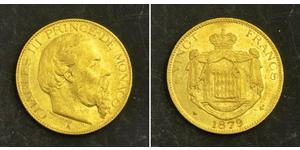
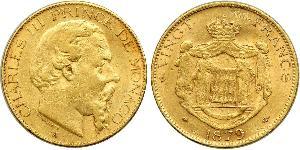
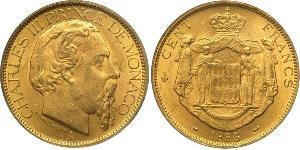
Coinage featuring Charles III serves primarily as commemorative numismatics rather than general circulation currency. The image connects a sovereign's visage to the economic engine he built through gambling infrastructure and diplomacy during a turbulent European era of shifting alliances and treaties.
Most specimens honoring him were issued posthumously by Monaco itself, celebrating his foundational role in state prosperity. These modern issues often link directly to historical anniversaries:
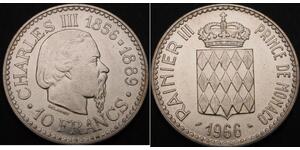
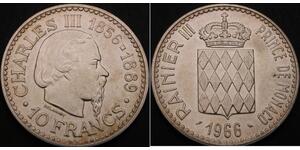
- In 1966 Monaco released a silver ten Francs piece marking the centenary of Monte Carlo Casino's foundation.
- On June 2016 fifteen thousand two euro coins were issued commemorating the one hundred and fiftieth anniversary of the casino.
During his lifetime, no standard circulating coin bears his portrait in common history texts often attributed solely to later commemorations. Instead, collectors examine these pieces as symbols of gratitude for a ruler who utilized state resources wisely rather than depleting them through war or reckless debt.
A Collector's Perspective
Enthusiasts value these issues for their connection to royal patronage in modern Europe. While rare ancient coins are prized for metal content or scarcity, collectors of Charles III focus on historical context and the narrative he represents: a ruler who turned necessity into wealth through innovation.
The portrait often depicts him with regal simplicity rather than ornate decoration found elsewhere in European numismatics from his period. This minimalistic design reflects the humble origins of Monte Carlo compared to other gaming destinations at the time, emphasizing that the state's financial revival was a collective effort born from necessity rather than mere luxury.
Exploring these items offers insight into how small nation-states leveraged unique cultural assets—such as favorable climates or gambling traditions—to secure their existence on the world stage. Through careful preservation of such currency, future generations understand that Monaco's survival is not merely a story of royal lineage but an economic achievement born from strategic adaptation and resilience.