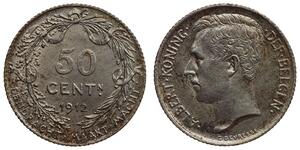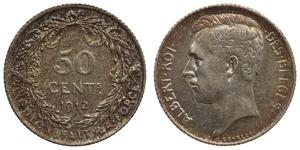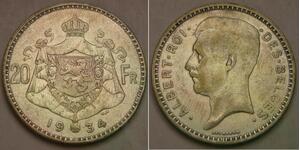
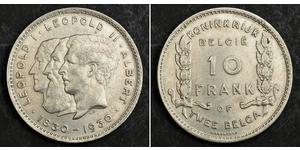
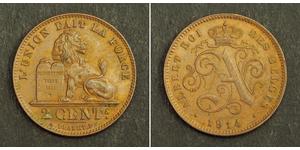
| Albert I of Belgium (1875 - 1934) | Link to Wikipedia |
Albert I of Belgium (1875–1934): History and Coinage
Frequently titled the Knight or Soldier King, Albert Léopold Clément Marie Meinrad reigned over a nation recovering from industrial expansion conflicts and colonial moral scrutiny. He was not merely an administrator but an active figure who led Army Group Flanders during World War I to liberate occupied Belgian territories before ascending Mount Durand alongside his loyal troops where he ultimately lost his life at age 58 in 1934.
Born into the royal line following Prince Philippe, Albert grew up incognito in working-class neighborhoods to understand societal hardships beyond courtly etiquette. This early exposure shaped a leadership style distinct from his uncle Leopold II, focusing on humanitarian reforms regarding native populations within the Belgian Congo and promoting technological progress rather than pure extraction for profit.
Beyond personal piety as a devout Catholic, Albert’s devotion extended to human welfare during times of immense suffering. His reign was defined by reconstruction efforts in Brussels following German occupation and the adoption of Treaty of Versailles principles that prioritized European peace over total victory mandates sought by belligerents. This legacy transitioned Belgium into modern democracy where he served as a constitutional monarch supporting social reform before his tragic death.
Relationship to Coinage
The state issued currency featuring Albert I primarily during his reign from 1909 until his death in the late thirties. While gold standard coins were common prior to economic instability, copper and nickel pieces circulated more frequently as paper money usage grew later into the Depression years.
Possessing a portrait on currency symbolized sovereignty during a period where Belgium was divided by linguistic tensions between French and Dutch speakers within royal decrees. Albert I innovated his accession oath to accommodate both languages, an administrative change sometimes mirrored in inscriptions found on coin denominations of the era establishing national identity beyond colonial imagery.
Why Collectors Value These Coins
- The pieces often represent specific eras where Western Europe transitioned from gold to paper standardization after major wars, offering insight into monetary shifts post-war recovery efforts for 1914 conflicts.
- Piece designs reflect artistic movements popular in Belgium around the early twentieth century which emphasized industrial motifs over royal heraldry, distinct from European monarchies of earlier centuries focused on conquest symbols.
Finding a silver piece from this period allows an observer to touch artifacts representing national rebuilding and stability in Western Europe during times when political unity was fragile. The shift to using French and Dutch language on legal acts reflects his modernization efforts, often paralleled by numismatic innovations that simplified designs compared to complex earlier issues found under colonial administrations prior to 1908.
For enthusiasts studying twentieth-century monetary history, holding these artifacts offers a direct connection to the era of national rebuilding. Collectors appreciate them because they are less about market price and more about preserving historical memory regarding how nations like Belgium survived total war occupation before economic stabilization arrived by the mid-1920s when he was still reigning.