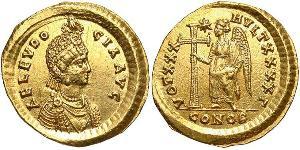
| Aelia Eudocia Augusta (401-460) | Link to Wikipedia |
Aelia Eudocia (c. 400 – 460 AD) History and Coinage
The Empress of Late Antiquity
Eudia Eudocia stands as a pivotal figure in late antiquity, bridging the classical world's decline with medieval beginnings. Born approximately 400 AD under her original name Athenaïs in Athens or possibly Antioch depending on historical debate, she was raised by an Athenian sophist named Leontius who taught rhetoric at the Academy of Athens. After his death left only one hundred coins for her inheritance against two brothers who denied her a share, Eudocia sought justice from the Emperor and married Theodosius II.
This transition from philosopher's daughter to Imperial Augusta defines her historical legacy. She was baptized shortly before their wedding in 421 AD and began minting authority as Augusta on January 2 of the following year. After an estrangement with her husband, she settled permanently in Jerusalem where she supported the local population until roughly 460 AD.
Coinage in Late Antiquity
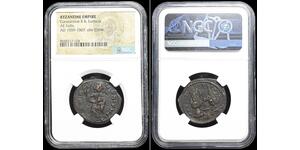
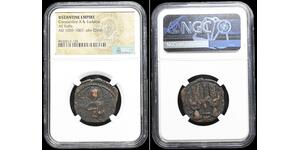
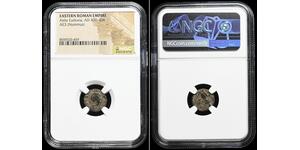
In the Byzantine tradition, imperial status dictated circulation media during this specific era. As Augusta proclaimed in 423 AD, her name likely appeared alongside Theodosius II on gold solidi issued from Constantinople mints throughout his reign spanning forty two years.
- Currency Type: Primarily denarius and gold solidus circulated within the Eastern provinces.
- Likeness and Propaganda: While Theodosius portrait was standard, Eudocia represented divine right alongside him, though often overshadowed by his sister Pulcheria who wielded significant court influence during her reign.
The rarity of coins depicting her alone reflects historical realities where female empresses received titles but male imagery dominated visual minting conventions until later centuries like the reign of Theodora. For collectors, understanding that her name appears in legends rather than frequent portraits provides critical context regarding fifth-century political hierarchies.
Curator's Guide for Collectors
This collection segment attracts connoisseurs focused on authenticity and historical narrative over market speculation. Discovering a solidus linking to the House of Theodosius reveals dramatic shifts in imperial power dynamics when sister Pulcheria managed state affairs effectively.
- Rarity Factor: Pieces bearing her title offer insight into Augusta status without standard portrait issuance common in later eras.
- Cultural Value: The coins support study of gender roles within the Eastern Roman Empire during its peak stability before Justinian reforms.
Aelia Eudocia remains essential reading for historians and collectors alike, representing a specific moment where female rule was acknowledged in legend and law even if minted representation remained guarded by tradition. Her story reminds us that value lies as much in narrative preservation as metal content.