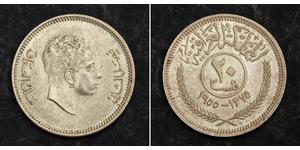
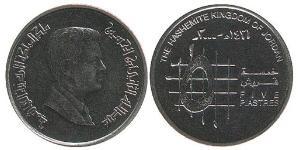
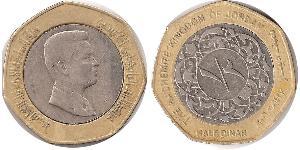
| Abdullah II of Jordan (1962 - ) | Link to Wikipedia |
Abdullah II bin Al-Hussein, 1962–Present: History and Coinage
Welcome to our gallery space dedicated to modern Jordanian leadership. Today we examine King Abdullah II of the Hashemite Kingdom of Jordan. As a direct descendant of Prophet Muhammad through his daughter Fatimah, he represents one of the oldest ruling dynasties in the Muslim world. His ascension to the throne on February 7, 1999, marked a significant transition for an Islamic monarchy that sought modernization amidst regional instability. For historians and numismatists alike, understanding his reign provides crucial insight into how constitutional monarchs navigate democratic reforms while maintaining executive authority in complex geopolitical landscapes.
The Numismatic Symbol of Reform
In the world of coin collecting, we often encounter portraits from long-dead emperors or revolutionary leaders. For modern heads of state like King Abdullah II, numismatics serves a different purpose: documenting national evolution and political reform rather than ancient empire building.
- The Ascension Issues: Upon his father's death in 1999, the Jordanian mint began issuing commemorative pieces to mark this transition. These coins often featured new designs reflecting a modernized national identity while preserving traditional Hashemite imagery.
- The Reforms of 2016: The most significant numismatic period associated with King Abdullah II stems from the political changes following the Arab Spring in 2011. To stabilize public confidence, Jordan implemented proportional representation reforms for parliament elections held shortly after. While banknotes often carry his likeness more frequently than circulating currency, specialized commemorative issues were released to symbolize this era of "constitutional renewal."
- Cultural Bridges: The portraits found on coins from the Kingdom are not merely decorative; they serve as a diplomatic tool. They emphasize interfaith dialogue and the custodianship of Jerusalem, themes central to his foreign policy.
Focusing solely on market prices misses the point for history enthusiasts. Instead, we look at how coinage captures a nation's soul during its most turbulent times—such as the influx of refugees from Syria or regional instability. King Abdullah II remains a key figure because he navigated these challenges personally, replacing government ministers and introducing reforms to ensure long-term stability.
A Collector’s Perspective
For collectors interested in modern history and Islamic culture, coins featuring the Hashemite Kingdom offer tangible links to contemporary geopolitics. They allow us to hold physical evidence of a nation balancing deep tradition with necessary economic liberalization. The historical importance lies not just in who ruled, but how that rule was accepted by a populace facing unprecedented global shifts.
We encourage our readers to explore numismatic collections from the 1990s and early 21st century to see Jordan's story unfold on copper-nickel clads. These are not standard circulating coins of daily commerce but rather carefully designed artifacts that document a monarchy adapting its structure for survival in the modern era.