| Abdul Hamid II (1842 - 1918) | Link to Wikipedia |
Abdülhamid II 1842 – 1918 History and Coinage
The Shadow Sultan of Modernization
Welcome, patrons to our gallery section on Ottoman numismatics. Today we explore the life and legacy of Abdülhamid II (born September 21, died February 10), who stands as a unique figure in global history—the last sultan to wield effective control over an increasingly fracturing empire during its twilight years.
In the annals of imperial power, Hamid is known for centralizing authority amidst the crumbling walls of sovereignty following the disastrous war with Russia. While political narratives often emphasize his repression or diplomatic isolation under Western pressure, a closer look reveals him as a pivotal administrator who embraced industrialization and infrastructure projects like the Baghdad Railway to revitalize state finances.
The historical context is essential for appreciating his currency: Hamid's rule coincided with an era of intense European scrutiny. His administration sought to present the empire not merely as fading, but as modernized. This transition from traditional Ottoman governance to a centralized bureaucracy deeply influenced how he wished to project himself—both domestically and internationally.
The Portrait on Silver
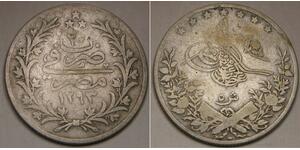
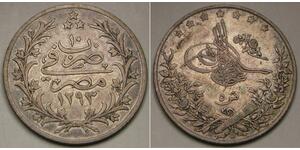
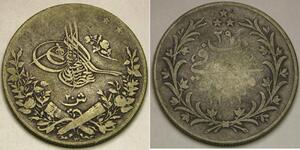
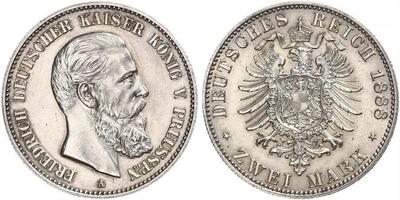
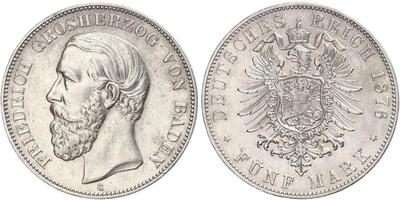
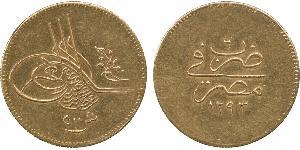
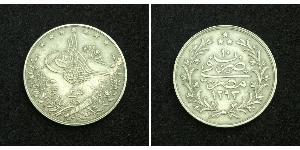
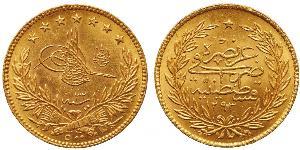
You will frequently encounter portraits of Hamid II depicted in fine silver or copper coinage minted during his reign between 1876 and the constitutional upheavals of 1908. Unlike earlier Ottoman dirhams which often featured calligraphic inscriptions, these later coins display a Western-style profile portrait.
The decision to place Hamid's face on currency was not merely decorative; it served as political branding for his autocratic rule and modernization efforts. The Great Eastern Crisis had forced the empire into heavy debt, managed by European officials through the Ottoman Public Debt Administration (OPDA). During this period, state control over money became a focal point of international relations.
Coinage from Hamid's era is particularly prized for numismatists studying the transition to republican Turkey. These pieces often bear inscriptions that reflect his specific religious and legal reforms—a synthesis of Islamic tradition with new imperial styles. Furthermore, because his reign ended in revolution and deposition (the 31 March Incident), coin issues became scarce after World War I when political upheavals led to a standardization under Mustafa Kemal Atatürk.
Collections for the Historian
Why are collectors so drawn to this specific historical currency? First is rarity; post-Ottoman stock often survived in only modest quantities, making authentic high-grade examples from Hamid's final years difficult to find. Second is artistic transition—finding a coin that visually bridges 19th-century Islamic art with early 20th-century European portraiture.
Holding these pieces allows one to hold the memory of an era defined by paranoia, diplomacy, and industrial ambition in your hands. They offer insight into how empires were re-branded for survival. For those seeking a connection between history and finance without relying solely on ancient art, this collection offers profound educational value.