| View |

 Western Roman Empire (285-476)
| Western Roman Empire (285-476) | Link to Wikipedia |
Western Roman Empire: History, Coinage and Collectibles
Historical Background
To understand the coins that have circulated through European history galleries, one must first comprehend the grand political arc of the polity known today as the Western Roman Empire. The story begins with a vast republic stretching across continents where governance was impossible to maintain from a single seat in Rome alone. Communication delays and logistical nightmares meant provincial governors held significant de facto autonomy long before imperial rule consolidated under Octavian following his victory over Mark Antony. As history evolved, this massive domain became administratively split between Greek-speaking eastern provinces and Latin-speaking western territories.
The turning point came when the need for two distinct courts formalized a political reality that had simmered for centuries. Following the civil wars of antiquity, Augustus Diocletian reorganized power into four pillars to stabilize administration before eventually collapsing back into duels between senior and junior rulers over time. Eventually, by 395 AD, the final division occurred upon the death of Theodosius I, handing distinct kingdoms—such as Italy—to Honorius in the West while Constantinople claimed Eastern dominion.
This political fragmentation was not merely administrative; it drove a sharp economic divergence between East and West. While Constantinople maintained robust gold reserves under successive Byzantine emperors later on, Rome faced internal instability, border pressures from Germanic tribes along the Rhine and Danube rivers, and plague outbreaks that strained public treasuries. The fall of 476 AD marked a profound shift when Odoacer forced an emperor to abdicate in Ravenna, effectively ending independent Western rule though Eastern authority remained nominal for decades before Justinian I attempted reconquest efforts in the sixth century.
Currency and Coinage History
The monetary history of this region is a testament to its resilience. In earlier republican days, silver denarii were used as standard currency across Mediterranean trade routes. By the imperial era, gold became paramount for international prestige transactions, with the aureus serving as a stable anchor even during political chaos.
A critical evolution in numismatics occurred under Diocletian and Constantine, who standardized production to restore public confidence amidst economic turmoil. This system relied heavily on minting high-quality solidi that served both domestic tax collection (often paid directly by merchants or soldiers) and foreign diplomatic gifts. As the political center shifted from Rome to Ravenna in Italy during the fifth century, local coinage began reflecting regional realities rather than just Imperial decrees.
A crucial feature for collectors is how silver coins debased over time as fiscal pressure mounted on Western governments unable to compete with Eastern wealth sources or recover lost tax bases. This process of inflation allowed barbarian rulers and puppet kings—like Odoacer—to issue low-quality copper coins while keeping gold titles valid through a relationship with Constantinople, creating complex hybrid issues where ancient designs sat alongside foreign names.
Mints and Coin Production
The physical creation of these artifacts occurred in various strategic locations chosen for security or accessibility. The capital mint at Rome was the premier center until barbarian encroachments disrupted production lines. Subsequently, mints relocated to Mediolanum—modern-day Milan—and later Ravenna became primary hubs for issuing currency after 395 AD.
- Rome: Early Imperial coinage featured high artistic standards depicting emperors in traditional military attire or laurel crowns. This city often issued gold issues intended to impress visitors and secure loyalty from Italian elites.
- Siscia (modern Sisak): Situated along the Danube frontier, this mint was crucial during earlier centuries for issuing copper coinage needed by soldiers stationed on Germanic borders before western mints became secondary later in history.
- Mediolanum and Ravenna: As political capitals shifted westward toward Italy to defend against invaders from Gaul and Spain, these locations assumed primary production responsibility. Their coins often bear distinct stylistic markers compared to eastern issues due to varying artistic influences among local artisans.
The technology used remained largely consistent with Roman punch-marking until late antiquity, though die quality fluctuated wildly depending on resource availability during periods of war and plague that plagued the region between 400 AD through Justinian’s reconquest efforts in Italy. This inconsistency provides collectors valuable clues about which coins were produced hastily versus those intended for official ceremony.
Notable Coins
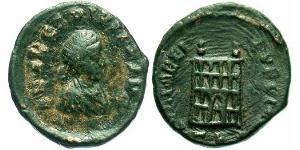
The Tetrarchic issues remain among the most sought after, representing a time of attempted stability where four rulers shared authority over distinct territories. Collectors often value these gold solidi because they represent an era before administrative fragmentation caused economic collapse in Europe proper.
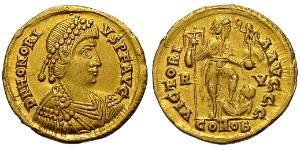
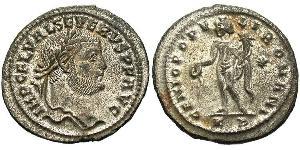
- Aurelian Solidus: This coin features striking portraits and is historically significant as it set the standard for centuries of Mediterranean trade under Roman law, remaining stable until late imperial reforms shifted production to Constantinople.
- Odoacer Denarius minted after 476 AD:
This series bridges ancient traditions with post-Roman reality. The coin displays Odoaker standing before seated emperors symbolizing continuity of governance, though technically independent rulers were issuing currency under nominal Eastern recognition.
Cultural Legacy
Beyond their material value as metal objects, these artifacts serve as cultural markers reflecting shifting identities in late antiquity. Coins from Ravenna often depict Christ or saints during periods when religious tensions rose between Rome and Constantinople following the great schisms of 1054.
The Silver Standard
The transition to silver coins marked a decline in Roman artistic standards, yet retained cultural memory through imagery that evoked traditional emperors holding globes and scepters even when ruled by barbarian kings. These designs allowed local populations—often Germanic or Frankish—to feel connected to Rome despite the political dissolution.
- The coinage reflects a gradual Latinization of administrative systems among conquered tribes after 476 AD, maintaining old Roman names for titles and places while introducing new tribal symbols on reverse legends.
The Final Centuries
In the sixth century, coins minted during Justinian’s campaigns brought Western Europe back under direct imperial rule temporarily before losing it again to political instability and plague that hampered central authority. This era produced unique hybrid issues combining Eastern gold standards with local Frankish artistic elements.
For Collectors
The coins of this period remain vital for collectors because they bridge the gap between ancient antiquity and medieval history in a tangible way, serving as proof that Western Europe did not fall entirely into obscurity overnight. They reveal how authority transitioned from imperial emperors to barbarian kings while retaining continuity through shared artistic conventions and titles.
- Rarity is driven largely by the loss of production centers following invasions between 400 AD onwards, making many late bronze issues particularly scarce today.
- Coinage serves as a historical record of changing borders where mints operated in different kingdoms sharing common imperial styles or legends.
In summary, the study of these artifacts provides profound insights into economic resilience during collapse. Whether examining an early solidus from Rome depicting Diocletian’s reforms or later barbarian imitations that preserved Roman iconography for decades after the fall in 476 AD, each piece tells a complex story about power and identity shifting across Europe.