| View |
| preceded by | |
 Vietnam (1945 - )
|
||||||||
|
| succeeded by |
| Vietnam (1945 - ) | Link to Wikipedia |
Vietnam: History, Coinage and Collectibles
Historical Background
The narrative of Vietnam is one written in the clay, bronze, and eventually gold that flowed across its ancient rivers for millennia. Emerging from Paleolithic shores around 500,000 years ago to a sophisticated agrarian society by 300 BC, this region served as a vital gateway between China and Maritime Southeast Asia.
In the early centuries of our era, Vietnam existed under complex political layers: initially ruled over by Chinese authorities from Nan Yue in the south before establishing independence in AD 939. For much of its medieval history, it functioned within loose tributary spheres to the Han dynasty and later Vietnamese emperors who sought a delicate balance between local sovereignty and northern hegemony. The landscape was defined by distinct river deltas—the Red River in the North and Mekong in the South—fostering economies based on wet-rice cultivation that necessitated sophisticated trade networks long before paper money existed.
The era of imperial unification began to take shape around 1802 with the rise of the Nguyen dynasty. While this was a period of immense consolidation for the state, it also brought about significant economic integration with global powers. It is crucial to understand that unlike most Western nations which adopted currency systems in their infancy, Vietnam operated on extensive barter and silver ingot traditions well into the 19th century.
Currency and Coinage History
The evolution of Vietnamese money mirrors a global transition from local craftsmanship to standardized imperial minting. For centuries prior to modern statehood, coinage was largely Chinese in nature. Following the fall of Annamite sovereignty under colonial pressures starting around 1850s onwards, Vietnam's monetary history shifted dramatically.
The French established Indochina and introduced a silver standard based on their Piastre system (based on gold or sterling standards). This replaced local ingots and Chinese cash with the Tien, an extremely fine copper alloy coin produced under colonial administration. These were often minted in Hanoi before being circulated across Southeast Asia.
During World War II, Japanese occupation brought a distinct shift as they issued their own currency denominations for circulation within occupied territories to support wartime economies. The post-war period saw the eventual emergence of paper money dominance due to hyperinflation and war costs; however, collectors remain most interested in the high-quality silver issues minted prior to 1945.
The final chapter before reunification involved various local revolutionary currencies printed as a necessity rather than for trade. Collectors today primarily hunt for the transitional coins that bridge French colonial rule with independent sovereignty—rare specimens where indigenous artists were given brief moments of creative freedom during administrative shifts in the mid-20th century.
Mints and Coin Production
The numismatic landscape was dominated by a few primary centers. The most prolific site for high-quality colonial coinage was located within Hanoi, specifically under the supervision of French administration who employed skilled local artisans to design motifs blending Chinese artistic traditions with European engraving techniques.
Coin production relied heavily on available metals: copper bronze (bronze) and silver. Silver content varied significantly; during periods of financial instability or wartime scarcity, coin quality fluctuated between standard bullion standards and debased issues containing lower metallic value. These variations are critical to a collector's eye when grading historical integrity.
The artistic style evolved from purely French neoclassical designs on the Piastres—which were often minted at Paris before local strikes—to localized efforts during wartime where mints in Hanoi and Haiphong attempted to incorporate more indigenous iconography despite political constraints. These small changes represent a fascinating study of how culture survives even under restrictive regimes.
Notable Coins
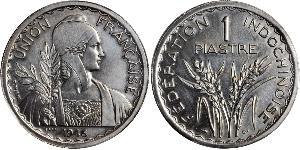
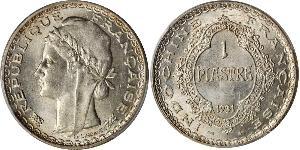
The most sought-after examples are the late French Indochina silver Piastres (1904-1945). Though technically colonial issues, these coins carry deep historical significance. The designs were elegant: featuring profiles of Emperor Bao Dai alongside allegorical figures representing trade and agriculture.
- The 2-Franc Silver Issue: Produced in large quantities but with a specific high-grade population for collectors today (circa 1940s).
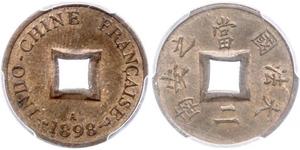
Circulation coins such as the half-centime or copper tians tell a different story—these were mass-produced, utilitarian pieces meant to handle daily market transactions.
Cultural Legacy
Vietnamese coinage serves as an artifact of cultural negotiation. Early designs often borrowed heavily from Chinese dragon iconography and Confucian symbols because those imagery resonated with the populace's heritage. As French influence solidified, we see a stylistic shift towards Roman-style laurel wreaths for national leaders.
The transition back to indigenous representation before 1945 is particularly poignant. It reflects an era of struggle—artists attempting to embed local deities and historical figures into the face value of currency while maintaining imperial administrative standards. This tension between tradition and administration creates unique visual narratives that collectors prize above mere metal rarity.
For Collectors
This region remains a fascinating niche for enthusiasts not due to high volumes, but rather its scarcity during the modern era compared to ancient Chinese issues or Western colonial coins. The story captured here is one of transition: from tribal barter systems to French silver standards.
Focusing on late 19th-century bronze and early 20th-century silver pieces allows historians to study how a nation attempted to establish its identity through finance. These collectibles are more than currency; they are tangible records of trade, political power struggles in Southeast Asia, and the resilience of local artistic expression within global colonial structures.