| View |
| preceded by | |
 United Arab Emirates (1971 - )
|
| succeeded by |
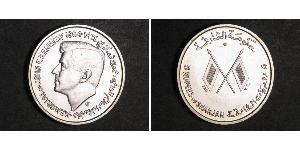
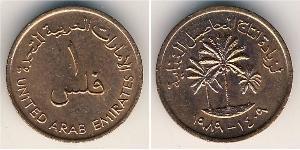
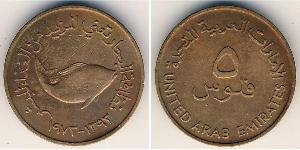
| United Arab Emirates (1971 - ) | Link to Wikipedia |
United Arab Emirates: History, Coinage and Collectibles
Historical Background
The story of money in this region is as deep-rooted as the sands from which it was formed long before the modern era began. In antiquity, the coastline that defines today's United Arab Emirates served as a bustling nexus between Mesopotamia and Egypt. For millennia, wealth flowed through these ports not via coins, but through barter systems built upon trade in copper, pearls, and dates. The nomadic tribes of this region were masters of adaptation; they used camel caravans to traverse the vast deserts while coastal settlements thrived on maritime commerce. This era laid a foundation where economic stability was paramount for survival.
The narrative shifts decisively with the arrival of European powers in the 18th and 19th centuries, transforming local trade dynamics into global geopolitics. As British merchants began to secure routes across the Indian Ocean, they intervened directly in regional piracy disputes between emirates like Ras Al Khaimah and Muscat. The establishment of a maritime pact—often called the Trucial States agreement—placed these territories under British protection against external aggression from neighbors such as Saudi Arabia. This protectorate relationship was not merely military; it was economic. For decades, imports of tea, coffee, textiles, and sugar arrived exclusively in pounds or rupees.
The discovery of oil in the early 20th century fundamentally altered this trajectory. By the mid-century, the pearling industry, which had once defined the social fabric, began to decline as crude became a new engine for prosperity. This economic explosion led directly to full independence from Britain on December 3, 1971, when seven emirates signed the Treaty of Union and formed a single sovereign federation. The transition was marked by an immediate need to establish national sovereignty over their currency reserves, moving away from foreign-issued coinage toward minting that represented a unified new identity.
Currency and Coinage History
In 1973, the United Arab Emirates launched its own currency series. Before this date, circulation was dominated by British Pound Sterling notes and coins, alongside Indian Rupees brought in through trade links with South Asia. The decision to mint national coinage required a significant leap from the previous barter or foreign-currency-dependent economy. Initially, these new currencies were often backed directly by gold reserves found within the country itself.
The introduction of currency was also an act of state-building. Unlike earlier monetary systems that simply reflected market value, this early phase served to visually assert sovereignty over a young nation composed of seven distinct emirates. The designs utilized for these new coins needed to bridge local tribal pride with international acceptance in the global financial system. This transition period saw high denominations issued quickly alongside lower-value copper or silver pieces meant for daily transactions in bustling markets like Dubai, Abu Dhabi, and Sharjah.
Mints and Coin Production
The production centers of United Arab Emirates numismatics reflect the nation's global outlook. Following independence, the responsibility fell to establish a central bank capable of backing currency issues with oil revenues. Initially, many commemorative pieces were produced using high-purity standards often facilitated by international partners like The Royal Mint or other specialized mints known for their technical expertise in gold and silver alloys.
The technology employed has evolved from early press-striking methods used for bulk circulation to advanced computerized dies capable of embedding microscopic details. These modern presses allow for high-quality relief that captures the intricate geometric patterns found in Islamic art, avoiding depictions of living figures or animals, as mandated by religious tradition and aesthetic choice.
The location of minting centers has also varied significantly over time while maintaining quality standards suitable for international circulation. As demand grew to meet G20 summits held within their borders, the production capacity scaled up dramatically. The metal composition was carefully considered; early coins were often copper-nickel (cupro-nickel) and later high silver denominations featuring purity levels of .917 or higher.
Notable Coins
Coinage collectors typically begin their search with the Independence Day issues from 1973. These are often considered significant because they represent the birth of a modern economic identity. The early copper-nickel coins feature stylized eagles—symbolizing strength and freedom—and architectural silhouettes representing the transition to urbanization.
The first gold sovereigns, issued in limited quantities with high relief detailing and proof finishes from international mints, hold particular prestige among connoisseurs for their historical importance. These pieces are distinguished by the use of pure metal that highlights intricate Arabic calligraphy used on both obverse and reverse sides without compromising readability.
Silver series released later capture key milestones in modern history: hosting World Expos, G20 summits, and visits from heads of state like the Prime Minister or President. The design team for these issues focused heavily on cultural preservation; coins depicting traditional falaj irrigation systems stand alongside others showing iconic landmarks such as the Burj Khalifa.
The "Dinar" remains a unit used in many countries but is distinct here due to its association with specific denominations of gold content and oil wealth backing. The high-denomination silver coinage, featuring detailed relief patterns on the reverse side—usually depicting an architectural gem or traditional dhow boat—are among the most visually arresting pieces found in any cabinet.
Cultural Legacy
The United Arab Emirates' approach to art and history through numismatics is unique. It serves as a visual archive for understanding how modern technology merges with ancient traditions. Religious themes play an invisible but crucial role; the absence of human portraits or animals on most circulation coins reflects strict religious adherence, replaced instead by geometric patterns that mimic Islamic architectural motifs.
The eagle motif chosen for many issues is not random; it represents a specific vision of national unity and protection against external threats during early statehood. Similarly, Arabic calligraphy used for denominations—such as the words "Central Bank" or "United Arab Emirates"—is often rendered in Naskh style scripts that are both elegant and legible.
This legacy ensures that collectors do not just hold metal but tangible evidence of a nation's identity. The coins reflect an evolution from nomadic origins to maritime dominance, then oil wealth, and finally global hospitality hubs like Expo 2025 in Dubai. Each strike into the die is a testament to national progress.
For collectors
The historical significance of these items lies in their representation of economic freedom achieved through independence from Britain following decades as protectorates. The early issues are not merely decorative; they were functional tools for an economy transitioning rapidly into the modern era due to natural resources and oil wealth.
To collectors, this coinage remains important because it encapsulates the transition period where a young federation had to establish international banking standards while maintaining cultural sovereignty in its design. While many coins are issued today with high production volumes creating easy entry points for beginners, those from earlier decades of statehood offer completeness and depth.
Culturally, these pieces serve as educational tools about the region's heritage; they tell stories without words through architecture, calligraphy patterns on denominations (which denote value in Arabic), and historical timelines marking events like independence day or oil discoveries. They are a bridge between ancient trade routes that spanned millennia of history and the modern era where the country is now seen as an international finance hub.