Historical Background
The narrative of Tanzania is one of migration, trade, and cultural synthesis that spans millennia. It was a region where the great waves of human expansion converged around the massive water bodies known as Lake Victoria and Lake Tanganyika long before they appeared on modern political maps. For centuries, this territory served as a crucial corridor between the interior highlands and the Swahili Coast, acting as a bridge connecting East Africa with the wider Indian Ocean trading networks. This flow of goods brought not only merchandise but also new ideas to the region from Persia, India, and Arabia.
The cultural foundation was laid by diverse groups: Southern Cushitic speakers arriving millennia ago; the Bantu expansion bringing iron-making traditions to Lake Victoria shores around 1500 years ago; later migrations of Eastern Nilotes like the Maasai; and enduring hunter-gatherer populations in the north-eastern highlands. This demographic blending shaped a complex economy reliant on gold, ivory, and timber from the interior for export via coastal ports like Kilwa, Kizimkazi, Zanzibar, and Mtwara.
The medieval period marked a significant turning point when Islam arrived along the coast as early as the ninth century CE. By 1300 CE, coinage minted in local sultanates reflected this shift; gold coins recorded information about local rulers with rhyming couplets that paralleled earlier Islamic traditions while diverging from Western precedents to suit African contexts. This period of indigenous trade established a distinct economic identity for the region before external colonization altered its trajectory dramatically during the late nineteenth century when German rule was imposed, transforming a series of independent city-states into the political entity known as East Africa.
Currency and Coinage History
The evolution of currency in this vast region mirrors the shifting geopolitical dominance from coastal sultanates to European empires, culminating in independence. While early history records indigenous trade goods like gold and ivory being exchanged for foreign coinage brought by visiting merchants (often Portuguese or Arab), the systematic issuance of government-minted metal began with colonial administrations.
The German period introduced a standardized system that facilitated commerce across what was once fragmented territory, though often viewed as a disruption to traditional local economies where barter systems and regional gold currencies prevailed. When British rule took over after World War I following the League of Nations mandate awarded to Britain from Germany, new monetary policies emerged aimed at stabilizing trade within the British Empire. The split between Tanganyika (formerly German East Africa) and Zanzibar remained significant; while their economies were complementary—Tanganyika providing agricultural exports and labor for coastal ports—the political separation meant distinct currency zones existed until 1964 when they united to form the United Republic of Tanzania.
Following independence in 1963, Tanganyika issued its own independent currency notes before joining with Zanzibar's administration two years later. The early post-independence period saw a transition towards currencies that reflected national sovereignty rather than colonial authority or imperial mandates. As East African Economic Community (E.A.C.E.) agreements developed, regional monetary integration began to influence coinage standards in the latter half of the twentieth century.
Mints and Coin Production
Understanding where these coins were made provides insight into their production constraints and quality control during various eras. For much of the colonial period, Tanzania did not possess a domestic mint capable of producing large-scale circulation coinage for its own territories; rather, coins were produced by major British Empire facilities in London or Berlin (under German rule). This centralization ensured uniformity across vast distances but meant that physical mints operating within Tanzanian territory are rare artifacts themselves.
However, local economic centers held distinct roles before the colonial period dominated. Kilwa and Pangani served as early production hubs where sultans ordered coinage to represent their authority locally; these were smaller in scale compared to continental issues but carried immense regional weight due to the gold content used in high denominations for trade with Swahili Coast ports or Indian merchants. The artistic tradition of engraving inscriptions on gold and silver pieces, seen as early as 1300 CE during the reign of sultans like al-Ḥasan ibn Ṭalūt, set a precedent that influenced how coinage was viewed: not merely as state currency but as tokens of religious merit or royal benevolence.
Post-independence minting shifted focus to standardizing denominations across East Africa under the E.A.C.E.M.U., utilizing international standards for size and metal weight which allowed circulation within a regional bloc rather than relying solely on national boundaries defined by modern geography. The Menai Bay Conservation Area around Zanzibar highlights another aspect of economic heritage—the use of protected resources like fish to sustain local economies, though coins rarely depict these ecological treasures until very recent times when biodiversity became central to national branding efforts.
Notable Coins
- Kilwa Sultanate Gold and Silver Pieces: These represent some of the earliest sovereign issues in East Africa. The 14th-century examples struck by sultans such as al-Ḥasan ibn Ṭalūt serve a dual purpose: they act as legal tender for local transactions but also functioned almost like medals or commemorative tokens for visitors and dignitaries, reflecting the wealth of the Sultanate. Their rarity makes them highly prized by historical collectors.
- German East Africa Marks (1906): Produced during the transition from a private trading company to formal Imperial German rule, these coins feature portraits that blended European imperial iconography with local flora and fauna found in East African highlands. The design style reflected Germany's ambition to modernize trade while showcasing its colonial possessions as centers of natural wonder.
- Zanzibar Archipelago Silver Coins: Distinct from mainland issues, these coins carried Islamic motifs or Arabic inscriptions reflecting Zanzibar’s heritage as a center of Arabian commerce. They often featured designs unique to the archipelago's culture and trade needs. These were minted in smaller quantities due to local production constraints but hold special significance for collectors interested in early 20th-century Indian Ocean coinage.
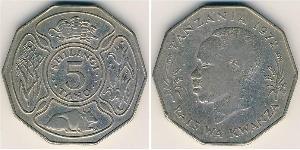
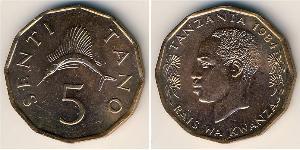
- Tanganyika Independence Issues: As the mainland moved towards self-rule, coins issued near 1963 featured motifs of independence eagles or agricultural harvests symbolizing economic hope. They represent a definitive break from colonial iconography and often served as propaganda tools to encourage national unity.
Cultural Legacy
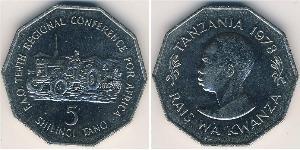
The coinage legacy leaves behind more than just metal; it carries the imprint of Tanzania's complex cultural DNA. Even during foreign rule, local artistry found expression in how symbols were integrated or how language was rendered on denominations—specifically regarding Arabic scripts used for trade and Swahili later appearing as a national unifier after independence.
The imagery on currency often reflected environmental reality: Mount Kilimanjaro’s snow-capped peaks represented the highest altitude available to mountaineers, while lake waters were depicted in notes of nations sharing those basins with neighbors. This was not merely aesthetic; it grounded abstract economic systems in tangible elements that citizens recognized daily. Over 100 languages and ethnic groups found unity through these shared symbols on a smaller physical medium than any document could achieve—making each coin literally "small but powerful."
The presence of Swahili language inscriptions, which are derived from the Bantu expansion described earlier in history texts, reinforced linguistic identity. Even before 1964, when Tanganyika and Zanzibar were administratively separate entities with different colonial histories (German vs British), coinage was a visual reminder that despite cultural diversity—whether speaking Iraqw or Maasai dialects or practicing Muslim faith alongside Christianity—a single unified monetary standard sought to bind the economy together.
For Collectors
Tanzania remains an intriguing subject for collectors of African numismatics because it sits at a convergence point between East African trade history and global imperialism issues without being as heavily covered in general catalogues compared to European or American states, where information is more accessible. The scarcity of pre-colonial pieces—such as those struck on Kilwa gold during the Islamic medieval period—combined with interesting colonial-era transitional coins offers opportunities for enthusiasts seeking historical context beyond standard "face value" collecting strategies.
Furthermore, Tanzania's unique position allows collectors to trace how trade currencies moved from Indian Ocean ports inwards toward interior markets like Lake Victoria or south into Mozambique borders through time periods defined by migration patterns (such as those of Southern Cushitic speakers). The transition from gold coinage used for luxury trading items during medieval times towards mass-produced silver and copper issues under colonial regimes demonstrates the shift from a regional trade economy to an industrialized global market. This evolution is valuable not only for rarity reasons but because each issue tells a piece of history: how political boundaries were redrawn, how local sultans lost power over their own mints or gained it back post-independence, and how cultural heritage was preserved through the art chosen for public money.

 Tanzania (1964 - )