| View |

 Somaliland (1991 - )
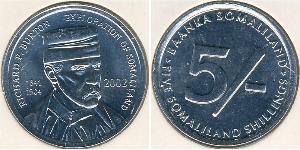
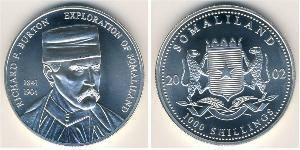
| Somaliland (1991 - ) | Link to Wikipedia |
Somaliland: History, Coinage and Collectibles
Historical Background
The historical landscape of this region is defined by its strategic position at the confluence of Africa's trade routes between East Africa, Arabia, India, China, Greece, Persia, Egypt, Rome, Ethiopia, and Somalia. The territory has long served as a commercial gateway on the Gulf of Aden coast where ancient civilizations thrived alongside pastoralists who herded cows and livestock for millennia.
The area's earliest known economic significance stems from its role in antiquity during the Neolithic age, when shepherds engaged in trade that predated widespread coinage. The region hosted vibrant rock art paintings dating back thousands of years, indicating a settled economy reliant on resources like frankincense, myrrh, spices, gold, ivory, and ebony.
Ancient Somaliland was home to the Puntites who established lucrative commercial ports connecting with merchants from Ptolemaic Egypt, Ancient Greece, Phoenicia, Parthian Persia, Saba, the Nabataean Kingdom, and the Roman Empire. The wealth generated here was substantial; ancient pyramidical structures and ruined cities stand as testament to thriving civilizations that utilized specific trade commodities. The Romans and Greeks famously sought spices from this peninsula, believing them exclusive to this region for centuries.
This early prosperity set a precedent where economic exchange often relied on high-value items like gold bullion before the introduction of metallic currency. When British forces took control in 1884 following treaties with ruling Somali Sultans and establishing the Somaliland Protectorate, they brought established monetary systems to replace traditional trade practices.
The establishment of independent status was a pivotal moment that altered economic dynamics once again. After initially uniting briefly as part of the Somali Republic in 1960 before separating during the civil conflict period which began after Somalia's internal dissolution following Ogaden War tensions, Somaliland has since maintained its own distinct political and administrative structures.
The history here is not just one of a modern state but rather a region with deep historical roots. Its economic narrative involves periods of British administration that utilized standard colonial currencies followed by post-independence arrangements aimed at international recognition as the successor to both Italian Somalia (formerly Trust Territory) and its own protectorate heritage.
Currency and Coinage History
In early antiquity, monetary exchange was facilitated through barter systems involving spices such as cinnamon imported from Ceylon or India. The ancient camel caravans transported goods along sea and land routes to the Mediterranean, where prices of Indian and Chinese cinnamon were inflated by Somaliland merchants.
The introduction of coinage in this region is closely tied to colonial intervention prior to 1960. Following independence as a State on June 26, 1960, British administration initially influenced local commerce using shillings before the country united with Italian Somalia under one state name shortly thereafter.
The currency system for this region evolved from traditional trade practices involving livestock to formalized coinage issued by colonial powers. The transition period following independence in June 1960 is a crucial era where coins were circulated that bore distinct imperial designs or early local symbols representing the new sovereignty of Somaliland.
The monetary history here mirrors the geopolitical shifts from British protectorate rule to eventual declaration of full independence during the civil war years, with currency reflecting these administrative changes. During this period, coins served a functional purpose in commerce while also serving as historical markers for the administration holding power over specific regions within what is today known as Somaliland.
Mints and Coin Production
Unlike many other African nations which operated local mints during independence periods or colonial eras, this territory generally circulated coins produced in distant imperial centers such as London. During the British protectorate era (1884 onwards), coin production was centralized under United Kingdom minting facilities.
The artistic characteristics of these early issues reflect broader patterns found across British East and Central African colonies. Designs typically featured royal effigies, territorial maps, or denominations clearly marked for use in local commerce alongside currency from Italy after unification attempts were made (1960).
Mint traditions here are characterized by a reliance on established global standards rather than localized production lines until the later period of statehood formation. The absence of indigenous mints during early independence highlights how small colonial territories often relied entirely on supply chains from major European powerhouses for their circulating coinage.
Notable Coins
The British Shilling:
- Historical Context: Circulated widely during the late 19th and early-to-mid-20th centuries under British administration.
- Design Features: Typically features the profile of Queen Victoria, Edward VII through Elizabeth II. The reverse often displays a coat of arms or territorial designation indicating usage in protectorates.
- Importance to Collectors: These coins represent a significant era when British law and economic structure governed local trade routes connecting Red Sea ports with the Mediterranean.
The Independence Era Issues (1960):
- Historical Context: Issued around June 26, 1960. These issues are transitional and reflect the complex merger with Italian territory or subsequent separation.
- Design Features: May bear the new flag of independence along with dates marking statehood before unification occurred five days later in July 1960 for some brief period under British administration alone.
- Importance to Collectors: Rare transitional pieces from this short-lived independent existence prior to re-unification hold high historical value. They capture a moment of sovereign self-determination that is often misunderstood due to later administrative changes (Somali Republic).
Past Statehood and Separation Issues:
- Historical Context: Following the Ogaden War and subsequent civil conflicts in Somalia leading to de facto independence declared by Somaliland.
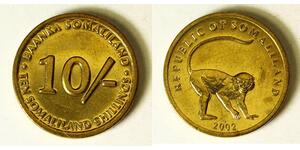
- Design Features: Often simpler designs focusing on regional unity or administrative seals rather than elaborate national iconography seen elsewhere.
- Importance to Collectors: These coins serve as proof of the administration's control and self-governance capabilities in a volatile region, providing insight into how currency functions without international recognition from all UN member states at certain times. They represent resilience in economic systems within conflict zones (prior to later developments).
Cultural Legacy
The coinage of this territory serves as a tangible link to the broader history of trade routes connecting Africa, Arabia, India, China and Greece. Ancient artifacts depicting wild animals or decorated cows found in Hargeisa complement narratives told by coins that circulated over centuries.
For Collectors
Somaliland offers collectors an opportunity to acquire items tied directly to the region's ancient history rather than just modern geopolitical states as sometimes seen elsewhere. The historical narrative involves trade hubs where Roman Empire and Ptolemaic Egypt met local populations seeking spices like cinnamon.
The early coinage issues from British rule are particularly significant because they bridge gaps between standard colonial currency systems used in East Africa with the unique administrative history of this region's independence movements post-1960. Collectors will find value not just in physical objects but also in their ability to tell a broader story about the Horn of Africa and its historical connections.
The enduring interest lies in how these pieces reflect ancient trade relationships which predate formal coinage, as well as later colonial administration that utilized standard designs for diverse regions. Understanding this context allows collectors to appreciate both monetary history and the deep cultural heritage preserved through generations who raised livestock across vast territories defined by rock art from 5000 years ago.
The numismatic legacy remains important because it connects modern states like Somaliland with ancient Puntite kingdoms that traded gold, ivory and other luxury goods to Rome. The evolution of currency here—from barter using livestock to British shillings and finally independence-related issues—illustrates the complex economic history of East Africa.