States/Countries -> Sierra Leone (1961 - )
| View |
| preceded by | |
 Sierra Leone (1961 - )
|
| succeeded by |
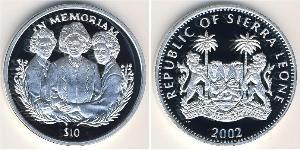
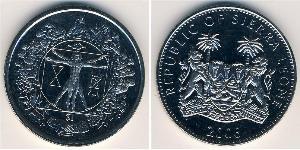
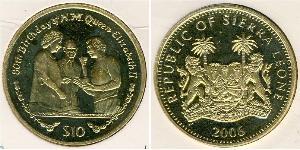
| Sierra Leone (1961 - ) | Link to Wikipedia |
Sierra Leone: History, Coinage and Collectibles
Welcome visitors. We are gathered here in the hallowed space of numismatic history to explore a nation whose currency tells a story not just of commerce, but of freedom, resilience, and empire. Sierra Leone stands as one of Africa's most unique entries into coin collecting—often overshadowed by its more famous neighbors but possessing profound historical significance for those who understand how British colonial influence shaped the monetary systems of West Africa.
Historical Background
The origins of this nation are deeply rooted in both ancient migrations and pivotal moments of global history. The region has been inhabited by diverse ethnic groups, including the Temne and Mende, who established complex societies long before European contact arrived around the 15th century.
What truly defines its early era is the tragic and eventual redemption brought about by the abolition of the slave trade. In the late 18th century, a group known as "Black Loyalists"—formerly enslaved people who escaped British control during the American Revolutionary War—were resettled in this territory to build Freetown. This period was crucial; it transformed what began as trading posts for ivory and timber into a free settlement dedicated to education and commerce.
By 1808, formal colonial structures were solidified under British rule following the Berlin Conference of the mid-19th century. The territory grew from a small colony into an inland protectorate in 1896 before gaining full independence as a republic in 1961.
These political shifts inevitably impacted the economy and how wealth was traded. In pre-colonial times, trade relied heavily on cowrie shells (shells of the Money Snail). These were used across West Africa to represent value due to their durability and ease of carrying large quantities. This tradition set a foundational context that early colonial administration had to navigate—introducing metal currency into an economy already familiar with shell money.
Currency and Coinage History
The evolution of Sierra Leone's money is almost entirely tied to its British heritage until the mid-1960s. When Europeans first established stations along the coast, they required a standardized medium for trade that could bridge different indigenous markets.
Initially, Britain introduced silver and copper coins alongside local currencies in Freetown (often called "Freetown Town" to distinguish it from inland regions). By 1803, Sierra Leone was issued its first British currency denominations—specifically the Penny. These were often circulated widely throughout West Africa; they bore legends of Great Britain or Queen Victoria's reign.
During this era, silver coins like the Shilling and Quarter Dollar saw extensive use in trade missions with Liberia across the coast to the south, as well as Guinea to the north (though those territories remained French colonies for a significant time). This cross-border circulation is what makes these early issues so historically valuable.
As Sierra Leone became more integrated into global markets—exporting diamonds and gold—the value of British currency held in colonial hands increased. Gold coins, such as 10 Guinea pieces minted by the Bank of Nova Scotia during this period, were also circulated locally. The coinage was a visual representation of loyalty to the Crown.
Following independence in 1961, there was an immediate transition away from British Imperial issues. Sierra Leone began adopting its own national currency unit, though it maintained a pegged value against sterling initially before establishing full local control over minting policies. By the early 20th century and beyond, coin production shifted to accommodate national identity while adhering to global numismatic standards.
Mints and Coin Production
Unlike many modern African nations that utilize domestic mints for their entire output, Sierra Leone's history is defined by the "Mintless" era. The coins circulating in this colony were almost entirely minted overseas at Royal Mints in London (Tower of London or Truro), South Africa, or occasionally India.
This reliance on foreign production sites gave rise to interesting varieties and errors that collectors prize today. A common source of local circulation was the Bank of Nova Scotia branch bank located in Halifax, Canada—they often produced gold coins used locally as bullion standards for international trade before being circulated into Freetown markets.
Local minting did eventually occur post-independence at various national banks and mints across West Africa. However, during the colonial period (1800s–mid-20th century), most coins found in Sierra Leone had been manufactured elsewhere but were transported via ship to British colonies like Liberia or Gambia.
In the mid-century era following independence, production facilities became local assets. Coins issued then often featured modern artistic sensibilities—reflecting West African geometry and flora—and moved away from purely Victorian-style portraits of royalty that dominated earlier periods.
Notable Coins
Let us examine a few issues that frequently surface in our auctions, which serve as markers for specific eras.The "Freetown Town" Penny (Silver/Copper)
Early Colonial Issues:The earliest silver issues carry immense prestige for collectors interested in the Black Poor and Loyalist history. These early coins typically display legends relating to Great Britain or local colonial authorities.
Design:The obverse often features a crown portrait, while reverse designs include symbols of unity or trade (like ships). The silver content made these coins valuable in the pre-20th century economy.
Why it matters:Coin collectors seek out "low grade" examples from this era because they circulated heavily, making survival rare for high-quality pieces. Finding a pristine specimen is akin to finding a historical artifact that survived centuries of wear.
The 1 Guinea Gold Coin
High-Value Bullion:
Gold coins were essential for international trade during the diamond rush periods that defined Sierra Leone's resource economy in the late 20th century.
Design:The designs vary based on mint location but often feature standard Royal Mint iconography or national seals after independence, sometimes displaying emblems representing diamonds and other minerals central to the local economy.
Cultural Legacy
The coinage of Sierra Leone reflects a unique synthesis. Early colonial coins bore symbols that celebrated British imperial control—crowns, royal busts—but were used by populations with distinct African heritage (like the Krio community). Over time, as independence approached and arrived after 1961, the visual language on these metals changed.
Post-independence issues began incorporating national emblems of peace rather than imperial crowns. They reflected a desire to define a new identity while maintaining ties with global financial systems (ECOWAS). For example, coins struck during this modern era often feature imagery representing unity or the environment—reflecting tropical climates and resources like diamonds mentioned in trade.
It is fascinating for those interested in culture: even though many early issues were made abroad to save costs on shipping equipment, they carried British artistic styles. Over time, as local designers took over after 1960s reforms (such as when it officially became a republic), designs began showing more indigenous motifs.
For collectors
Collecting Sierra Leone's numismatic history is an opportunity to own artifacts that bridge African heritage with global empire. You are not merely collecting "old coins" but preserving stories of trade routes, the movement of freedom seekers (the Loyalists), and resource economics.For auction buyers looking for quality pieces: * Look for silver pennies from pre-independence:These have strong historical narratives tied to British colonial history in West Africa. We hope this tour of Sierra Leone's coinage helps you appreciate these tangible artifacts that connect the past with our modern world.