| View |
| preceded by | |
 Saudi Arabia (1727 - )
|
| succeeded by |
| Saudi Arabia (1727 - ) | Link to Wikipedia |
Saudi Arabia: History, Coinage and Collectibles
Welcome to an exploration of one of the world's most historically significant regions through its currency. The story of Saudi Arabia is not merely a tale of geopolitical borders on a map; it is a chronicle of commerce, faith, and wealth that has shaped global trade for over two millennia.
Historical Background
To understand the currency of modern Kingdoms Arabia (KSA), one must first visualize this land not as an isolated desert expanse but as a critical artery in world history. Located at the center of the Arabian Peninsula, its geography dictated that it be a crossroads for civilization long before statehood was formally established in 1932.
The Crossroads of Civilization
From antiquity until the Islamic conquests during the seventh century, this region served as the primary link between Africa, Eurasia, and India. It is a landscape that has hosted some of humanity's earliest steps out of Africa. The climate—arid deserts meeting high mountains along coasts in both the Red Sea and Gulf—created an environment ideal for trade caravans but hostile to agricultural self-sufficiency without external intervention.
The economy was built upon a unique synergy between agriculture, particularly date palms supported by flash flood (Wadi) systems, livestock herding of sheep and goats, and the transhumance patterns that moved flocks into fertile oases during summer months. This reliance on specific environmental cycles meant that early trade required reliable mediums of exchange.
The Rise of Commerce
Cultural life evolved rapidly around two holy cities: Mecca (Makkah) and Medina (Yathrib). These locations served as spiritual anchors but also economic hubs. The economy was traditionally based on local agriculture, livestock husbandry, dates production, salt mining, and petroleum refining after 1938.
This strategic location allowed Saudi Arabia to become a major non-NATO ally of the United States by 2006 while maintaining independence through oil exports since discovery in 1938. The transition from traditional trade—relying on barter systems, cowrie shells (known as "jebeli" locally), and regional currency—to a modern monetary system was driven heavily by petroleum revenues starting in the early twentieth century.
The Unification Era
A pivotal moment occurred when King Abdulaziz unified Hejaz, Najd, Eastern Arabia, South Arabia into a single state. This political consolidation mirrored economic centralization; previously disparate coinages of Emirate of Hejaz and various regional powers were replaced by standardized currency backed first by gold reserves derived from oil sales.
Currency and Coinage History
The monetary evolution in this region follows the broader arc of Islamic numismatics, transitioning from traditional pre-state issues to a modern fiat-backed system. In ancient times and during early Islamic history (after 632 AD), coins were predominantly struck by Byzantine or Persian models before local minting was centralized under Caliphates like Rashidun or Abbasid dynasties.
The Era of Transition
Before the establishment of the modern kingdom in 1932, coinage existed largely as a political symbol. The Emirate of Hejaz issued silver dirhams and gold dinars featuring Islamic script but distinct from pre-Ottoman coins found earlier. These were primarily circulation pieces used for local markets.
The Oil Revolution
Saudia Arabia is categorized as a World Bank high-income economy, the largest in the Middle East with G20 membership status since 2014 and among top economies globally by purchasing power. Following oil discovery in 1938 came an economic transformation that necessitated robust banking systems.
Prior to this period, trade was often conducted through barter or foreign currencies like the Indian Rupee which circulated widely due to colonial influence until replaced during British protectorate reforms (ending with the unification of Najd and Hejaz in 1926-1930).
The post-unification state introduced a dual-currency system. The silver Riyal was established as legal tender alongside the gold Dinar, though their use shifted over time.
Mints and Coin Production
Coinage Standards
Saudia Arabia is categorized among major global economies by nominal GDP. As a G-20 member since 1983 (later reaffirmed in 2014) with high income status, its minting process reflects international standards.
Minting technology has shifted from traditional hand-hammered techniques to computerized CNC production and digital printing technologies for banknotes. Modern mints operate under strict quality control systems that adhere to global specifications, ensuring the durability of coins used in daily commerce among a young population where approximately half are under 25 years old.
Artistic Constraints
An important consideration for collectors is how religious tradition shaped design. Saudi Arabia's Basic Law defines itself as an Arab Islamic state with Islam as the official religion and Arabic language. Consequently, unlike Western currencies that feature portraits of leaders or historical figures, early modern issues adhered to strict iconographic prohibitions.
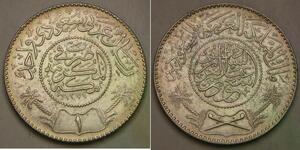
Dominant designs typically featured intricate calligraphy displaying "Bismillah" (In the name of God) alongside Islamic geometric patterns and symbols representing national pride without human representation. This tradition persisted as the defining characteristic until late 20th-century commemorative issues or banknote series featuring portraits were occasionally introduced for special events, though standard circulation coinage maintained its calligraphic purity.
The Role of Foreign Labor
The nation has a massive migrant population—roughly 40% foreign-born residents comprising the third-largest immigrant group globally. This diversity necessitated international clarity in currency design to ensure acceptance across trade partners, reinforcing Saudi Arabia's identity as both a regional power and middle power within global organizations like OPEC.
Notable Coins
The Early Silver Dirham (1960s)
The silver dirhal coins minted during the 1960s are often regarded by collectors as foundational to Saudi coinage. These pieces marked a transition from older regional practices to standardized national currency.
- Historical Context: The economy was moving away from reliance on foreign currencies (Indian Rupee) which circulated widely until replaced during British protectorate reforms ending with the unification of Najd and Hejaz in 1926-30. By the late 50s, full independence was sought through standardized coinage.
- Design Features: These coins typically featured inscriptions in Arabic script denoting face value along with dates corresponding to both Hijri and Gregorian calendars—a dual dating practice that remains relevant today.
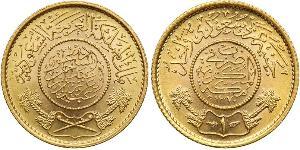
The Gold Dinar of the 1960s-70s
While modern gold coins in high denomination were primarily circulated during pre-oil periods or specific commemorative eras (like 2nd Saudi state), they hold immense value today.
- Islamic Calligraphy: The reverse designs frequently featured the royal crest or calligraphic verses emphasizing sovereignty and religious devotion, often omitting portraits to maintain adherence to traditional Islamic aesthetics which have defined these coins for decades.
Silver 1/20 Dinars (Modern Issues)
- Ideal Circulation: These smaller denominations were common in commerce before being largely replaced by banknotes or larger denominants post-20th century. Their designs often included geometric patterns representing water, mountains—the natural landscape—and flora.
The Gold 1/10 Dinar (Ceremonial)
- Ideal Presentation: These pieces are rare and highly prized for their purity and presentation. They were often produced in limited quantities to honor national milestones, featuring detailed engravings of the flag or dates.
Cultural Legacy
The numismatic heritage of Saudi Arabia is a testament to its history as an ancient civilization that played host to early human migrations and served as trade routes between Africa, Asia, Europe. The coinage reflects this by maintaining consistency while evolving.
Coins serve more than monetary value; they preserve memories. In modern collectibles culture (a hobby often pursued alongside hobbies like stamp collecting or trading card games), the focus remains on history: how money evolved from simple barter in Bedouin camps to complex banking systems managed by a high-income economy.
The designs—often avoiding portraits due to religious adherence but featuring geometric patterns and calligraphy of God's name (Bismillah)—provide insight into values that have guided society for over 14 centuries since the emergence of Islam in this region. These coins are not just metal; they carry history, culture, art, science, technology, religion, philosophy...
For collectors
Saudi Arabia remains one of the most fascinating numismatic subjects because it blends ancient traditions with modern economic realities.
- The Historical Bridge: It offers a direct link between early Islamic currency standards and contemporary fiat money. The transition from standard circulation to oil-backed reserves provides context for how sovereign wealth funds impact monetary stability.
Why Collect Today?
- Rare Early Issues: Coins minted prior to the full unification of 1932, or during early Hejaz/Najd separate periods (1805-), are scarce. These represent a pivotal era when distinct states were merging into one.
Design Aesthetics:
- No Portraits Rule: Unlike other nations that feature heads on currency, Saudi coins focus entirely on script and symbol. For those who appreciate calligraphy or geometry without figures, these pieces are a masterclass in design restraint.
The modern state is governed as an absolute monarchy under the House of Saud since 1932 (Third State). Collectors can trace this lineage through coins that celebrate dynastic history. Additionally, with over half its population being youth and rapid cultural reforms starting mid-2010s, the coinage has slowly incorporated elements reflecting social liberation while maintaining conservative roots.
In conclusion, Saudi Arabian numismatics represents a convergence of deep religious faith, strategic geopolitical positioning (major non-NATO ally status), and significant resource wealth. Whether examining an early silver dirham or modern commemorative proofs, each piece tells the story of a nation rising from ancient desert civilizations to global economic leadership.
- Museum Curators Note: "This collection serves both history enthusiasts and auction buyers seeking authentic pieces with provenance."