| View |
 Roman Republic (509BC-27BC)


| Roman Republic (509BC-27BC) | Link to Wikipedia |
The Roman Republic: History, Coinage and Collectibles
Historical Background
The story of the Roman Republic is one of a rising power transforming from an Italian city-state into the dominant force on the Mediterranean. Founded traditionally in 509 BC as a democratic experiment to avoid autocratic rule, Rome grew through internal political maneuvering and external military conquests. The early society relied heavily on barter systems inherited from Etruscan neighbors before adopting minted metal currency during times of expansion and conflict with Greek city-states.
The transition away from simple bronze exchanges toward standardized silver coinage began in earnest when Rome engaged the Samnites and later fought Carthage. This shift was driven by a growing need for rapid pay to professional armies, which allowed for long campaigns across foreign territories. As conquests expanded into Greece, Spain, and Gaul, Roman trade networks flourished, requiring a currency that facilitated commerce with diverse cultures. The cultural backdrop of this era is defined not just by battlefields but by the complex relationship between Rome’s Greek artistic influences and its own Latin heritage.
This period was also politically turbulent, characterized by struggles between the patrician aristocracy and the plebeian commons. These social tensions often manifested in currency policies that favored specific groups or political factions during times of civil unrest toward the end of the Republic era. The economy stabilized as Rome’s reach extended further outward, securing raw materials like silver from Spain which provided a steady supply for coinage production.
Currency and Coinage History
Rome's monetary history evolved alongside its political structure. Early attempts at money were crude copper coins of local Italian origin, but the quality improved significantly after Roman contact with Syracuse in Sicily during the Second Punic War. This influence introduced higher standards of weight consistency and metal purity that would define the Republic for decades.
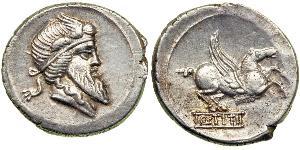
The primary silver coin became known as the Denarius. Initially a heavy piece weighing more than two grams at its inception, over time debasement or inflation pressures led to reduced weights by various mints during civil conflicts. This fluctuation was intentional in many cases; generals used lighter coins during military uprisings while maintaining official standards when peace prevailed.
Copper and bronze denominations circulated alongside silver for daily transactions among common citizens, functioning as the working currency of the masses known generally to collectors as asses or sestertii. The evolution of this system was vital because it allowed Rome to maintain a functional economy even during times of heavy war weariness when trade volumes increased sharply.
Mints and Coin Production
In ancient terms, minting technology shifted from simple die striking to complex operations often overseen by high-ranking officials. During the late Republic era specifically, authority over coin production became fragmented as political generals assumed control of mints within conquered territories like Capua or Sicily.
This decentralization had profound numismatic effects: coins produced in Italy generally bore Latin inscriptions and Greek-style profiles that were heavily influenced by Hellenistic art. In contrast, provincial issues might display local variations due to contract terms between the Senate and private contractors managing these operations.
Artistic characteristics are most important here as collectors examine die designs closely. Roman engravers learned from Greek masters while retaining their own distinct style of laureate headwear on coin portraits before imperial rule mandated specific standards for all issues later.
Notable Coins
- The Late Republican Denarius represents the pinnacle of state minting authority prior to Imperial unification. These coins often feature heads wearing radiate crowns or laurel wreaths symbolizing military victory rather than simple royalty titles found in other cultures.
- Bronze issues featuring mythological imagery, such as Ceres holding a cornucopia on certain types from the southern Italian provinces, remain prized for their historical representation of Rome's agricultural roots and religious piety during that time period.
- Certain pieces associated with political figures like Brutus or Pompey carry significant interest because they represent specific moments in history where generals used minting as tools to raise private armies loyal only to themselves before the establishment of an Emperor took central control.
The designs on these coins were rarely static. The portraits changed frequently, reflecting current political leaders and sometimes their deaths or victories depicted through imagery such as Victory crowns over heads that appeared in circulation across diverse regions controlled by Rome at any given time.
Cultural Legacy
Rome's coinage served as mobile propaganda carrying the values of Roman virtue, strength and military discipline to distant provinces. Each side on a silver Denarius tells stories about specific emblems associated with gods or legendary founders like Romulus and Remus appearing in art styles that were far more sophisticated than simple pictorial representations seen earlier.
The use of coins also reflected social hierarchy where lower denominations circulated among the common people while gold issues remained reserved for high official transactions involving state finance and major commercial settlements. This economic stratification was mirrored on coin faces showing different symbols to denote rank or authority levels within society before later imperial reforms consolidated control.
For collectors
The Roman Republic remains essential study territory because it marks the transition from ancient regional money systems into global commerce standards that would influence Europe for millennia. Collectors today can examine coins not just as metal artifacts but as tangible records of a society moving toward empire while maintaining democratic forms.
Roman Republican silver offers unique artistic beauty unlike later Imperial styles which were more standardized and formalized under strict censorship from the Emperor himself in Rome's capital city. Bronze examples often provide insight into daily life during civil unrest when political upheaval impacted common economic stability across the region where armies marched freely.
The enduring appeal of these pieces comes largely from their rarity since many ancient issues melted down by later rulers to fund new wars or infrastructure projects, leaving only scattered survivors available for modern study and appreciation. Collectors gain a deeper understanding of how money functions not just as exchange but also as art that documented history in metal form during the Republic's final transformative years before transition.