| View |
| preceded by | |
 Republic of Panama
|
| succeeded by |
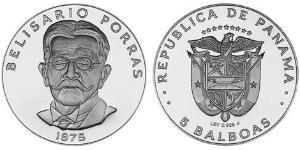
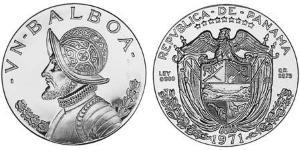
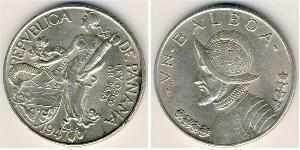
| Republic of Panama | Link to Wikipedia |
Panama: History, Coinage and Collectibles
In the annals of global commerce, few geographical features have been more pivotal than the narrow Isthmus that connects North America to South America. Historically a mere strip of land traversed by Spanish galleons carrying treasures from the Pacific coast back to Mexico City, Panama eventually became the world's primary trade corridor during the era of globalization and canal construction. For numismatists and history enthusiasts alike, examining the coins minted within this narrow region offers a fascinating window into an economy that bridged two oceans for centuries.
Historical Background
Panama's journey from a colonial possession to a sovereign nation is deeply intertwined with its role as a transit point. Originally inhabited by indigenous tribes who traded local cacao and tortillas against Spanish silver, the region became crucial in 1504 when it was formally incorporated into the Viceroyalty of New Spain. This political union meant that for three centuries, Panama shared much of its economic destiny with Mexico.
The early economy relied heavily on barter—exchanging goods like pearls and timber before the Spanish Empire established a heavy reliance on hard currency to sustain trade routes across the isthmus. However, as global shipping expanded during the 17th and 18th centuries, Panama became less of an isolated frontier and more of a bustling transit hub where coins from Europe, Peru, and Spain circulated freely.
The geopolitical landscape shifted dramatically following independence movements in Latin America at the turn of the nineteenth century. By 1821, Panama declared its freedom from Spanish rule but remained culturally linked to Mexico for several decades before becoming part of Colombia and later gaining full sovereignty as a nation-state within Central America. These periods were marked by political instability that inevitably influenced monetary policy; currency often changed hands rapidly based on which colonial power or ally controlled the trade routes.
Currency and Coinage History
The evolution of money in Panama reflects its unique status as a crossroads. In the early days, coins were rarely minted locally to any significant extent; instead, they flowed across the ocean with the galleons. However, this situation changed in 1750 when the first local mints appeared on the isthmus itself. These initial coinages served more as currency replacements—often lighter and smaller—to facilitate daily commerce than as high-value store of wealth for distant monarchies.
The most significant shift occurred after independence from Spain, a period often termed "The Republic." Herein lie the greatest treasures for collectors: gold and silver issues that were locally minted during the late 19th century. These coins represented an attempt to create national identity independent of foreign influence. The transition continued through several monetary experiments until Panama fully adopted United States currency as legal tender in 1904, marking the end of indigenous coinage production.
During this pre-decimal era, gold became king for high-value transactions between merchants and international traders who bypassed the isthmus to sail around South America. Gold coins were often struck by private banks like Castro & Co., or government entities that utilized these facilities to service debt or encourage commercial activity during a time of economic boom.
Mints and Coin Production
The heart of Panama's coinage story lies in its mints, specifically the Casa de Moneda founded in 1750. Unlike other regional hubs where state monopolies strictly controlled metal production for royal coffers, Panama often employed private banks to handle minting duties due to logistical necessities and political instability. The most famous operator was a consortium known as Castro & Co., which produced gold coins that have since become the hallmarks of this collection.
The artistic approach taken by these mints distinguishes Panamanian coinage from its neighbors, often Peru or Colombia. While many Latin American states utilized religious iconography and portraits of monarchs to reinforce their claims on divine favor or royal right, Panama leaned heavily toward maritime motifs and industrial symbolism that reflected the reality of daily life: ships arriving from New York, cargo moving through ports, and the sheer speed required by global trade.
The production techniques during this period were a mix of standard minting practices for gold but sometimes utilized private tokens with varying levels of metal purity. These variations make collecting Panamanian currency an exercise in distinguishing between state-minted issues and privately authorized pieces used to clear customs duties or pay debts on the docks.
Notable Coins
- The 5-Peso Gold Sovereign (1860s-1904)
- This is widely considered one of the crown jewels for collectors. Struck during a time when gold was in short supply, these coins were often minted with high relief and distinctive designs.
- Historical Context:Minted to pay workers on canal construction projects and facilitate trade between Panama City and Colón (then Aspinwall). The coin served as both currency and a means of settling government accounts during periods when the national treasury was unstable.
- Design Features: Unlike many generic gold pieces found in other Central American republics, these often bear unique portraits that reflect contemporary Panamanian leadership or feature nautical elements such as anchors.
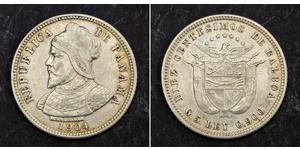
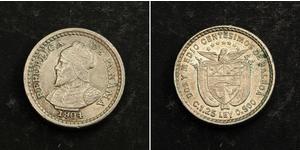
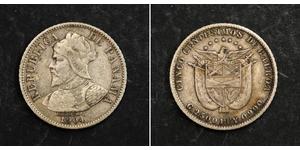
- Silver Dollars and Five-Céntavo Pieces (Late 19th Century)
- The silver dollar series features designs that depict the maritime connection, showcasing ships passing through the Strait of Panama with sails unfurled to catch trade winds.
- Historical Context: These were used extensively in daily markets before the American Dollar was fully adopted. They represent a unique moment when local craftsmanship merged European numismatic standards into distinct Central Asian aesthetics.
- The "Castro" Gold Issues (1890s)
- Prior to strict government control, private banking firms struck coins that were accepted by custom houses and local merchants.
- Historical Context:These pieces are crucial for understanding how the economy functioned under a regime of limited state infrastructure. The coin often bore only minimal text due to technical constraints or political shifts in who controlled the minting facilities at any given time, making identification based on subtle artistic variations essential.
- The 5-Centavo Fractional Silver
- Frequently found among collectors of Latin American copper and silver fractions. While often overlooked due to being small change, these pieces provide a stark contrast between the grandeur of gold sovereigns.
- The 1904 Decimal Transition Pieces
- Panama's final native coinages appeared in the form of modern decimal coins. These serve as memorials to an era where Panama began aligning itself with global banking systems but still retained its distinct artistic stamp.
Cultural Legacy
The art found on Panamanian coinage speaks directly to the maritime soul of this nation. The frequent depiction of ships, anchors, and navigational tools was not merely decorative; it declared that Panama's wealth lay in its connection between two worlds. This focus is distinct from Peru or Mexico, whose coins often highlighted gold mines or indigenous warriors.
The imagery also subtly references the struggle for independence without always depicting battles directly—instead showing maps of trade routes or ships carrying "gold dust" (precursor to coinage). By choosing these symbols over royal portraits until very late in its history, Panama asserted a democratic and commercial identity that was forward-looking rather than traditionalist. Even after adopting the American dollar as legal tender in 1904, gold pieces were still minted for collectors or ceremonial purposes.
For Collectors
Panama's coinage stands apart from its Central American neighbors because of its intense maritime focus and the unique involvement of private banking houses before the government could fully control the economy. For enthusiasts, collecting these pieces is less about catalog numbers or rarity lists and more about understanding a nation that was built on transit.
The historical significance here lies in their role as currency during one of the most volatile times for Latin American economic development—following independence from Spain but before canal construction stabilized trade flows. While many collectors shy away from fractional coins, these silver pieces offer high-quality designs and interesting stories about how small denominations fueled daily commerce.
The transition to decimalization in 1904 remains a poignant moment for the serious collector; it marks the end of a distinct era where Panama's economy operated with unique weight standards independent of Mexico or Peru. The gold sovereigns that circulated before this date serve as tangible proofs of wealth transfer across an isthmus, bridging continents and economies just by virtue of having been minted there.