| View |
| preceded by | ||||
|
||||

|
|||||||
 Republic of Bulgaria (1990 - )
|
|||||||

| succeeded by |
| Republic of Bulgaria (1990 - ) | Link to Wikipedia |
Bulgaria: History, Coinage and Collectibles
Historical Background
To hold a coin of Bulgarian origin is to possess a fragment of its turbulent yet profound history. The land now known as Bulgaria has long served as a crossroads where civilizations met, traded, and occasionally clashed over the control of key passages between Europe, Asia, and the Black Sea coast.
The narrative begins deep in antiquity with the Karanovo culture around 6500 BC. This era represents one of the earliest organized societies in Southeastern Europe. Following this Neolithic foundation came the Thracians, a people whose influence on metallurgy was profound; they gave rise to the Orphean and Dionysian cults that resonated across ancient Mediterranean philosophy.
The formation of Bulgaria itself is rooted in the migrations of tribal groups from Central Asia during the 7th century AD. These Bulgars settled alongside Slavic tribes, leading to a cultural synthesis known as Old Bulgarian culture—characterized by the adoption of Christianity and Cyrillic script under the First Empire's great rulers. This was not merely a political shift but an economic one.
During its zenith in the 9th century AD, Bulgaria dominated most of the Balkans and maintained extensive trade relations with Constantinople, Baghdad, and Volga Rus'. As a transit hub for natural gas pipelines later on and historically for oil routes and silk roads from Asia Minor to Northern Europe, Bulgarian territory saw heavy commercial traffic. This strategic location ensured that Sofia was not only an administrative center but also the seat of significant monetary exchange.
Currency and Coinage History
The evolution of currency in this region mirrors its shifting geopolitical allegiances. Early silver issues under Khan Simeon I marked a golden age for Bulgarian numismatics, where silver dirhams were minted to facilitate trade across the Volga River basin.
Following centuries of Ottoman rule, which saw the local economy rely heavily on tax coins and imports from Constantinople (the Sublime Porte), independence in 1879 brought a renewed focus on sovereignty through currency. The new state sought to assert its identity as an industrialized European nation.
The transition into democracy after 1946 saw the adoption of socialist models, yet coinage remained a powerful tool for propaganda and economic standardization within Eastern Europe.
Mints and Coin Production
Sofia has served as the primary minting center throughout modern history. However, to understand full production scope, one must acknowledge that during the Kingdom era (1908–1946), high-quality sovereigns were struck at London's Tower Mint.
The design traditions of these mints shifted dramatically over time:
- Royal Era: Designs featured royal portraiture, often crowned kings or historical national figures. The artistic quality was exceptionally high due to British craftsmanship standards applied during the minting process in London.
- Khanate and Socialist Eras: Artistic focus shifted towards collective labor imagery (collectivization) later transitioning back to national landscapes like rose bushes, symbols of peace, and Bulgarian historical figures post-1989.
- Ottoman Influence: While distinct sovereign minting was limited during Ottoman administration, tax coins from Sofia Pashalik mints circulated widely before independence.
Notable Coins
The history of the Bulgarian Lev is punctuated by specific periods that remain highly sought after. These are not just metal discs but stories etched in copper, silver, and gold.
- Simeon I Silver Dirhams (9th Century): Often referred to as "Butugas," these coins were high-quality pieces minted during the First Empire's height. They featured the cross of Constantine on the reverse and Simeon’s portrait or titles in Cyrillic script on the obverse, marking a significant fusion of Greek religious art with Slavic literacy.
-
The Sovereigns (1879–1886):: The most famous issue includes silver sovereigns produced in London. These pieces bear the head of Alexander II (Tsar), often wearing imperial regalia or a turban-like headdress symbolizing historical legacy. They represent the nation's entry into European financial independence.
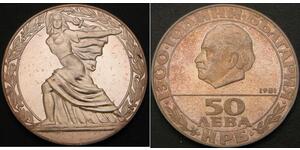
- The Modern Leva:: Following adoption as an EU member, Bulgaria transitioned from Gold and then Deutsche Marks to its current currency, but collectors still value early transitional denominations or high-finish silver commemoratives that celebrate cultural heritage.
Cultural Legacy
A coin serves as a vessel for the values of its society. Bulgarian numismatics reflect the nation's embrace of both Slavic and Turkic roots, often symbolized in design elements like horses (from ancient nomadic past) or roses (symbolizing peace).
The use of Cyrillic script on coins began early but remained a distinctive feature that allowed historians to read history directly from metal. During the 19th century designs incorporated religious motifs—Sts Peter and Paul, St George—to honor their role as patrons.
For Collectors
Bulgarian coinage is a discipline of great depth for those who appreciate the intersection of history and commerce. For auction buyers looking at historical rarities or museum curators displaying pieces to the public, understanding these issues offers insight into how Bulgaria navigated centuries between East (the Ottoman Empire) and West (European alliances).
Rare examples from early periods—such as silver dirhams from Preslav mint or copper coinage from post-independence years—are often valued not only for their rarity but because they represent a specific moment when the nation was asserting its existence on world trade maps. For modern collectors, these artifacts remain accessible and historically significant.