| View |
| preceded by | |
 Qatar (1878 - )
|
| succeeded by |
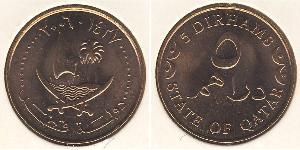
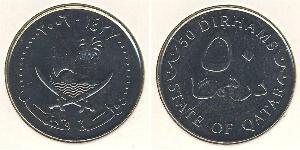
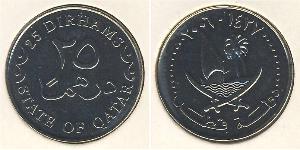
| Qatar (1878 - ) | Link to Wikipedia |
Qatar: History, Coinage and Collectibles
Welcome to an exploration of Qatar's heritage through both its archaeological landscape and the metallic tokens that once circulated within it. As a curator presenting this exhibition, my goal is not merely to display objects but to tell the story of trade, sovereignty, and wealth accumulation on the shores of the Persian Gulf. When you look at coins or banknotes from Qatar today, they are more than financial instruments; they are artifacts marking significant transitions in geopolitical power—from ancient empires to modern petro-states.
Historical Background
The story of the region begins far before written records. For millennia, this peninsula served as a critical node on global trade routes connecting East and West. In antiquity, under Sasanian rule and later the Arab Caliphates, Qatar was renowned for its pearls and purple dye industries produced along the coast from Al Khor. These commodities were so valuable that they attracted Roman traders like Pliny and Ptolemy, who mapped these lands with an eye to commerce rather than conquest.
A pivotal shift occurred in 1520 when Portuguese forces seized territories up to Hadhramaut and the coast of Qatar, driven by their desire for a monopoly on spice trade routes. The region was later contested by the Ottomans before falling under British protection starting with an agreement in 1868. This transition marked one of the most significant changes for local economics: as foreign powers took charge of security against Bedouin raids and piracy, Qatar moved from relying solely on private merchants to utilizing state-backed currency standards.
The late nineteenth and early twentieth centuries were a time when British naval dominance secured maritime safety. During this period, the country was officially recognized as a sovereign entity with its own borders distinct from the Ottoman territories of Eastern Arabia that surrounded it. The discovery of oil in 1940 transformed Qatar’s trajectory once more, shifting the economy away from pearling and towards energy exportation.
Currency and Coinage History
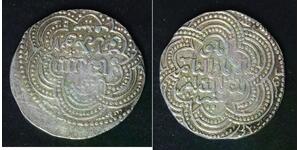
The monetary history of this region is distinct because native coin production was sparse compared to circulating foreign currency for much of its recorded past. While archaeological hoards found across the Gulf yield examples of Roman, Sassanian, Fatimid silver dirham coins, these were imports or tribute paid by local chiefs rather than mintage from a centralized national authority.
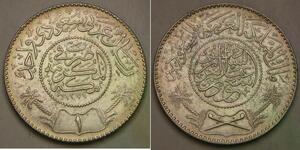
In 1928, Qatar adopted the standard Aden rupee as its primary medium for internal and external commerce. This coinage was minted in India (in Bombay at first), reflecting that trade routes had not yet fully shifted to oil dollars but rather continued heavy engagement with British imperial economics.
In 1960, a local currency board established the Qatar Riyal, allowing it to adopt its own monetary identity. This era marks a true separation from regional currencies and signals independence in both political sovereignty and economic policy. The modern state of Qatar did not rely on ancient mints for daily commerce but used paper notes until 2014 when it finally began minting its own circulating coins.
Mints and Coin Production
The history of the Qatari Riyal is a story that begins in London, then moves to India where early denominations were struck for local circulation. When independence was achieved with oil wealth securing its economic foundation, modern minting began as part of an industrial complex capable of producing intricate designs.
Focusing on numismatics today, we see the evolution from simple utility coins to artistic statements reflecting national pride and environmental stewardship. The first issues in 1960 were relatively plain functional pieces that circulated alongside foreign currency for decades before being fully accepted locally by the mid-20th century.
The production of modern Qatari coinage reflects high standards of precision required to protect consumer safety with new materials like steel and aluminum rather than precious metals. This shift was driven both by global numismatic trends in low-cost metallurgy for circulating currency but also Qatar's need for secure, unique denominations that could not be counterfeited easily.
Notable Coins
The Aden Rupee (1900–1964)
- Historical Context: This piece represents the era of British protection and reliance on Indian standards to protect the economy against external trade pressures.
- Design Features: Often featuring standard colonial motifs used throughout the Gulf region during this period, they served as a common currency before independence was secured in 1971.
- Importance to Collectors: These coins illustrate the economic relationship between Qatar and British India long after the political ties were severed. They are significant for understanding how commerce evolved from barter systems or imported foreign currency into state-backed paper money eventually supported by oil wealth.
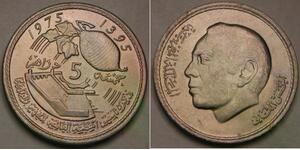
The 1960 Series (The Qatari Riyal)
- Historical Context: Issued upon establishment of the Currency Board in London, these marks Qatar's financial independence from its neighbors and its integration into global banking systems.
- Design Features: The first series featured denominations ranging from one to a hundred riyals. Early coins were made with standard alloys common across many post-war states but lacked unique local iconography until later years when artistic direction focused on indigenous heritage.
- Importance to Collectors: These represent the transition toward sovereignty in trade and economy as oil revenues began entering state coffers, funding large infrastructure projects funded by foreign investment rather than direct coinage revenue from mints alone.
The Gold 10th Anniversary (2076)
- Historical Context: This commemorative piece marks the centenary of Qatar as a British protectorate, emphasizing independence and sovereignty achieved through its unique position on trade routes.
- Design Features: These coins were produced with high-quality alloy standards that reflected both modern industrial capabilities while paying homage to historic maritime traditions by including motifs like ships or dhow sails in their engravings.
- Importance to Collectors: While they do not appear as common daily currency, these items serve an important educational function. They document the continuity of Qatar's relationship with global markets from ancient pearl dives through modern oil extraction and digital finance initiatives that are developing rapidly today.
Cultural Legacy
The story of money in this region is deeply tied to its geography, particularly around the Pearl Diving industry which once sustained a thriving economy. In 1907 alone over one thousand divers worked under difficult conditions to harvest oysters from the sea floor for their pearls.
Pearling and Trade
The economic shift that brought modern currency came about through oil discovery rather than coinage revenue directly, yet the coins themselves are a testament to Qatar's resilience. They show how ancient trade traditions evolved into high-tech exports like liquefied natural gas.
For Collectors
If you approach this collection with curiosity and respect for history, these items serve as tangible proof that human civilization has long looked toward the Persian Gulf for wealth—pearls in antiquity and oil today. For numismatists interested in regional independence movements or British protectorates within India's sphere of influence during late colonial rule, Qatar offers a fascinating window into how smaller states secured financial sovereignty amidst vast global empires.
The coins found here reflect both the past reliance on external currency standards like the Aden rupee and later independence-driven designs. They offer not only visual pleasure but also an insight into why this small country has risen to become one of the largest exporters in its region, standing firmly as a middle power backed by abundant resources.