| View |
| preceded by | |
|
|||||||||
 Principality of Schaumburg-Lippe (1643 - 1918)
|
|||||||||


| succeeded by |
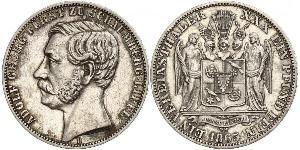
| Principality of Schaumburg-Lippe (1643 - 1918) | Link to Wikipedia |
Schaumburg-Lippe: History, Coinage and Collectibles
Historical Background
Nestled within the rugged landscapes of Lower Saxony, the Principality of Schaumburg-Lippe represents one of Germany's smallest yet historically resilient political entities. Its story begins in 1647 with a geopolitical necessity born from dynastic failure and the strategic division of land among powerful neighbors like Hesse-Kassel and Brunswick. For two centuries, this territory existed as a county before evolving into a principality under increasing pressure to align itself with emerging European powers during the Napoleonic era.
The region was not merely defined by its borders but by its unique position in trade routes connecting Hanover and Prussia. The economy relied heavily on local resources; notably, the productive Bückeberg mines were central to early revenue generation. These mining operations influenced statecraft directly, requiring a robust administrative structure that eventually led to one of Germany's most distinct small states.
The political landscape shifted significantly in 1807 when Napoleon's reforms elevated Schaumburg-Lippe from county to principality under the Treaty of Vienna arrangements and subsequent decrees. This elevation was not merely honorary; it brought new administrative privileges including more significant rights over taxation and internal trade regulations. The capital city, Bückeburg, served as a beacon for merchants traveling between Hanover and Berlin.
Currency and Coinage History
The evolution of currency in Schaumburg-Lippe mirrors the broader narrative of German unification. Early coinage issues were local necessities to facilitate trade before national consolidation occurred. When the state joined the North German Monetary Union prior to 1871, it retained rights to issue its own sovereign silver coins alongside standard Reichsthaler denominations.
Coinage served as a tangible link between the small ruling house and their populace. During the era of Imperial coinage starting in 1873, Schaumburg-Lippe adhered to strict federal standards but maintained specific artistic signatures that allowed collectors to identify regional origin quickly. As Germany expanded into an empire following unification, local mints adjusted production volumes to align with national needs while preserving distinct visual identities.
The transition from monarchy to republic in 1918 marked a profound change for coinage output. Following the abdication of Prince Adolf II and World War I's upheaval, new designs were required that omitted royal portraiture but retained state symbolism like coats of arms or allegorical figures representing liberty and labor.
Mints and Coin Production
Bückeburg served as the primary center for numismatic activity within the principality. While minting facilities were not always located solely on site, the state maintained oversight over production quality to ensure its coins circulated smoothly in commerce with neighboring Hanoverian regions.
Arc of technological advancement played a crucial role here; from hand-striking silver thalers to later die-struck nickel and copper issues. The mints operated under strict imperial guidelines that dictated metal content, yet the artistic license granted to designers allowed for unique relief depths on small state coins compared to national circulation.
The production environment often fluctuated between domestic capacity and reliance on larger German Empire facilities during periods of war or economic crisis. This flexibility ensured continuity but also created variations in mint marks found only by dedicated collectors seeking out specific years where Bückeburg operated as an independent agency versus when it acted under centralized Prussian oversight.
Notable Coins
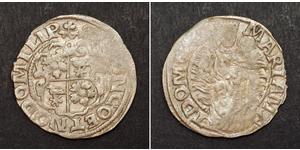
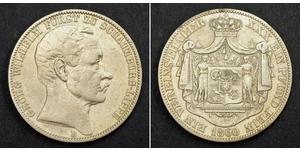
A prime example for the collector is the early silver coinage issued during Prince George William's reign. These pieces transitioned from simple county marks to high-quality imperial standards, reflecting his status as a ruler of a principality rather than just a minor lord.
- The Thaler coins minted under Adolf I feature refined portraits and heraldic crests typical of the mid-19th century art nouveau movement within German design. These are valued for their high relief quality which distinguished them from mass-produced national issues.
Following World War II, Schaumburg-Lippe ceased to exist as an independent state entity in terms of political sovereignty but its legacy endured through remaining currency pieces collected before 1945. Collectors appreciate the final gold and silver coins struck immediately prior to occupation due to their historical scarcity.
Cultural Legacy
The numismatic artistry reflects a culture deeply embedded in Christian tradition and statecraft. Religious motifs often appeared on lower denomination copper issues, symbolizing the piety of local society while higher denominations focused more purely on dynastic achievement.
This legacy persists because each piece carries an imprint of governance philosophy from 1640 until 1918. The symbols stamped onto metal plates became permanent records of sovereignty that outlasted administrative changes, providing a physical connection to the lives of thousands of citizens who relied on these coins for daily transactions.
For collectors
Schaumburg-Lippe remains an important area of study for those interested in micro-states and European coinage history. These issues represent the transition period between fragmented feudal economies and modern currency unions without needing to explain complex geopolitical theories.
- Rarity is driven by low production volumes due to small domestic markets which favored local spending.
The historical significance of collecting these items lies in witnessing the decline of a monarchy within Germany's largest state confederation before modernity fully took hold. For any enthusiast looking for pieces that tell stories of resilience and administrative adaptability, Schaumburg-Lippe offers compelling narrative depth beyond mere aesthetics.