| View |
| preceded by | |
 New Caledonia (1853 - )
|
| succeeded by |
| New Caledonia (1853 - ) | Link to Wikipedia |
New Caledonia: History, Coinage and Collectibles
Historical Background
Welcome to a narrative of the deep Pacific, where geology and culture intertwine in unique ways. New Caledonia is not merely an island group; it represents a distinct chapter in French history defined by isolation, discovery, and resilience. Its story begins before recorded time with the Lapita people, skilled navigators who arrived between 1600 BC and 500 AD to cultivate vast landscapes along the coast.
The arrival of Europeans transformed this archipelago from a remote outpost into a strategic French possession in 1853. The era that follows is one defined by hardship and resilience, shaped first by the harsh realities of sandalwood trade—known locally as "blackbirding"—and subsequently hardened further when France designated New Caledonia a penal colony.
The island became known as "le Caillou," or the stone, reflecting its rugged nature. For nearly half a century until 1897, it served as an open-air prison for approximately twenty-two thousand convicts from metropolitan France. This period significantly altered demographics and social structures; while many prisoners were sent back after amnesty following the Paris Commune of 1871, their passage represented a desperate attempt to alleviate overcrowded prisons in Europe through forced labor.
Economic drivers shifted again with the discovery of nickel in 1864. The establishment of mining operations drew immigrants from Japan and other Pacific islands while indigenous Kanak communities were marginalized onto reservations. This exclusion sparked violent resistance, notably the uprising led by High Chief Ataï in 1878.
The timeline extends through World War II, where the General Council voted to reject Vichy rule, aligning instead with Free France and Charles de Gaulle, a significant political act that foreshadowed its future path toward autonomy. The island remained integral to French interests but increasingly sought recognition of the rights of its diverse population.
Currency and Coinage History
To understand the monetary landscape here is to recognize a story written in gold, silver, and paper notes issued far from home. New Caledonia did not maintain an independent central bank for most of its history; instead, it existed under the financial umbrella of Metropolitan France as an Overseas Country and Territory (OCT).
For much of the 19th century, commerce was driven by barter or coins minted in Paris that circulated widely. When the nickel mines began to boom with Société Le Nickel in the late 1870s, trade volume increased drastically, yet no specific local currency was created at that time—French coinage sufficed for mining wages and agricultural transactions.
The numismatic history of New Caledonia is thus defined more by association than distinct issuance. The archipelago utilized the French Franc until 1958/60 when it transitioned to a new monetary framework, eventually aligning with the XPF (CFP) Franc structure that defines the region today.
The history of coins here is one of scarcity and connection. Before recent independence moves finalized currency autonomy in the early 2010s—allowing for local variations—the island relied on French mints to supply its commercial needs during periods when it was a penal colony or a strategic refueling station.
The lack of an autonomous central bank until very recently distinguishes this territory from other overseas lands. Collectors interested in the early 20th century will often find that they are collecting standard French coins marked for circulation, carrying with them the economic history of nickel mining rather than local minting marks. The monetary evolution mirrors the colony's journey: first a source of convict labor and resources, later an industrial hub.
Mints and Coin Production
The heart of coin production here was not located on the island itself for most of its existence but rather in Paris or Marseille within France. New Caledonia’s own "mint" activity is best understood through commemorative productions authorized after it gained greater political autonomy.
In a sense, the minting traditions reflect the colony's unique legal status as part of French Republic while maintaining local distinctiveness. Unlike regions that established their own mints to produce circulating currency decades ago, New Caledonia’s production history relies heavily on commemorative pieces produced by specialized workshops in mainland France or authorized partners.
The artistic characteristics found on these later issues often highlight indigenous heritage rather than industrial machinery of the past. Designs frequently feature Kanak motifs drawn from traditional art forms—kneeling men, spearguns, and geometric patterns—and are intended to celebrate local identity alongside national French symbols like Marianne or Liberty figures.
The shift in production centers correlates directly with political status changes. As New Caledonia moved toward "sui generis" collective autonomy, the design of currency shifted from purely French motifs to representations that honored both its Melanesian roots and modern democratic society within France's constitutional framework.
Notable Coins
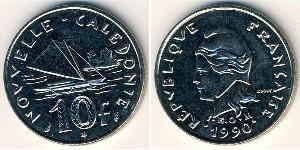
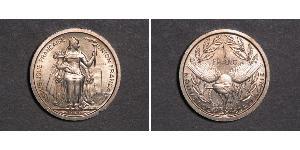
While mass-produced circulating coins are rare for collectors in this specific territory outside of standard issues circulated alongside other OCTs, there are distinct types of currency that hold historical weight. One must look closely at the Nickel Centennials or Commemoratives.
- The Nickel Discovery: The most historically resonant period in New Caledonia's economy was its nickel boom starting mid-century. In modern times, collectible pieces have been released to commemorate this discovery (circa 1864). These items feature industrial machinery motifs and portraits of early miners or governors.
- The Penal Colony Series: Commemorative tokens issued in the late 20th century honor the history of convict labor sent from France. Often produced as proofs, these coins reflect a dark but essential chapter where political prisoners helped build infrastructure and work mines under harsh conditions.
- The Independence Markers: Post-1983 reforms led to new economic status for the region. Coins minted during this period often feature dates reflecting independence timelines or "OCT" statuses, distinguishing them from French coins of 20th-century circulation.
The importance to collectors lies in these commemorative pieces which serve as physical mementos of a nation navigating its complex relationship with France and the Pacific neighbors. They often bear the "Nouvelle-Calédonie" legend rather than just "France," making them sought-after for their dual identity.
Cultural Legacy
The coins that enter collection are more than mere denominations; they act as cultural ambassadors reflecting a people defined by conflict and reconciliation. The Kanak population, who constitute nearly half of the inhabitants today, has long fought for self-determination—a struggle mirrored in recent coin designs which increasingly feature indigenous symbols alongside French republican icons.
The use of traditional motifs such as Duma (the great canoe) or representations of nature’s beauty—referencing coral seas and volcanic soils—are hallmarks of this region's cultural identity. Furthermore, the history displayed on coinage is not just about metal; it represents a shift from exclusion to inclusion.
The Kanaky people fought for rights through political movements in the 1980s which culminated in self-determination referendums and ongoing autonomy. This struggle is often symbolically represented on currency designs, illustrating that modern design choices are acts of cultural preservation rather than just economic necessity.
For collectors
New Caledonia remains a fascinating entry for the advanced numismatist not because it is an abundant source of common coinage—but precisely because its scarcity and unique political context tell such a potent story. It represents a bridge between French history, Pacific discovery, and indigenous rights.
The value here comes from historical significance rather than rarity of metal or circulation volume in the traditional sense. The coins are valuable artifacts that document how a nation transformed itself—from penal colony to self-governing entity. Collectors who appreciate the nuances of imperial legacy mixed with modern autonomy will find New Caledonia's coinage offers an educational glimpse into one of France’s most complex overseas territories.
The story written in copper, nickel (ironically), and gold is a testament to survival and cultural pride amidst isolation at 16,000 kilometers from the motherland. Whether collecting penal tokens or modern independence marks, every issue carries the memory of Lapita navigation lines connecting past and present.