| View |
| preceded by | |
 Nepal (1768 - )
|
| succeeded by |
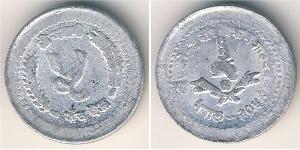
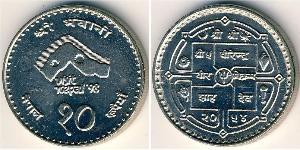
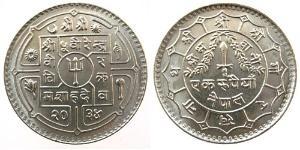
| Nepal (1768 - ) | Link to Wikipedia |
Nepal: History, Coinage and Collectibles
Welcome to a journey through time in one of South Asia’s most enigmatic landlocked states, the Himalayan Republic known as Nepal. For centuries, this nation sat at the delicate nexus between two empires—China and India—but its own history is distinctively carved by mountains that touch the clouds. In the world of numismatics and historical collecting, few regions are more complex than Nepal. Here we explore a sovereign state whose currency has mirrored not just economic fluctuations, but deep cultural shifts from ancient kingships to modern republics.
Historical Background
To understand the value behind these collectibles, one must first walk through the valley of their formation. Long before unification under a single banner in 1768 AD by Prithvi Narayan Shah, Nepal was defined by its position within ancient trade routes that connected China and India via Tibet (Lhasa). As a landlocked nation protected by high peaks and surrounded on three sides by the subcontinent of India, Nepal developed as an independent buffer zone. This geopolitical importance is crucial to understanding why their currency evolved alongside international powers rather than existing in isolation.
The early history features distinct cultural zones—the north intertwined with Tibetan culture and the south shaped by Indo-Aryan traditions—uniting into a singular entity that served both British India and Imperial China. The transition from the monarchy, which lasted until 2008, to a federal secular republic marks another significant shift in national identity. However, for collectors of historical artifacts, it is not merely dates but the resilience of culture under changing political climates—such as during the Rana oligarchy—that defines this region's narrative.
Currency and Coinage History
Nepal’s monetary evolution begins in a fascinating state of dependence. For much of its early recorded history, foreign coins flowed freely through Nepal to satisfy local trade demands before native coinage was firmly established under centralized rule. During the unification period initiated by Prithvi Narayan Shah, the kingdom sought to consolidate internal markets; initially adopting foreign currency from British India and China, they eventually moved toward producing distinct sovereign issues.
The era of major numismatic interest began during the Rana dynasty (late 19th century). Initially serving as vassals or partners to Britain, the rulers adopted silver coins modeled on contemporary British standards but often adorned with local iconography. This period served not merely as a commercial tool for trade partnerships, but also as an assertion of administrative control. The independence movement in 1950 eventually led to full sovereignty over monetary policy; however, it was only in later decades that the nation moved away from paper money reliance toward minting its own distinct series.
Under modern governance following the shift to a republic, Nepal has largely transitioned into an electronic economy. For collectors, this era is significant because of its scarcity and unique design—early republican issues often carried images celebrating the new democratic order rather than traditional religious deities found in earlier reigns, creating a sharp contrast from historical specimens.
Mints and Coin Production
The geography of Nepal itself influenced how coins were struck. Unlike large industrial empires with massive minkhouses dedicated to heavy coinage production, the region’s numismatic history was often defined by workshops that served specific localities or royal courts. The capital city, Kathmandu (and its sister valleys), acted as a center for traditional art and craftsmanship.
In earlier times before independent minting became fully established under international supervision, coinage involved skilled artisans creating designs that bridged the gap between religious iconography—such as Lord Shiva’s Trishul or goddess Laxmi—and commercial needs. The artistic quality of Nepal's coins often reflects a blend of traditional craftsmanship and imported British technology used in the late 19th century.
The transition to full state control meant that designs shifted from purely religious depictions (common during earlier, more open trade periods) toward national symbols like Mount Everest (Sagarmatha), national birds, or agricultural motifs. The lack of an industrial monopoly on coinage production in this region often led to lower volumes per year compared to neighbors, making many specimens naturally scarce without a need for complex minting quotas.
Notable Coins
The Early Unification Silver Rupees:
- Historical Context: Issued in the late 18th century, these coins represent Prithvi Narayan Shah’s efforts to unify Nepal politically and commercially.
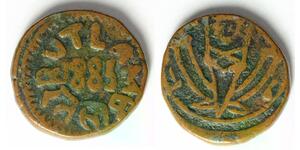
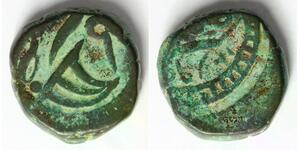
- Design Features: These pieces typically feature a simple depiction of sovereignty alongside inscriptions asserting royal power. Designs were often conservative due to limited engraving technology available at the time.
- Importance to Collectors: They represent the birth of modern Nepal's independence from fragmented principalities and foreign currency reliance, marking a pivotal moment in national history.
Rana Dynasty Silver Coinage:
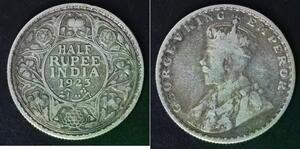
- Historical Context: During this period (1846-1950), Nepal was allied with Britain. Coins minted here often mimic British design styles, using English legends for "Nepal." This is a result of the alliance mentioned in earlier historical records.
- Design Features: The obverse typically displays portraits similar to those found on Indian rupees of that era or later independence coins. Reverse designs often incorporate local script and religious symbols like the Trishul, showing how even political subservience did not erase cultural identity from currency.
- Importance to Collectors: These serve as a rare example of "hybrid" colonial-style coinage in South Asia. They are highly prized by those who study the intersection of foreign trade influence and local sovereignty before full independence was achieved post-1950.
Modern Republic Gold and Silver Issues:
- Historical Context: Introduced after Nepal became a secular republic in 2008, these coins celebrated national milestones like the centennial of independence or specific anniversaries.
- Design Features: Modern designs feature imagery such as Mount Everest, agricultural harvests (wheat), and symbols of democracy rather than royal portraiture. These often reflect a modern aesthetic that appeals to international collectors seeking representations of contemporary nations.
- Importance to Collectors: They symbolize the break from monarchy and the embrace of democratic federalism, offering a window into how Nepal defines itself in the 21st century—through peacebuilding efforts and technological advancement rather than imperial might.
Cultural Legacy
The legacy left by these coins extends beyond simple economic utility. As an ancient land of spirituality, Nepal’s currency often mirrored religious devotion. Whether depicting the Pashupati (Shiva) or the goddess Laxmi, coinage in this region was also a form of public prayer and blessing—a tradition that continued well into later years even as denominations changed.
This fusion is visible on older pieces where traditional Newar art styles from Kathmandu are evident alongside British engraving techniques. For historians examining the economic history of South Asia, these specimens show how trade networks operated across mountain ranges and international borders, proving that Nepal was never truly isolated despite its landlocked geography.
For collectors
Nepal remains a fascinating subject for numismatists not because it has produced an endless variety of complex mints like China or India, but rather because every piece tells the story of sovereignty struggles against great powers. The scarcity is defined by history—where foreign influence often dominated domestic needs until recently.
The appeal lies in their unique position as a bridge between Asian economic zones (Tibet and India) during periods when few countries could assert full independence from colonial currencies while maintaining distinct cultural symbols. While modern collectors might encounter fewer items than other major nations, the historical context of each coin is rich with narratives about diplomacy unification.
The enduring significance today lies in the transition to a republic where coins now feature images representing national unity and democracy rather than dynastic heritage—a change that reflects how this mountain nation continues to redefine its future while honoring a past defined by resilience, spirituality, and cultural harmony. This narrative makes these small-denomination treasures some of the most compelling artifacts for those who collect beyond mere metal weight.